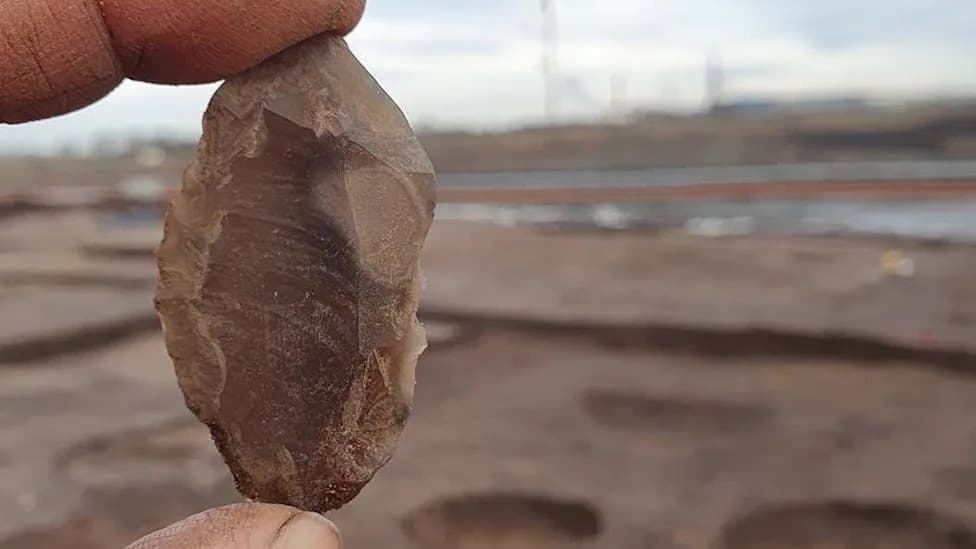
A Neolithic circular sanctuary near Chleby, Czech Republic, has been dated to more than 6,500 years ago, about 1,000 years older than Stonehenge. The enclosure is roughly 230 metres across with a ditch over 2.5 metres deep and 12 entrances aligned to mark key solar and lunar events. Radiocarbon dating supports the earlier chronology, while ongoing soil chemistry studies aim to reveal how the site was used across prehistoric periods. Earlier finds include a Bronze Age Únětice burial and later conversion of the site into an Iron Age settlement.
6,500-Year-Old Neolithic Sanctuary at Chleby Predates Stonehenge by a Millennium
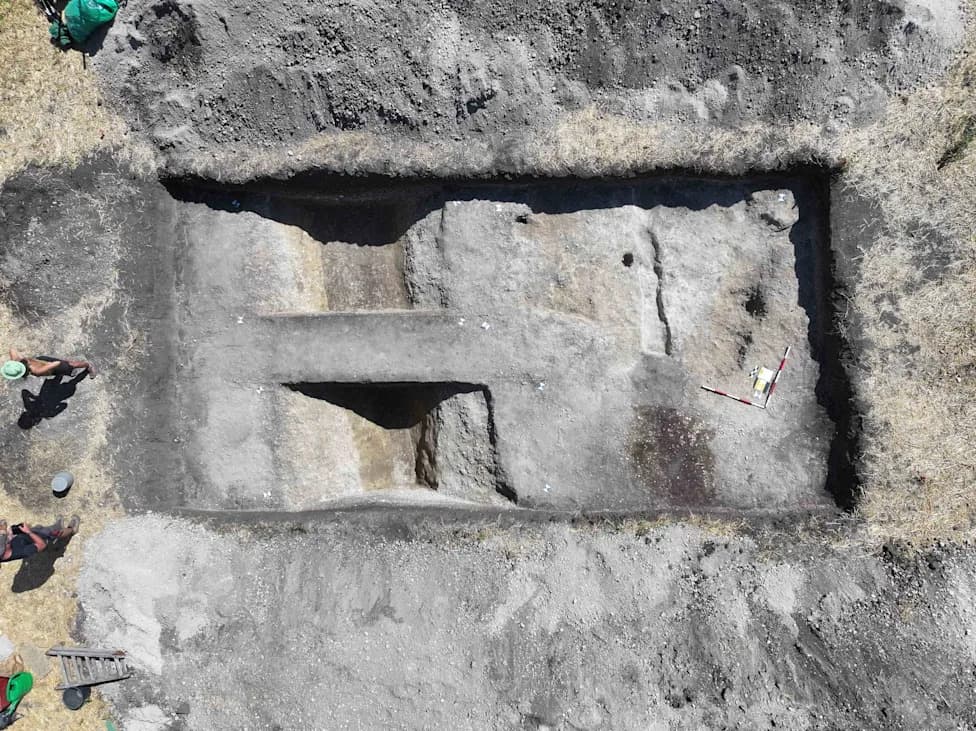
Section of the prehistoric sanctuary discovered near Chelby in the Czech Republic, September 25, 2026. (photo credit: University of West Bohemia (Západočeská univerzita v Plzni))
A remarkably well-preserved Neolithic circular enclosure discovered near Chleby in the Czech Republic has been dated to more than 6,500 years ago, making it roughly 1,000 years older than Stonehenge. The monument spans about 230 metres in diameter, is defined by a ditch deeper than 2.5 metres, and has twelve irregularly spaced entrances whose alignments appear to mark major solar and lunar events.
Key Findings
Researchers from the University of West Bohemia (UWB), in collaboration with Charles University and the University of Hradec Králové, report that detailed analysis shows the entrances are not randomly placed. Instead, their geometry forms a system for observing important moments in the sun and moon cycles. Two primary observation points were identified: one linking summer solstice sunrise with winter solstice sunset, and another aligned with the moon's extreme rising and setting positions during its approximately 18.6-year lunar standstill.
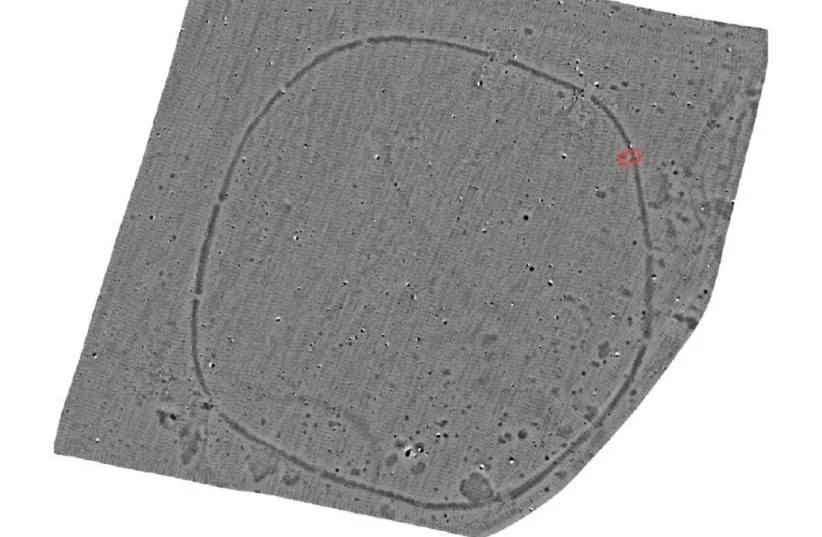
Aerial photo of the prehistoric sanctuary discovered near Chelby in the Czech Republic, September 25, 2026. (credit: University of West Bohemia (Západočeská univerzita v Plzni))
“Circular enclosures are completely unknown in our region for this period, which already makes the site exceptional,” said Petr Krišt of UWB's Archaeology Department, who leads the investigation. “The arrangement of entrances creates a system that allowed prehistoric observers to track the most significant moments of the solar and lunar cycles.”
Radiocarbon dating of organic material recovered at the site supports the earlier chronology that places Chleby a millennium before Stonehenge. Finds include fragments that may have decorated monumental gateways, possibly linked to a bull cult—an important religious symbol among early farming communities across prehistoric Europe, according to Jan Turek of Charles University.
Earlier excavations uncovered the remains of roughly 18 individuals in the ditch, later identified as a Bronze Age Únětice culture burial. Current work indicates that the sanctuary's role changed over time: by the Iron Age the monument appears to have lost its original ritual significance, the ditch was gradually filled, and an ordinary settlement was established on the site.
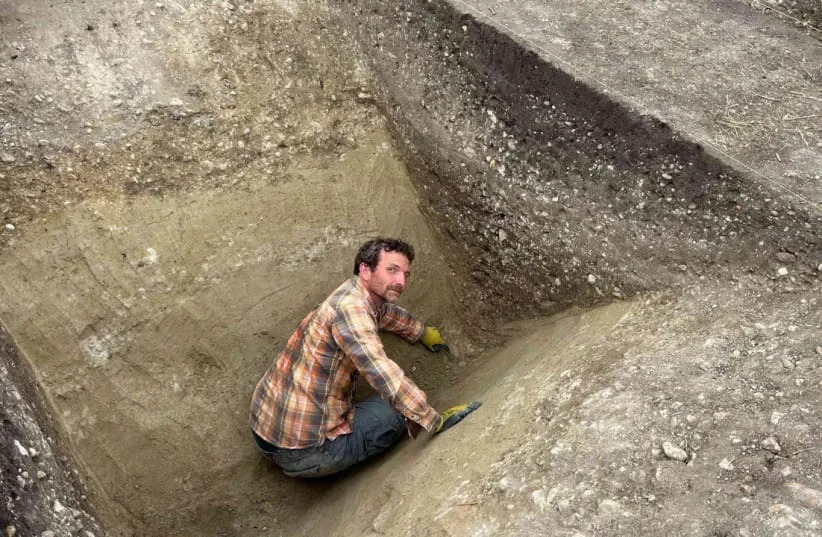
Ditch at the prehistoric sanctuary discovered near Chelby in the Czech Republic, September 25, 2026. (credit: University of West Bohemia (Západočeská univerzita v Plzni))
“While Stonehenge experienced repeated periods of renewed use and later cultural associations, the first results from Chleby suggest the opposite development,” Krišt noted. “By the Iron Age the monument had been repurposed and incorporated into everyday settlement life.”
Next Steps
Ongoing research will focus on soil chemistry and microstratigraphic analysis to detect chemical traces left by people over millennia. Jan Fišer of the University of Hradec Králové explains that, in addition to artifacts and human remains, chemical signatures in soils can reveal activities such as burning, feasting, animal keeping, or other ritual practices, helping to reconstruct how the site was used across different prehistoric periods.
This work is part of the international Long-term Land Use Dynamics within the Areas of Prehistoric Ritual Places project, a collaboration between the University of West Bohemia in Pilsen, Charles University, and the University of Hradec Králové.
Help us improve.