Maggie Haberman said the release and handling of Justice Department files tied to Jeffrey Epstein marked a turning point for parts of the MAGA base. Haberman argued that Trump’s resistance to scrutiny over those records undercut his anti‑corruption message and, coupled with heavily redacted disclosures, widened a rift with some former supporters. She also criticized Trump for breaking core campaign promises and pursuing grand personal projects that, she said, compounded voter disillusionment.
Maggie Haberman: Epstein Files Marked The Moment MAGA Began Turning On Trump
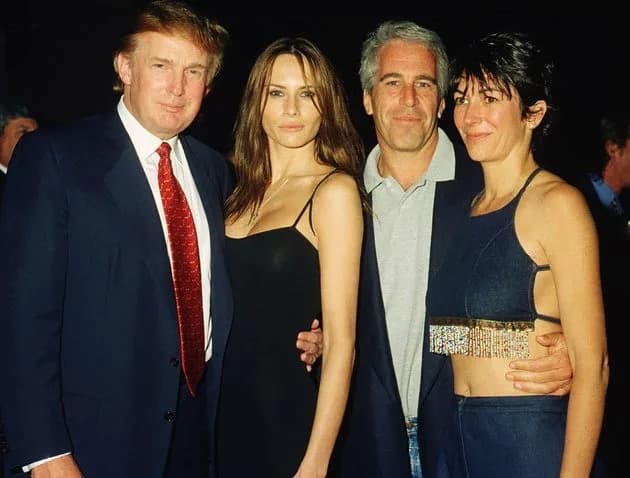
Trump with his then-girlfriend Melania Trump, Epstein and Ghislaine Maxwell at Mar-a-Lago in 2000.Davidoff Studios Photography/Getty Images
Maggie Haberman, a New York Times reporter and co-author of Regime Change, told an audience at the Texas Tribune Festival in Austin that the first major fissure between former President Donald Trump and portions of his MAGA base came last year over the handling of Justice Department files tied to Jeffrey Epstein.
Haberman said the episode undercut a central campaign promise — that Trump would expose corruption in Washington — when he appeared to resist scrutiny of his own connections. "And that was the moment, by the way, last year, with how Trump handled Epstein and the files," she said. "That was when, according to his own top allies and advisers, they could start seeing his own base stop believing him quite as much."
"It was the first time that Jonathan [Swan] and I could recall ... Trump saying, 'Believe me, not what you're hearing over there' — and it didn't work," Haberman added, referencing reporting she has done with fellow New York Times journalist Jonathan Swan.
Epstein was found dead in his jail cell in August 2019 while awaiting trial on federal sex‑trafficking charges; his death, which was ruled a suicide, intensified public interest in his ties to powerful figures. In February 2025, former Florida Attorney General Pam Bondi publicly said she intended to release what some called a "client list"; Bondi later said her remarks were misconstrued, and some reports have suggested she told Trump in May 2025 that his name appears in those records. These details have been reported by multiple outlets and remain the subject of ongoing scrutiny.
Haberman noted that Trump publicly dismissed the attention as a "hoax" even as, amid heavy bipartisan and legal pressure, he signed legislation in November that led to the release of additional files. The Department of Justice ultimately produced the records close to the court‑mandated deadline, but the documents contained extensive redactions.
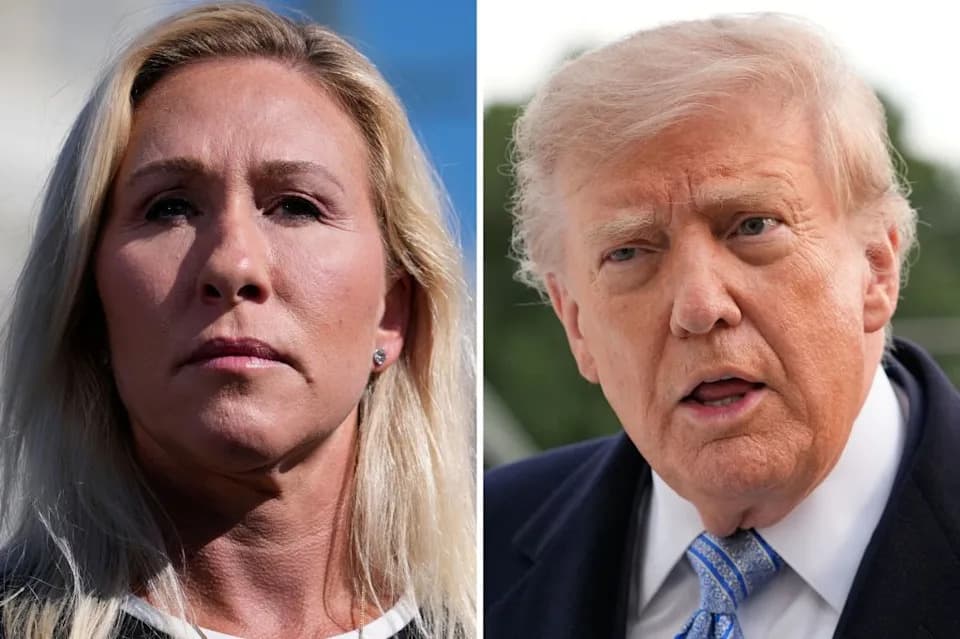
That outcome, Haberman argued, contributed to a rupture with some former loyalists. She cited, for example, the fallout with Rep. Marjorie Taylor Greene (R‑Ga.), whom Trump publicly called a "traitor" after she pushed for greater transparency about the Epstein files.
Beyond the Epstein episode, Haberman criticized what she described as a pattern of broken promises. She said Trump campaigned on three core pledges — to boost the economy, avoid unnecessary foreign entanglements and "drain the swamp" — but in her view had not delivered on them while simultaneously pursuing high‑profile vanity projects such as an ornate White House ballroom and a self‑styled triumphal arch sometimes dubbed the "Arc de Trump."
Haberman concluded that the Epstein files episode was "one scandal too many" for some voters who expected the anti‑corruption posture Trump had promised. The full discussion from the Texas Tribune Festival, including Haberman's reporting and analysis, is available to watch on the Texas Tribune's video channels.
Help us improve.