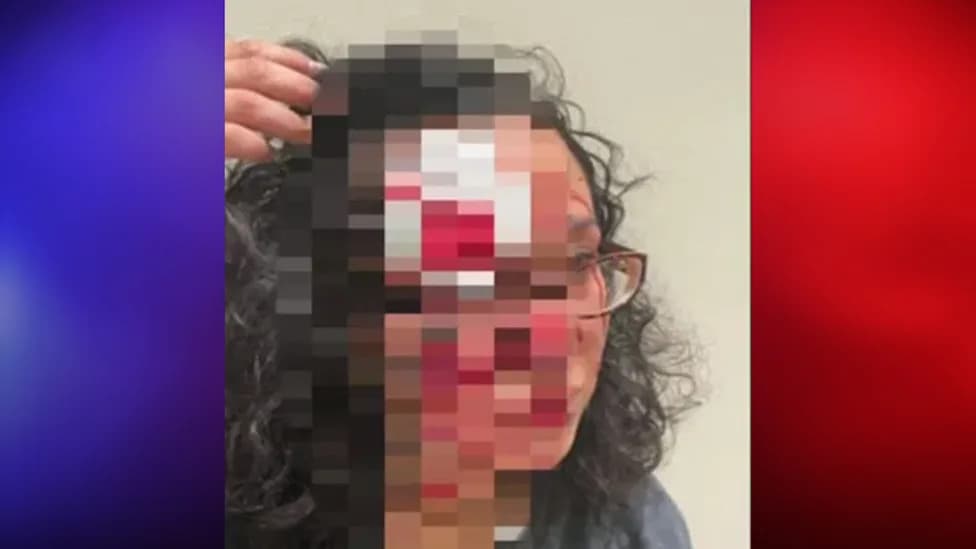
A Seattle woman is recovering and will need surgery after an alleged, unprovoked attack on Sept. 18 in which a stranger bit a roughly 1‑inch circular chunk of flesh from her forehead, according to police and prosecutors.
The victim, 36‑year‑old Diana Gonzalez, told Seattle police that she was walking to a nearby convenience store in broad daylight when a woman later identified by prosecutors as 36‑year‑old Kamilia Chadli threw a food wrapper at her. When Gonzalez asked why, the suspect allegedly shouted racial and homophobic slurs, spat on her and pushed her to the ground.
Prosecutors say the suspect then bit Gonzalez's forehead and removed an approximately 1‑inch‑diameter piece of tissue. Responding officers reported finding a fragment of the victim's flesh that had been spat into a street grate.
"It looks like a zombie bite in a movie that you would see — like it's a full circle," Gonzalez told KOMO‑TV while wearing a bandage. "This is my face. I'm going to have a scar permanently."
Court documents and police reports reviewed by local media indicate Chadli was staying at a shelter across the street from the scene and that prior contacts with police described her as having a history of mental‑health and substance‑abuse issues. Gonzalez said she and Chadli are the same age and share a similar complexion and curly hair; she told reporters the attacker repeated racist remarks and told her she was an "inferior race."
After the assault Chadli allegedly fled, but a witness pursued her and flagged down a deputy marshal at a nearby courthouse, which led to her apprehension, authorities said.
Chadli has been charged with second‑degree assault, a felony, and is being held in custody with bail set at $150,000. Her arraignment is scheduled for Monday. Jail records show a hate‑crime investigation is also under way; the King County Prosecutor's Office said an enhancement has not been filed yet but may be added later if evidence meets the higher burden required under state law.
What authorities say: The prosecutor's office noted that proving a hate‑crime enhancement often requires a higher legal burden than what the public may expect, and that the charge can be added later if supported by evidence.