Maggie Thurman collapsed from a cardiac arrest while swimming at Hathersage Swimming Pool on 26 January 2026 and was kept afloat by a fellow swimmer until lifeguards and bystanders started CPR. East Midlands Ambulance Service crews arrived, delivered defibrillator shocks and transferred her to Sheffield's Northern General Hospital. Tests showed no blocked arteries; an ICD was fitted nine days later and she went home the next day. After cardiac rehabilitation, she returned to swimming four months later and reunited with the rescuers, stressing the lifesaving value of immediate CPR.
Saved by Quick CPR: Woman Reunites With Lifeguards and Paramedics After Pool Cardiac Arrest
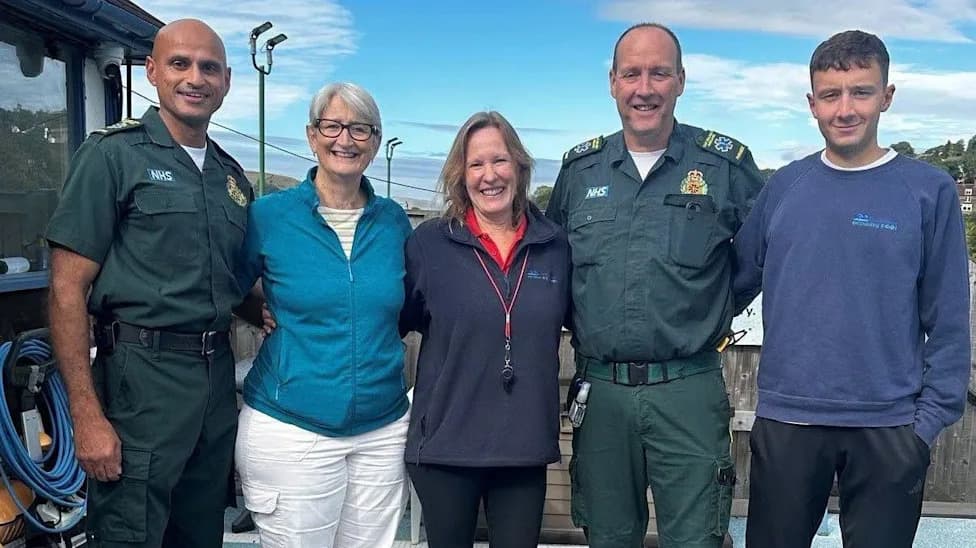
Maggie Thurman was reunited with those who saved her life after she fell ill earlier this year at Hathersage Swimming Pool [East Midlands Ambulance Service]
Maggie Thurman, now 69 and from Youlgrave in Derbyshire, has reunited with the lifeguards and ambulance crew who pulled her from Hathersage Swimming Pool and helped save her life after she suffered a cardiac arrest on 26 January 2026.
During her regular swim, Thurman — 68 at the time — began to sink. Another swimmer kept her afloat until lifeguards pulled her from the water. Lifeguards and bystanders immediately began cardiopulmonary resuscitation (CPR) and used a defibrillator, delivering several shocks, East Midlands Ambulance Service (EMAS) said.
Paramedics Nicholas Hinchley and Simon King, technician Asad Khan and critical care paramedic Karl Bexon (from the Air Ambulance Service) arrived on scene. After sustained CPR and the defibrillator shocks, crews stabilised Thurman and transferred her to Sheffield's Northern General Hospital for specialist care.
"I owe so much to the lifeguards, bystanders and the EMAS crew who acted so quickly. Without them, things could have turned out very differently," Thurman said.
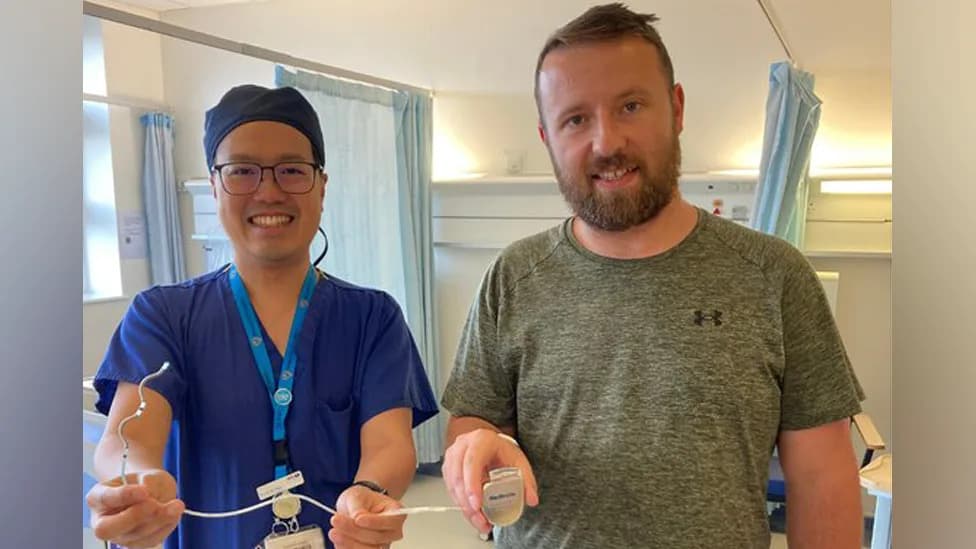
At hospital, doctors ran a series of tests, including an angiogram, and found no blocked arteries, no significant scarring of the heart and no evidence of heart failure. Nine days after admission she had an implantable cardioverter defibrillator (ICD) fitted and returned home the following day.
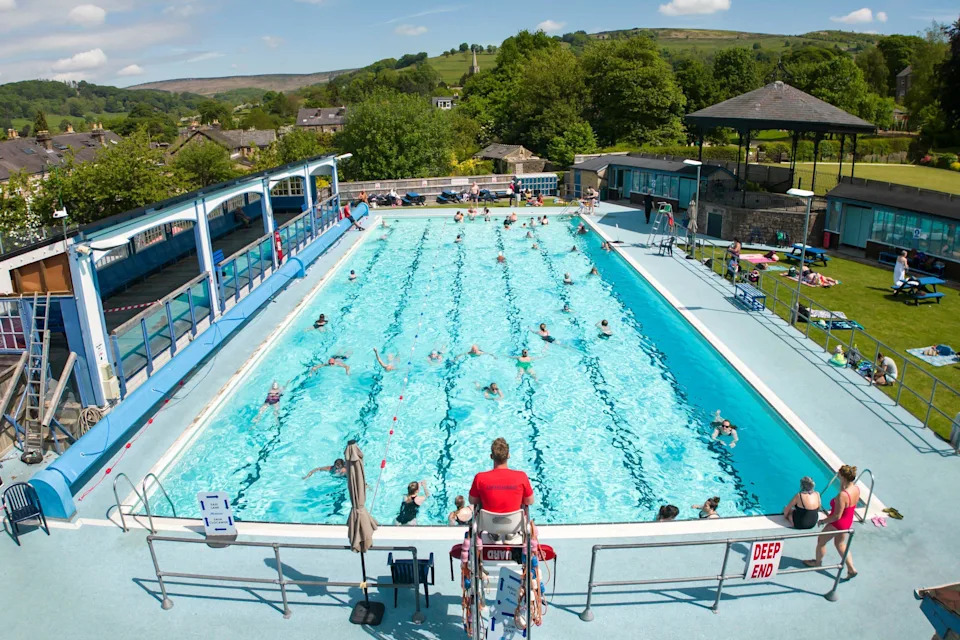
Maggie Thurman suffered a cardiac arrest during one of her regular swims at Hathersage Swimming Pool in Derbyshire [PA Media]
Thurman completed a cardiac rehabilitation programme and, four months after the cardiac arrest, she was thrilled to return to the pool. She described her early memories as hazy and said she had no recollection of the incident itself; staff told her she was even messaging friends during recovery.
Her husband Ian stayed by her side while her son and daughter travelled from Bristol and Manchester to be with her during the frightening early days.
Josh Wragg, a lifeguard on duty that day, said his training gave him the skills to help save a life: "It is wonderful that a skill I learnt through my lifeguarding means that Maggie is sat here today with us, is back swimming and doing the things that she loves." Lifeguard Helen Kohlhardt added that the team response felt instinctive: "It was like a reflex and we all just slotted into our roles instantaneously."
Paramedic Nicholas Hinchley praised the lifesaving effect of prompt CPR: "Maggie's story is a brilliant reminder that CPR can save lives. On the day, the lifeguards were like a well-oiled machine... she only needed a couple of shocks before she was trying to sit up and talk to us."
This reunion underlines two clear messages: immediate bystander CPR and fast, coordinated emergency response can make the difference between life and death, and good local training saves lives.
Help us improve.