NACIQI deadlocked on whether to recommend revoking federal recognition from the ABA's law school accreditor or to place it under another year of oversight, voting 11-1 to report no consensus. Department staff had recommended revocation, citing failures on more than two dozen federal criteria and concerns about the accreditor's independence and timeliness in changing standards after the 2023 Supreme Court ruling on race-conscious admissions. Under Secretary Nicholas Kent has 90 days to decide; the council could appeal to Secretary Linda McMahon or pursue legal action. The potential withdrawal would affect federal student aid access for a small number of schools and could complicate state licensure practices.
Federal Panel Deadlocks Over Whether To Revoke ABA Law Accreditor's Federal Recognition
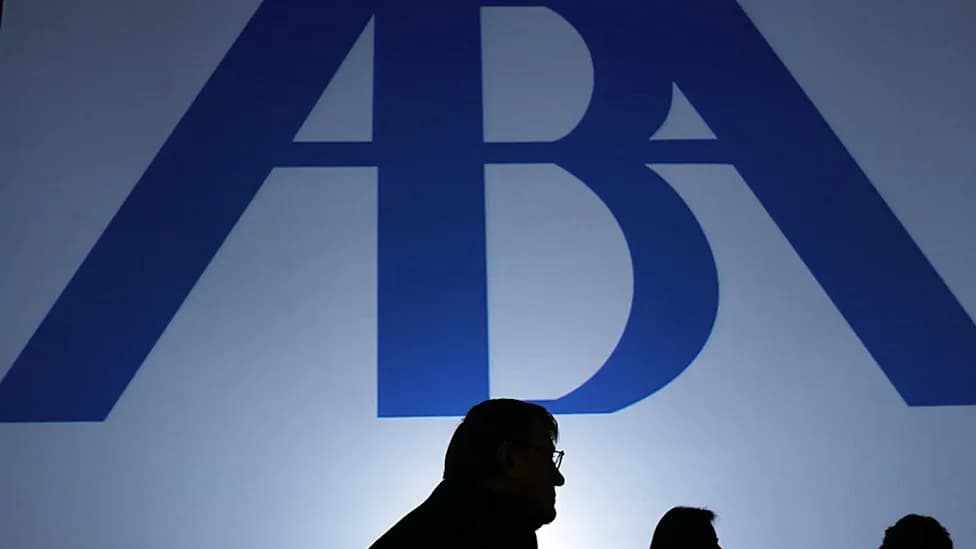
An American Bar Association (ABA) House of Delegates meeting August 9, 2010 in San Francisco, California.
The National Advisory Committee on Institutional Quality and Integrity (NACIQI) failed to reach a recommendation on whether to withdraw federal recognition from the American Bar Association's law school accreditor, the Council of the Section of Legal Education and Admissions to the Bar. After roughly seven hours of deliberation and public comment, committee members voted 11-1 to report that they could not agree on a path forward.
Split Votes After Intense Review
The day before the final report, NACIQI deadlocked twice in 8-8 votes on whether to recommend revocation of recognition or to place the accreditor under an additional year of heightened oversight. Department staff had issued a report about a month earlier urging the Department of Education to end recognition, saying the council failed to meet more than two dozen federal criteria.
Key Concerns Cited by Department Staff
The staff analysis highlighted two primary areas of concern:
- Independence: Questions about whether the accreditor is sufficiently independent from the ABA's larger professional governance, including the role of the ABA's House of Delegates and the Section of Legal Education and Admissions to the Bar in the council's processes.
- Timeliness And Standards Changes: Criticism that the council did not revise or suspend certain standards quickly enough following legal and regulatory shifts—most notably the 2023 U.S. Supreme Court decision limiting race-conscious admissions and subsequent federal guidance changes.
Debate Over The Diversity Standard
Much of the scrutiny focused on the council's former diversity standard, which required law schools to demonstrate a "commitment to diversity and inclusion" and maintain a student body diverse by gender, race and ethnicity. The council formally suspended that standard in February 2025 after new federal guidance from the Trump administration and other anti-DEI actions.
Daniel Thies, the council's immediate past chair, said the council initially sought to apply the standard in a way consistent with August 2023 guidance from the prior administration, and later suspended it when subsequent guidance changed. He also warned of political influence on the review process, saying the executive order directing the review "reinforces our concerns" that an outcome could be predetermined.
What's Next?
Under Secretary Nicholas Kent now has 90 days to make a final determination. If he moves to withdraw recognition, the council can appeal to Education Secretary Linda McMahon and may pursue legal remedies. Losing federal recognition would mean the ABA council could no longer serve as a gatekeeper for federal student aid—but the accreditor currently oversees nearly 200 law programs, and a council representative said only five of those schools rely solely on ABA accreditation to access federal student aid.
Potential Impact On Law Schools And Licensure
Even without federal recognition, the council could continue to accredit law schools for the purposes of meeting state licensure requirements; many state supreme courts require graduation from an ABA-accredited program for bar eligibility. Still, law placement officials warned that removing federal recognition could prompt state courts to adopt different accreditors or standards, potentially fragmenting licensure requirements and complicating interstate attorney mobility.
Frederick Thrasher, deputy director of the National Association for Law Placement, told NACIQI that federal recognition provides an important foundation for state courts' reliance on the council and that its loss could produce inconsistent bar eligibility rules across states.
Context
The review sits at the intersection of broader federal efforts to reshape accreditation and renewed scrutiny of diversity, equity and inclusion policies following executive actions from the Trump administration. The committee's inability to reach a recommendation hands the decision-making responsibility to the Department of Education's leadership and underscores the contentious, politicized nature of accreditation oversight today.
Help us improve.