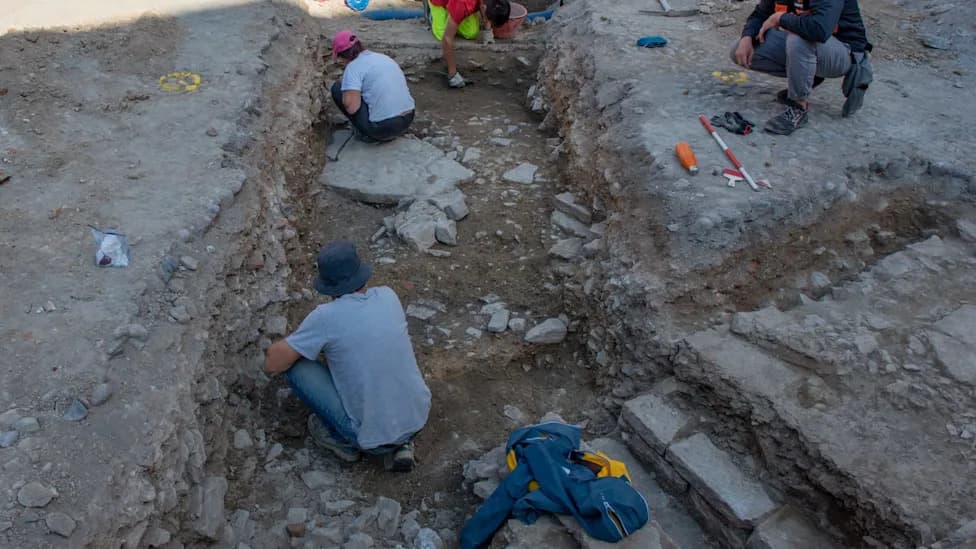
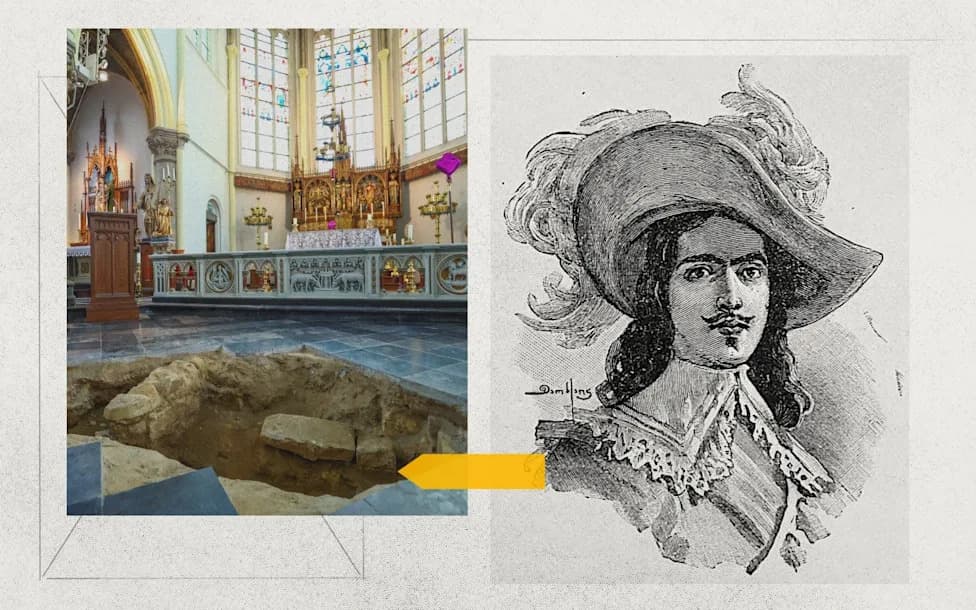
The Culture Ministry hailed the summer discovery beneath Hotel-Dieu on the Île de la Cité as a "major breakthrough." Carbon dating places charred remains on the roughly 65‑foot Gallo‑Roman wall between 10–200 B.C., a range that includes the 52 B.C. Battle of Lutetia. Experts believe the fragment may be part of Lutetia’s ramparts and could help resolve whether the city’s original settlement was on the Île de la Cité rather than in Nanterre. Further analyses are under way to confirm the wall's function and chronology.
Ancient Gallo‑Roman Wall Unearthed Beneath Paris Hotel Could Pinpoint City's Origins
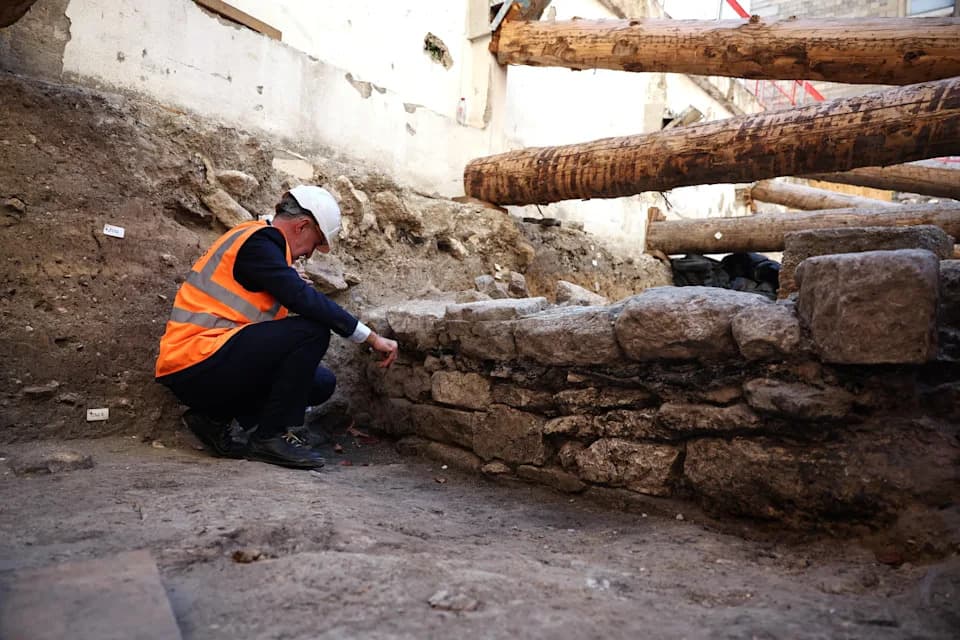
Paris Mayor Emmanuel Gregoire visits an archaeological site following the discovery of a Gallo-Roman era wall of Lutetia under the Hotel-Dieu hospital on the Ile de la Cite in central Paris, on September 22, 2026. / Credit: SIMON WOHLFAHRT /AFP via Getty Images
Archaeologists this summer uncovered a roughly 65-foot (about 20‑metre) stone-and-wood wall beneath the Hotel-Dieu on the Île de la Cité, a short walk from Notre-Dame Cathedral in central Paris. French authorities called the discovery a "major breakthrough" because it may help confirm where the ancient city of Lutetia — precursor to modern Paris — originally stood.
Discovery and Dating
The structure, thought to date to the Gallo‑Roman period, is believed to be a fragment of defensive ramparts built by the Parisii, the Gallic tribe that lived along the Seine in the Iron Age. Excavators also found traces of burning on the wall: charred material from the site has been carbon‑dated to roughly 10–200 B.C., a range that includes the 52 B.C. Battle of Lutetia described in Julius Caesar's Gallic Wars.
"We may be looking at one of the most important remains ever discovered for understanding Gallic Lutetia," Culture Minister Catherine Pégard said, while also stressing that scientific caution requires further verification of the wall's function and chronology.
Why It Matters
The Île de la Cité has long been regarded as the heart of ancient Lutetia, but some researchers have argued the original settlement was instead at Nanterre, west of central Paris. This newly uncovered wall — its construction, location and the presence of burnt layers — could tip the balance in that debate by providing direct physical evidence of a fortified settlement on the island.
Broader Archaeological Context
The find builds on a wave of recent archaeological discoveries in Paris. Nearby Notre-Dame has yielded coins, inscriptions and medieval burials in recent years, while last year researchers announced a large prehistoric stone wall off the coast near the Île de Sein. Together, these finds are deepening understanding of settlement and defensive practices in the region across millennia.
Next steps: Specialists will continue stratigraphic study, radiocarbon analyses and comparative research before drawing definitive conclusions about the wall's date, function and relationship to accounts such as Caesar's. For now, the discovery offers a rare and tantalizing window into the origins of Paris.
Help us improve.