The R/V Shirase's continuous measurements during Japan's JARE64 expedition show that ERA5, MERRA-2 and CAM-ATRAS overstate low-cloud occurrence over the Southern Ocean but still underestimate downward longwave radiation to the surface. The discrepancy stems from models simulating too-ice-rich clouds and having a persistent cold bias, both of which reduce emitted longwave heat. Increasing aerosol emissions in the model produced more low clouds but barely changed surface radiation, indicating aerosols alone do not explain the gap. The authors call for better cloud-phase representation, improved temperature observations, and wider assimilation of underused datasets like the PANSY radar to reduce biases.
Antarctic Cruise Reveals Models Overpredict Southern Ocean Low Clouds but Underestimate Surface Heat
Photo Credit: iStock
New shipboard observations from Japan's R/V Shirase during the JARE64 Antarctic expedition expose a persistent mismatch between models and reality over the Southern Ocean: major reanalysis products and a climate model show too many low clouds, yet they still underestimate the thermal energy returned to the surface.
How the Study Was Done
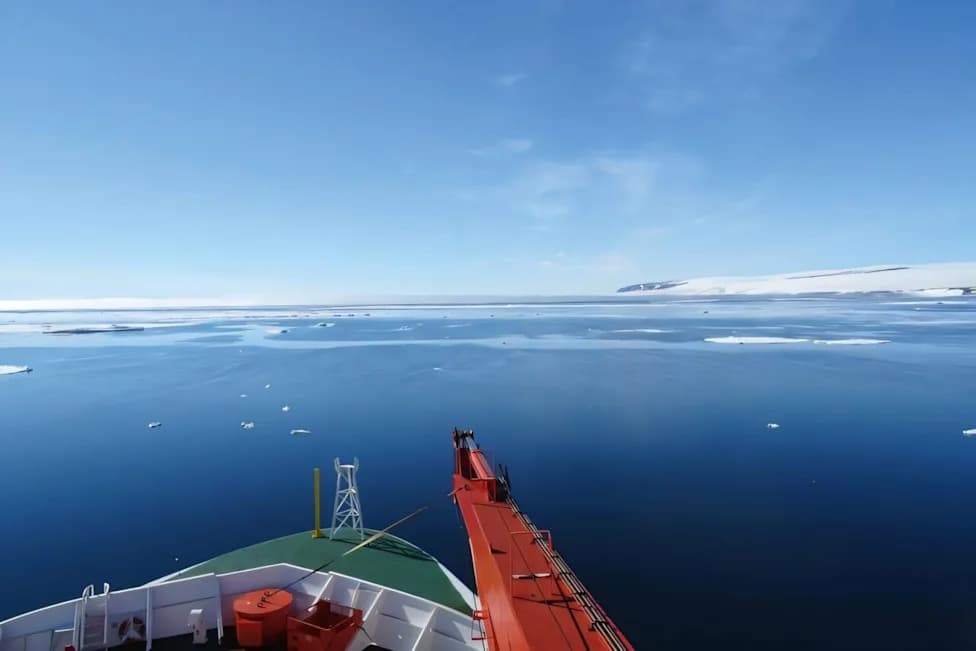
Researchers led by Assistant Professor Kazutoshi Sato, Professor Jun Inoue and Hitoshi Matsui collected continuous measurements aboard the icebreaker R/V Shirase during voyages in December 2022 and March 2023. Instruments recorded cloud properties, atmospheric temperature and humidity profiles, surface radiation fluxes, and aerosol concentrations. The team compared those in situ measurements with two global reanalysis datasets (ERA5 and MERRA-2) and the CAM-ATRAS climate model.
Key Findings
All three systems captured the general patterns of Southern Ocean cloud cover, but ERA5 and MERRA-2 reported low clouds more frequently than the ship observed. Paradoxically, despite that excess of low clouds in the reanalyses, all three systems underestimated downward longwave radiation — the heat emitted back toward the surface by clouds and the overlying atmosphere.
Why the Radiation Shortfall Occurred
The study identified two main contributors to the underestimated surface heat:
- Cloud Phase Bias: Models simulated clouds with a larger ice fraction than observed. Ice-rich clouds emit less longwave radiation toward the surface than liquid-dominated clouds.
- Cold Model Temperatures: Simulated atmospheres in the region were colder than ship measurements, further reducing modeled longwave emission.
Tests With Aerosols
The team also tested whether aerosol differences could explain the mismatch. Because ERA5 and MERRA-2 showed higher aerosol concentrations than the ship observed, they increased Southern Hemisphere aerosol emissions in CAM-ATRAS. That produced more low clouds in the model but only slightly changed surface radiation, indicating aerosols alone are unlikely to resolve the heat deficit.
Implications and Recommendations
Accurate cloud representation matters not only for reflected sunlight but also for thermal emission. Mistakes in cloud phase and atmospheric temperature over the Southern Ocean can skew the surface energy budget, with downstream effects on temperature, sea-ice extent and climate projections.
"Numerical models have been reported to exhibit poor skill in reproducing clouds," said Jun Inoue. "In particular, over the Southern Ocean and Antarctica, cloud-related biases increase errors in the surface energy budget through biases in the radiative budget."
The authors call for:
- Improved representation of cloud phase (liquid versus ice) in models.
- Better atmospheric temperature observations across Antarctica and the Southern Ocean to reduce cold biases.
- Greater use of existing, underutilized observations — for example, assimilating data from Japan's PANSY radar at Syowa Station into operational forecasting systems.
Broader Context
These results underscore why polar cloud processes are critical to global climate: clouds' altitude, thickness and phase determine whether they warm or cool the planet; small errors in this region can affect sea-ice dynamics and regional climate feedbacks; and even episodic warming events can impact sensitive Antarctic ecosystems.
Bottom line: Fixing the Southern Ocean heat shortfall in models will require both improved observations (especially temperature profiles) and refined physical treatments of cloud phase and aerosol–cloud interactions.
Help us improve.