Brooke Rollins, the Trump administration’s agriculture secretary, told a podcaster she is “really proud” nearly six million people were removed from SNAP, citing fraud, work requirements and immigration enforcement. A Center on Budget and Policy Priorities analysis found that more than 1.2 million children lost benefits between July 2025 and July 2026, accounting for 43% of the decline. Experts say the administration’s “Big Beautiful Bill,” which cut at least $1 trillion from social safety-net spending and expanded work requirements, is a key driver and warn the changes risk serious harm to children and low-income families.
Trump Agriculture Secretary Says She’s ‘Really Proud’ Six Million Removed From SNAP — Critics Say Children Suffer
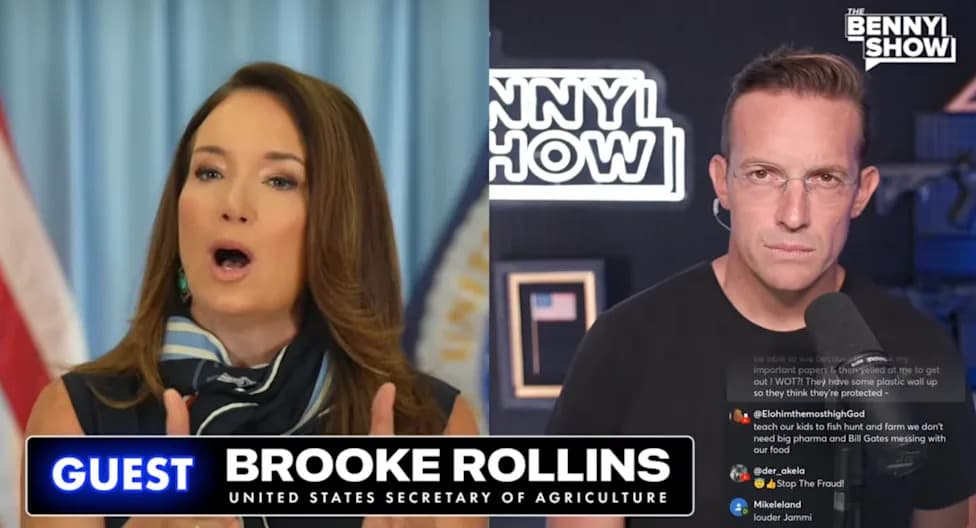
Trump Cabinet Official Boasts About Six Million Americans Losing SNAP Benefits: ‘I’m Really Proud’
Brooke Rollins, who serves as agriculture secretary under President Donald Trump, told influencer Benny Johnson on The Benny Show that she is “really proud” that nearly six million people have been removed from the Supplemental Nutrition Assistance Program (SNAP).
During the interview, Rollins credited a mix of fraud investigations, expanded work requirements and immigration enforcement for the drop in enrollment. She said,
“We've moved almost six million people off of the SNAP program. Some of it's welfare-to-work, some of it's getting rid of illegals, and some of it is the fraud, but six million people out of 40-plus million. That's a pretty good chunk, and I'm really proud of that work.”
What The Data Shows
Independent analysis from the Center on Budget and Policy Priorities (CBPP) found that more than 1.2 million children lost SNAP benefits between July 2025 and July 2026, with children accounting for 43% of the overall decline in participants. Rollins’ six-million figure aligns with administration statements about enrollment reductions, but advocates say the data show a disproportionate impact on vulnerable households.
Policy Drivers And Debate
Experts speaking to PBS News point to the administration’s so-called “Big Beautiful Bill,” legislation that cut at least $1 trillion from federal social safety-net spending, as a major driver of the decline in SNAP participation. The law expanded work requirements for adults receiving SNAP and will soon require states to assume a larger share of program costs.
Proponents of the changes argue the steps reduce fraud and encourage employment. Critics counter that the policy shifts and funding cuts have resulted in many eligible people, including children, losing access to essential food assistance.
Voices From Experts
Priya Fielding-Singh, director of policy and programs at George Washington University’s Global Food Institute, told PBS: “SNAP is not, despite the name, supplemental. SNAP is essential. SNAP is critical. SNAP is how families feed their kids enough food.” She added that children losing benefits is “really devastating.”
Reporting on the exchange and the data has appeared in outlets including Mediaite, the Center on Budget and Policy Priorities, and PBS.
Bottom line: The administration frames the enrollment reductions as a win against fraud and dependency; researchers and advocates warn the cuts and new requirements risk harming children and low-income families who rely on SNAP.
Help us improve.