Project Monarch and partners are using tiny solar-powered BluMorpho Bluetooth tags (≈0.066 g) attached with eyelash glue to monarch thoraxes so ordinary phones can log sightings within roughly 328 feet (100 m). Early deployments in New Brunswick, Oregon and Idaho—15 tagged in Portland and about 200 planned—have already revealed rapid, long-distance flights. Public detections uploaded via a companion app will help researchers map stopover sites, guide habitat protection and inform pesticide and conservation policy.
Tiny Solar Bluetooth Tags Let Anyone Track Monarch Butterflies on Their Great Migration
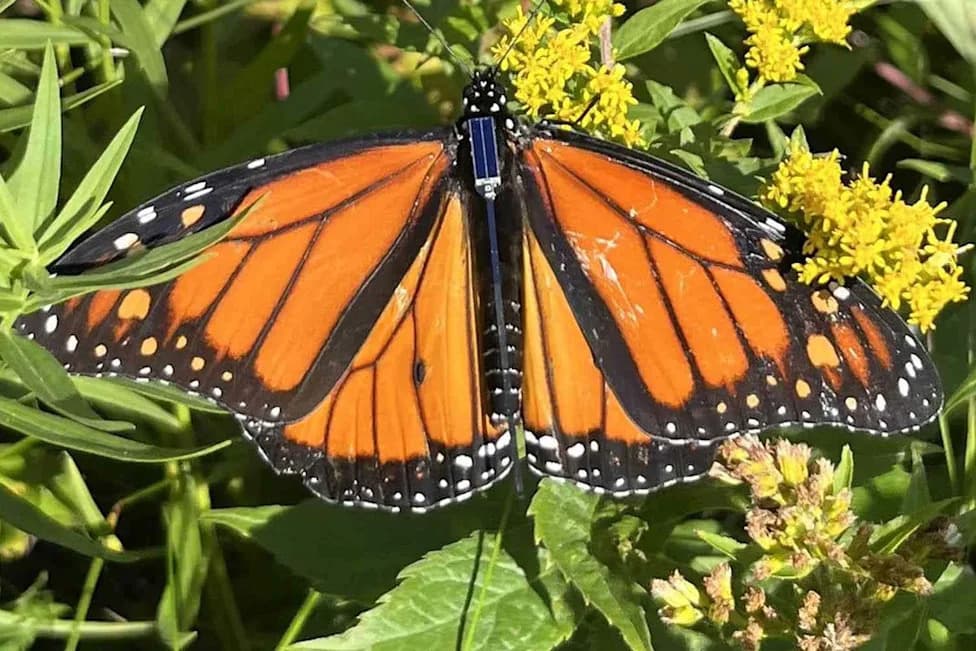
Monarch butterfly with tag.Credit: Nature NB/Facebook
New lightweight tracking technology is letting the public follow monarch butterflies as they begin their annual fall migration across North America. Project Monarch, a collaboration of researchers and conservation groups, has developed minute solar-powered Bluetooth transmitters—called BluMorpho receivers—that can be affixed to monarchs to make their journeys detectable by ordinary smartphones.
How the Tags Work
The BluMorpho tags weigh about 0.066 grams and are attached carefully to a butterfly's thorax using eyelash glue. They operate via passive Bluetooth interactions: any phone with Bluetooth enabled that comes within roughly 328 feet (about 100 meters) of a tagged monarch can register and upload a detection to Project Monarch's online platform and companion app.
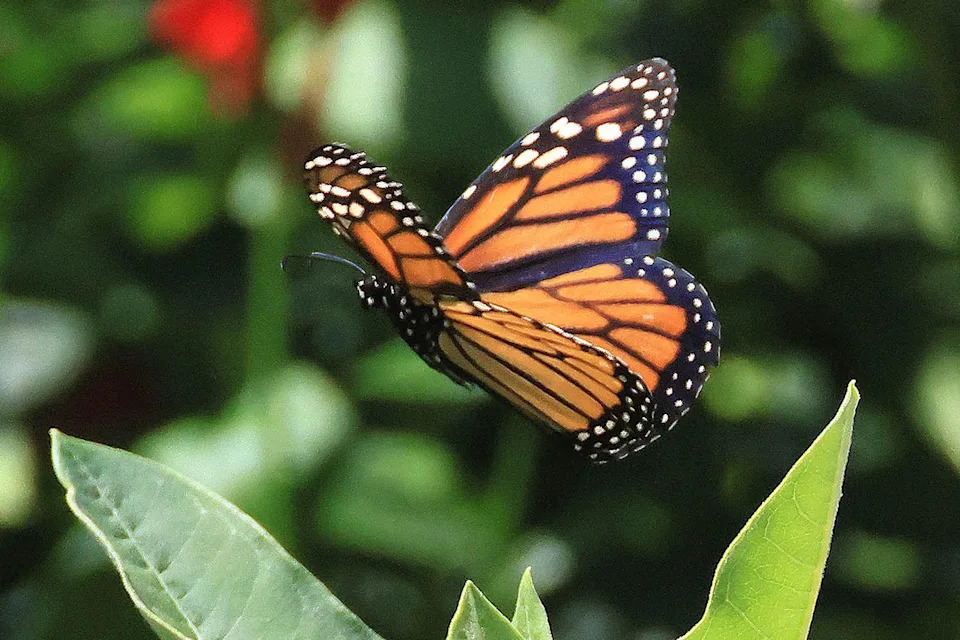
Stock photo of a monarch butterfly.Credit: Bruce Bennett/Getty
Field Deployments and Early Findings
Canadian nonprofit Nature NB announced in a Facebook post that it is the first group in New Brunswick to deploy the devices, working in partnership with the Point Lepreau Bird Observatory. In the U.S., researchers led by David James at the University of Washington tagged 15 monarchs in Portland, with about 200 tagged butterflies planned across Oregon and Idaho.
"The old method was simply to put a numbered wing tag on and hope somebody would find it or see it and report it between here and Mexico. This is now online; you can go on there and find out where that monarch is," said Jim Wilson, a naturalist with the Point Lepreau Bird Observatory.
Early tracking data are already revealing surprising movement capabilities. One tagged butterfly moved from Oregon to California in 10 days, while another covered more than 125 miles in four days. Researchers call these findings a "game changer" for understanding insect movement and migration behavior.

Monarch butterflies.Credit: Getty
Why This Matters
Fine-scale movement data from public detections can help scientists and policymakers identify crucial stopover sites, prioritize habitat protection, and assess landscape factors such as pesticide exposure and nectar availability along migration routes. Emma Pelton, senior conservation biologist at the Xerces Society, emphasized that these data reveal how sites are connected across the landscape and can inform smarter conservation policy and planning.
"Personal stories about individual butterflies and the challenges they face—storms, long flights—help build public connection and support for conservation," Pelton said.
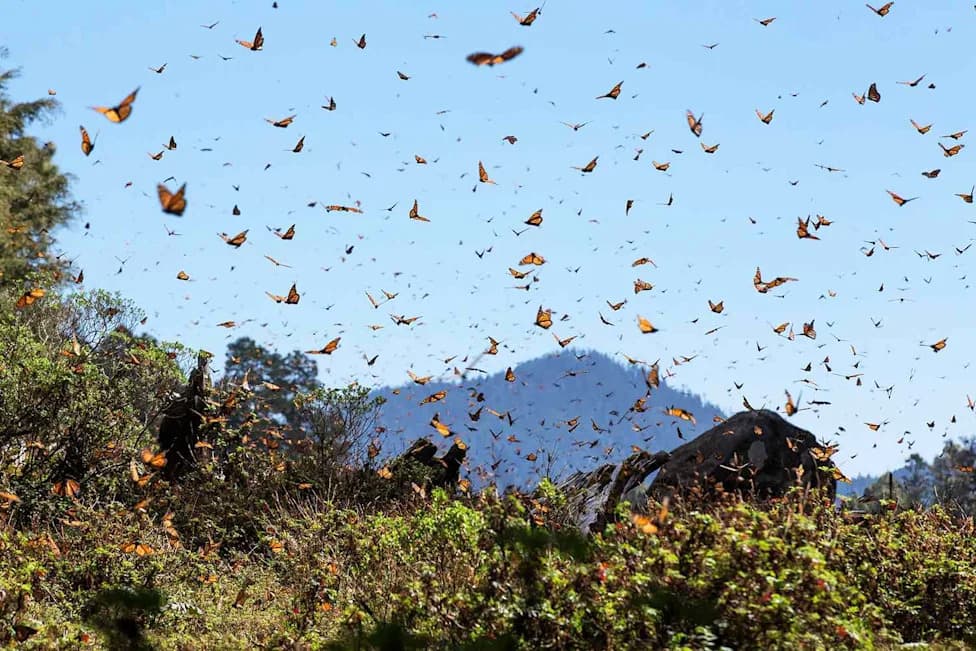
The Bluetooth-tagging initiative arrives as millions of monarchs embark on their autumn migration. Monarchs can begin moving south from southern Canada and the northern United States as early as August, with the main waves passing through in September and October. Some eastern monarchs travel as far as 3,000 miles to overwintering sites in central Mexico, while western monarchs follow a separate route to overwinter in northern Baja California.
By combining ultra-light BluMorpho tags, public participation through an app, and ongoing deployments across the continent, Project Monarch and its partners aim to map these journeys more precisely and mobilize broader conservation action.
Help us improve.