This Land Use Policy study models the trade-offs of converting U.S. cropland used for alcohol into food production. Eliminating alcohol production for drinking could avert about 178,000 deaths per year, while replanting that land—especially with potatoes—could theoretically feed roughly 641.65 million people annually. The authors estimate that converting only 2.1% of U.S. alcohol-related cropland could remove global hunger-related mortality, and they call for subsidy reform and policy incentives to make such land-use shifts feasible.
If We Stopped Making Alcohol: Repurposing 2.1% Of U.S. Alcohol Cropland Could End Global Hunger

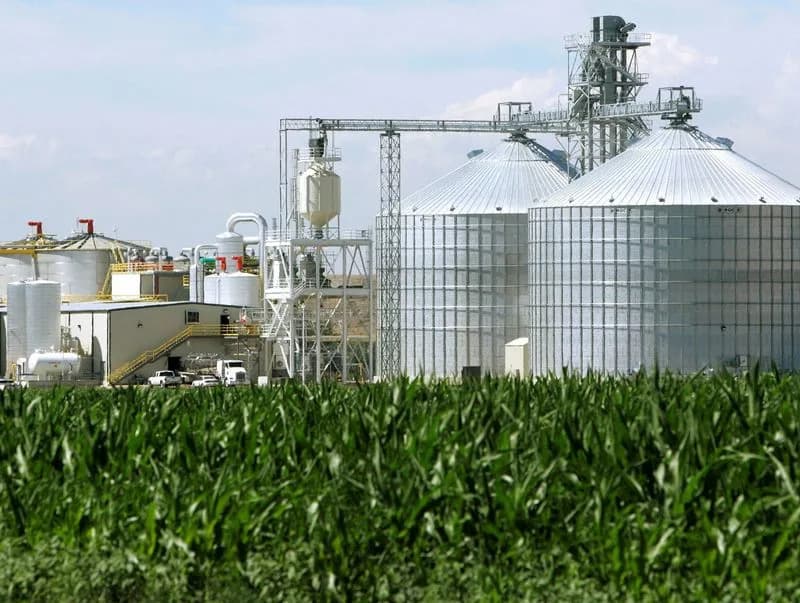
What would happen if we stopped producing alcohol?getty
A provocative new study in the journal Land Use Policy asks a stark question: should U.S. cropland be used to grow crops that are converted into alcohol (for beverages and fuel) or prioritized for direct human food production? The paper quantifies the trade-offs by estimating both the lives that could be saved from reducing alcohol-related harms and the enormous food-producing potential if alcohol-dedicated cropland were replanted with food crops.
How the Study Works
The researchers identify U.S. cropland associated with alcohol production (including hops, grapes, barley and corn used for drinking and ethanol) and calculate caloric yield and human feeding capacity. They compare four outcomes: (1) lives saved by eliminating alcohol-related harms from consumption, and two conversion scenarios for the same land—(2a) consuming the alcohol crops directly as food rather than converting them into alcohol, and (2b) replanting the land with higher-yield food crops. The analysis produces estimates of both avoided mortality and the number of people that could be fed annually under each scenario.
Key Findings
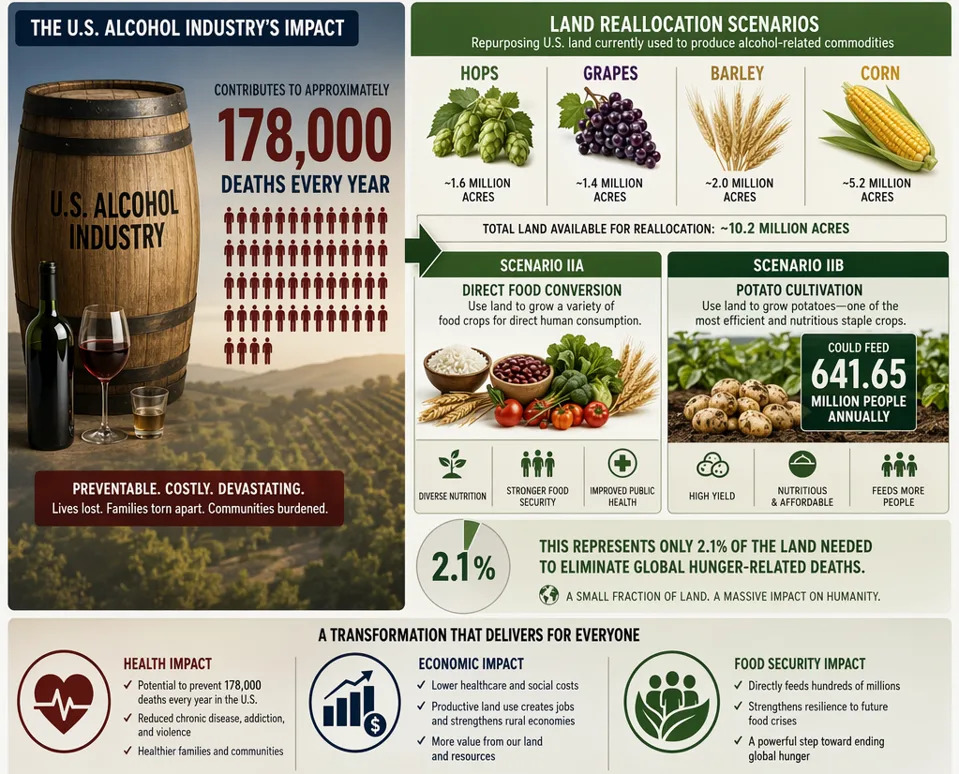
Lives Saved From Alcohol Reduction: Eliminating alcohol production for drinking in the United States could avert roughly 178,000 deaths per year attributed to alcohol-related harms.
Food Production Potential: Under the most productive replanting scenario (2b), switching U.S. alcohol cropland to potatoes produces the highest estimated human feeding capacity: about 641.65 million people per year. That is more than a 50% increase compared with simply consuming the same alcohol crops directly.
From Alcohol to Food Infographic
Scale And Context: The study estimates that converting only 2.1% of American alcohol-related cropland would, in theory, be sufficient to eliminate global hunger-related mortality. In short, relatively modest changes in land use priorities could have outsized effects on global food security.
Policy Implications And Economic Considerations
The authors argue the findings warrant re-examining public subsidies and incentives that favor alcohol-related production—most notably corn ethanol. They summarize several critiques of current ethanol support: subsidized corn ethanol costs consumers an estimated $164 billion per decade, equates to around $1,464 per ton of CO₂ avoided, and—when land-use change is included—may emit about 24% more carbon than the gasoline it replaces. Corn ethanol also occupies roughly 30 million acres (an area comparable to New York State), whereas equivalent energy might be produced by solar using only ~3.2% of that land footprint (not counting other benefits of solar).
These figures highlight both environmental and food-security trade-offs and suggest that subsidy reform, targeted incentives and careful land-use policy could shift production toward higher social returns.
Limits, Caveats And Next Steps
The paper models potential outcomes based on caloric yields and epidemiological estimates, but real-world transitions would face significant hurdles: economic displacement in farming and alcohol industries, cultural and market demand for alcoholic beverages, logistical constraints in shifting crop types, and land-quality differences that affect yields. The authors call for more detailed economic analysis to design feasible incentive structures, pilot programs, and consideration of nutrition (not just calories) when selecting replacement crops.
While the study offers a powerful framing of opportunity costs, it does not prescribe an immediate policy package. Instead, it highlights how even small shifts in land use and subsidy policy could produce large public-health and food-security dividends.
Originally reported on Forbes.com; study published in Land Use Policy.
Help us improve.