Researchers at the University of Queensland found that growth bands in land-snail shells preserve chemical and isotopic signals that record extreme weather events. Radiocarbon spikes from 1960s nuclear tests allowed precise dating of bands and showed the snail lived about 4.5 years. Measured shell growth varied from 23.7 mm to 144.3 mm, with rapid-growth pulses tied to Cyclones Marcia (2015) and Debbie (2017). Because shells survive in sediments, they offer a promising archive to reconstruct prehistoric cyclones and extreme rainfall.
Snail Shells Keep a Clear Record of Past Cyclones and Extreme Rainfall
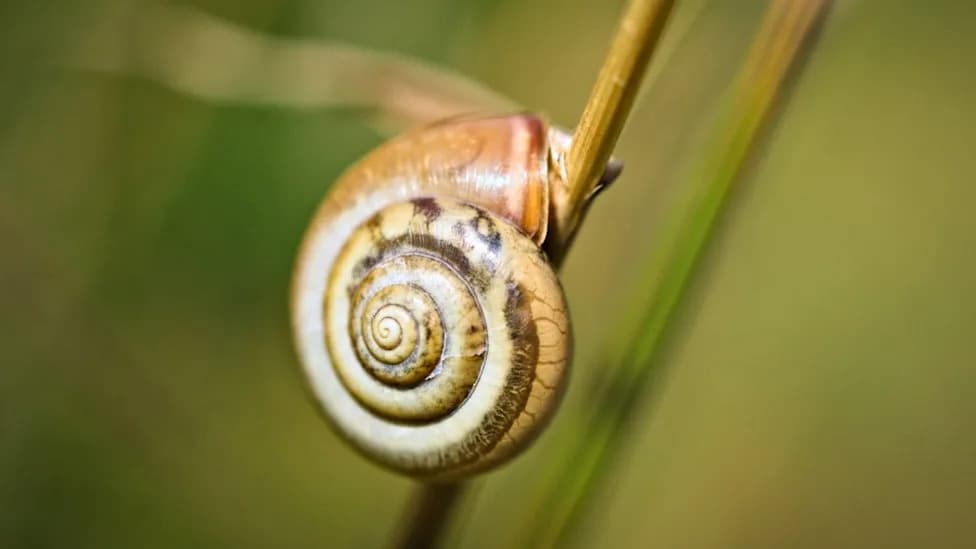
(flatter_und_plant/500px/Getty Images)
Researchers at the University of Queensland have shown that the growth bands in land-snail shells can preserve detailed records of extreme weather, including tropical cyclones. Because shells are mineralized, they can lock in chemical and isotopic signals that survive long after the animal dies—creating a durable archive of past environmental conditions.
YouTube Thumbnail
How Snail Shells Record Weather
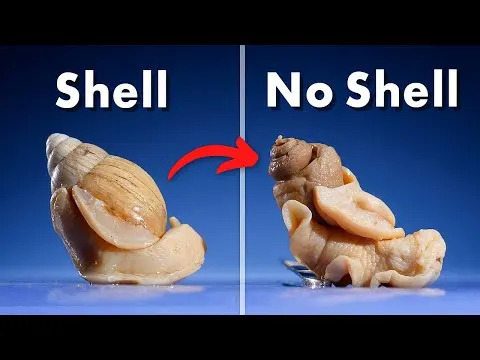
A newly hatched snail already carries a tiny, rigid shell. The shell protects the animal but also constrains its growth: rather than widening the coiled tube, the snail grows outward from the shell aperture. As the snail extends, its mantle secretes calcium carbonate, which hardens into successive mineral bands at the shell opening. Each band effectively records the chemical and environmental conditions present when it formed—much like tree rings.
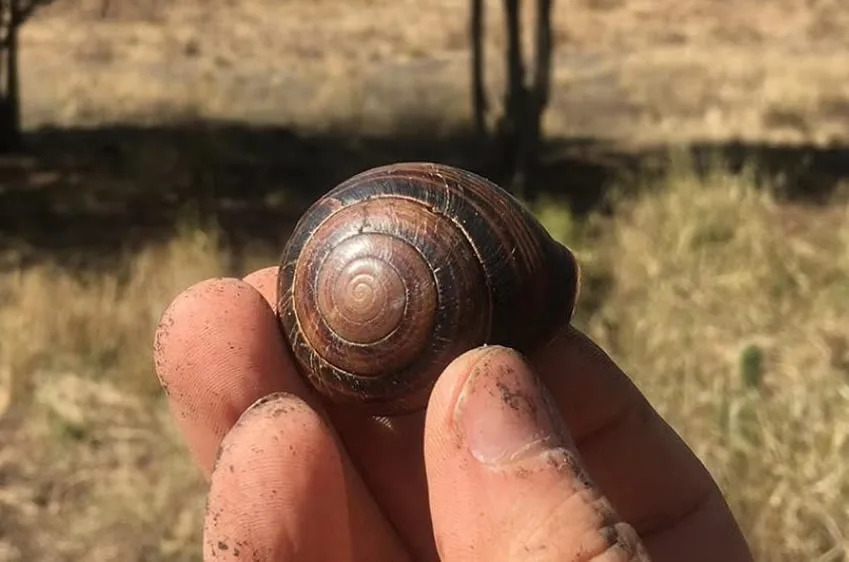
The shell of a Biggenden Banded Snail at Coalstoun Lakes National Park. (The University of Queensland)
Radiocarbon and Isotopes Reveal Timing and Conditions
In the new study the team examined a shell of the Biggenden Banded Snail (Figuladra bayensis) collected from Coalstoun Lakes National Park. High-resolution radiocarbon analysis found elevated radiocarbon concentrations in particular growth bands that matched fallout from nuclear tests in Australia during the 1960s. That marker allowed the researchers to date the bands and estimate the snail’s life span at roughly 4.5 years.
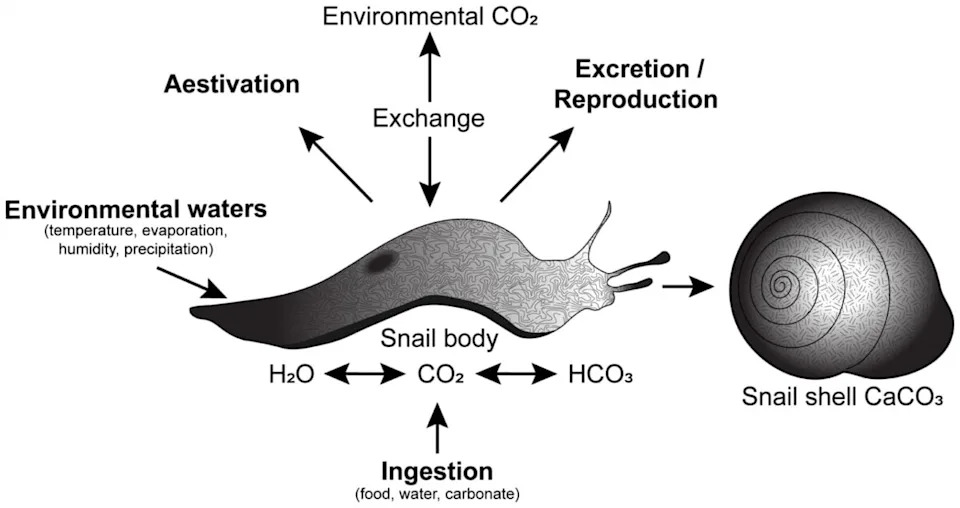
The environment a snail lives in influences the way its shell forms – leaving a record that lasts much longer than the snail itself. (Patton et al.,The Holocene, 2026)
"We used high-resolution radiocarbon dating to determine the age of the growth bands," said Nicholas Patton, the study leader. "The radiocarbon signal from 1960s nuclear tests enabled precise dating of the bands."
Carbon and oxygen isotopes incorporated into the shell’s mineral matrix provided additional information about the snail’s environment and diet during each growth phase.

Subscribe to ScienceAlert's free fact-checked newsletter
Growth Pulses Linked to Extreme Rainfall
Patton and colleagues found that shell growth was episodic rather than continuous: some years recorded modest increments (about 23.7 mm) while other years showed much larger increases (up to 144.3 mm). The researchers concluded that the shell responded to extreme rainfall events rather than to steady seasonal wetness. By matching the timing of rapid-growth bands to meteorological records, they linked those episodes to Severe Tropical Cyclone Marcia (2015) and Tropical Cyclone Debbie (2017), both of which produced heavy rainfall at Coalstoun Lakes.
Why This Matters
Because mineral shells persist in sedimentary deposits, they can be recovered from older strata and combined to extend records of extreme weather back in time—potentially into prehistoric periods where instrumental weather records do not exist. The study demonstrates that humble land-snail shells can serve as fine-scale climate proxies for reconstructing the occurrence and timing of intense rainfall and cyclone impacts.
Publication: Patton et al., The Holocene (2026). Lead institution: University of Queensland. Specimen: Figuladra bayensis from Coalstoun Lakes National Park.
Help us improve.