Young Iranians are delaying marriage as war and surging inflation make weddings and housing unaffordable. Couples are downsizing ceremonies, selling gold and postponing plans as prices for appliances, rent and services spike. State marriage loans rose in nominal terms but have lost real purchasing power. Experts say currency stability, wage growth and lower economic uncertainty—not only peace—are needed to restore young people's ability to form households.
Postponed Futures: How War and Inflation Are Forcing Young Iranians to Delay Marriage
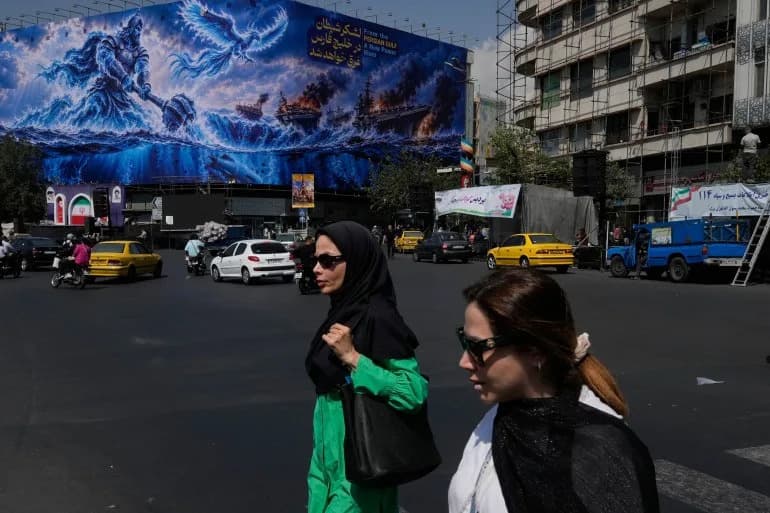
Pedestrians walk past a billboard depicting a legendary Iranian hero and flying figure hitting US aircraft carriers alongside a message in English and Farsi: 'From the Persian Gulf a new power rises' [Vahid Salemi/AP]
Across Iran, rising prices and renewed insecurity are pushing many young couples to delay or downsize weddings and to rethink when — and whether — they can start a household. What began as individual decisions has become a broader social trend shaped by war-related fears, chronic inflation, and an unstable currency.
A Personal Story: Plans Put On Hold
Subhan Dashti and his partner, Nadia Sabzi, together since 2016, had planned to marry on Nowruz 1405 (March 20–21). They began buying items for their home, but last year’s price surges, political unrest and an armed confrontation involving the United States and Israel on February 28 forced Dashti’s family to flee Tehran and suspended wedding preparations.
When the couple returned after a lull in fighting, Dashti discovered that a television he had budgeted at 70 million tomans (roughly $302) now cost about 100 million tomans (about $432). Although his monthly income of about 100 million tomans is well above the average worker’s pay, the new prices convinced him to postpone the wedding.
“We decided to postpone the wedding for at least a few more months,” Dashti, 35, said.
What Has Changed: Prices, Rent and Gold
Many wedding-related services have become more expensive, and couples are cutting back rather than canceling entirely. Bridal packages that once cost 50–70 million tomans now range up to 150 million for VIP services in Tehran, while in lower-income districts packages remain around 50 million tomans. Makeup artists report far fewer bookings: where they once saw two or three brides per day during peak season, they now see only two or three a week.
Housing is an even greater strain. One Tehran couple, Pejman and Sanaz, saw their required apartment deposit rise from about 300 million tomans to 400 million tomans while monthly rent jumped from 25 million to 46 million tomans — a 71 percent increase in total cost for the same unit. For Pejman, whose salary is 56 million tomans, the new rent would consume roughly 82 percent of his pay.
Gold — often sold to finance weddings — has also surged. Eighteen-carat gold rose from roughly 6.48 million tomans per gram in June 2025 to over 23 million tomans per gram by mid-September 2026, making it far costlier to replace what couples sell to start married life.
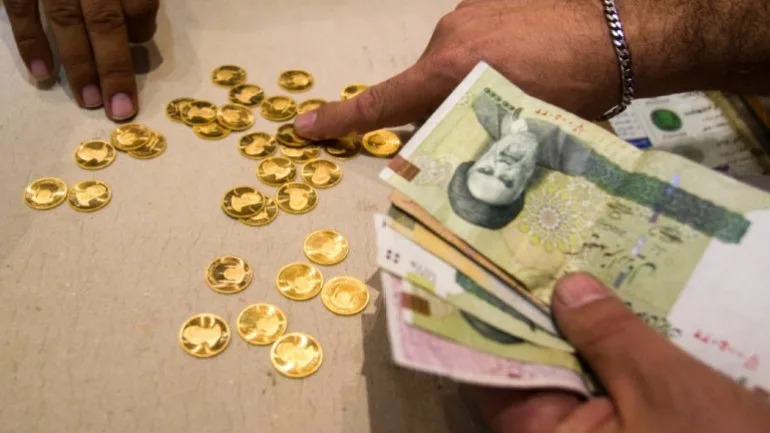
A customer buys Iranian gold coins at a currency exchange office in Tehran's business district [File: Raheb Homavandi/Reuters]
Weddings and Loans: Nominal Rises But Less Buying Power
A mid-range Tehran wedding for around 100 guests — hall, photography, music, bridal services and modest gold — now approaches 1.1 billion tomans (about $4,752), compared with roughly 480 million tomans ($2,074) before the 2025 war. To cope, the state has raised marriage loan ceilings: a standard loan rose from 180 million tomans per person in 2023 to 300 million tomans per person more recently.
But the loans’ real purchasing power has fallen. Bank employee Abbas Derafshi notes that even though nominal loan sizes increased, the loans buy far less than they did, and loan applicants still face administrative hurdles in practice. Derafshi and others say rising costs for housing and household goods have effectively put wedding plans on hold.
Experts: Unpredictability, Not Just Prices, Is the Problem
Economist Amir Hossein Mohaddes frames the dilemma as twofold: the upfront cost of establishing a household and the ongoing cost of sustaining it. Couples can shrink ceremonies, he said, but they cannot remove the need for housing. Mohaddes warns that unpredictability — rapidly rising prices and currency volatility — is as damaging as high prices themselves, because it prevents short-term planning and leaves households exposed even if hostilities end.
Political scientist Jalil Dara adds that Iran’s difficulties predate the current conflict. Years of sanctions, chronic inflation, currency depreciation, weak investment and domestic policy shortcomings had already made marriage and housing more difficult for young people; the war has acted as an accelerating shock rather than the sole cause.
Social Consequences and Coping Strategies
Couples are responding in several ways: postponing weddings, downsizing ceremonies, selling gold, cutting nonessential bridal services, and—in some cases—planning to study or work abroad with hopes of returning later. These decisions reflect both immediate financial calculations and deeper concerns about safety after recent attacks on civilian gatherings.
What Would Help?
Experts say reversing the erosion of purchasing power will require more than a ceasefire. They point to currency stability, sustained real wage growth, productive employment, stronger investment and reduced economic uncertainty as prerequisites for restoring young people's ability to form households.
Published in collaboration with Egab — a platform amplifying journalists from the Global South.
Help us improve.