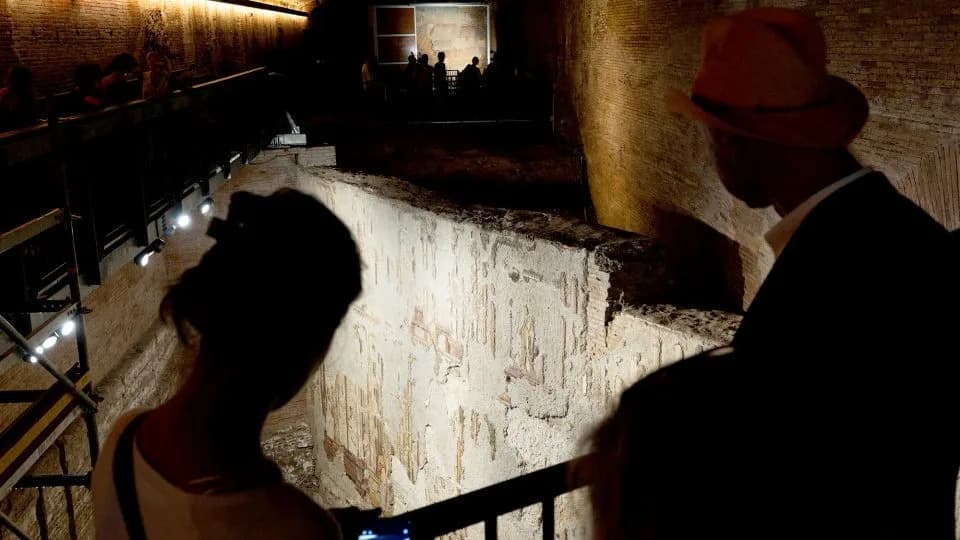
Researchers reconstructed about 190,000 miles of Roman roads spanning roughly 3.5 million square miles at the empire’s height (2nd–4th centuries AD). The new model shows the network didn’t centrally converge on Rome; instead, Constantinople (modern Istanbul) emerges as a major hub. The paper explains how simple survey tools like the groma, local topography and durable materials shaped routes that often remained in use through medieval times and influenced modern highways.
Mapped: 190,000 Miles Of Roman Roads — Constantinople, Not Rome, Emerges As The Hub
Dima Moroz/Shutterstock
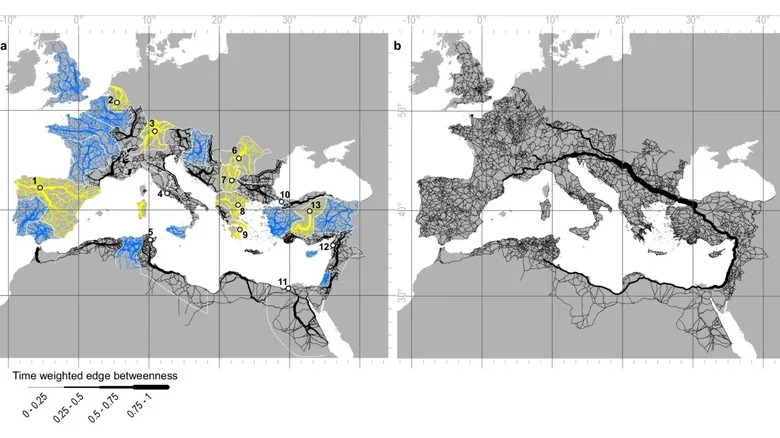
Researchers have reconstructed roughly 190,000 miles of road that once stitched together an empire spanning about 3.5 million square miles, revealing new insights into how ancient transport shaped history. The study, published in Nature Communications, models what the Roman road network likely looked like at its height in the 2nd–4th centuries AD and challenges the familiar image of all roads converging on Rome.
A Surprising Geographic Focus
When the team mapped movement across the entire Italian peninsula and beyond, they discovered that the most central route runs along the opposite Adriatic coastline — effectively bypassing Rome. Tom Brughmans, a classical archaeologist at Aarhus University and a lead on the project, told Reuters the result was "shocking": the reconstructed network points to Constantinople (modern Istanbul) as a primary hub. Sitting on the Bosporus Strait between Europe and Asia, Constantinople occupied a naturally central position for both overland and short-sea movement.
Nature Communications
How The Roads Were Built And Routed
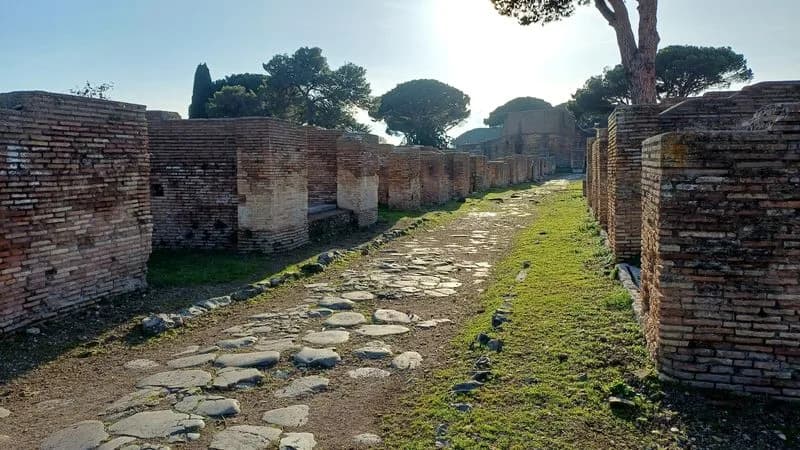
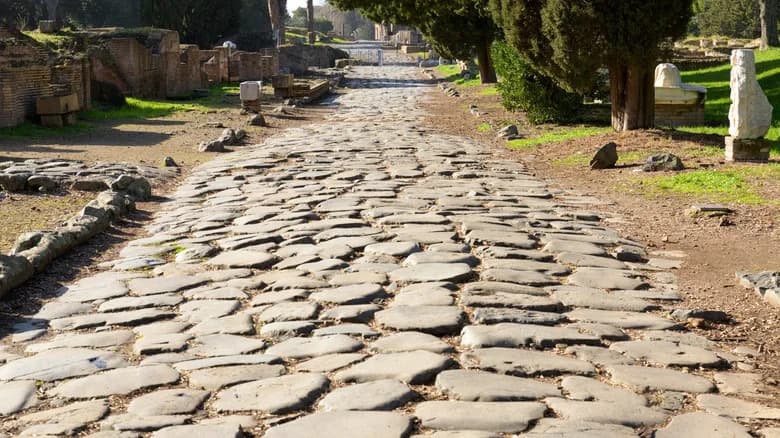
Roman surveyors used straightforward—but effective—tools such as the groma, which produced straight alignments and right angles but offered little help for curves. Where topography required it, routes link straight segments with switchbacks and zig-zags to climb slopes or skirt valleys; large-scale blasting through mountains was rarely feasible. Construction used layered roadbeds of lime and cement, gravel, crushed stone and paving stones, producing durable paths that often outlasted the regimes that built them.
Legacy And Function
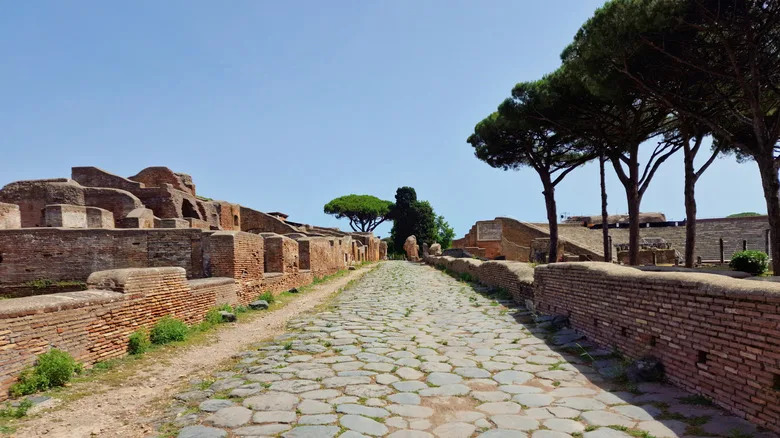
Many Roman roads remained in use well beyond the fall of the Western Roman Empire and through the Byzantine era; some alignments influenced 19th- and 20th-century rail and highway development. The study also found that Romans sometimes incorporated pre-existing local routes (for example in Britain and Egypt) and then connected them into a broader imperial grid. Road features we still recognize today — stone milestones engraved in Latin, distance markers, and waystations or small forts in harsh regions — are recorded across the network.
Jerry Uomala /Getty Images
"This infrastructure meant that a vast region became more tightly integrated: it provided a continent-sized platform for people, animals, pathogens, goods and ideas to spread," Brughmans said. Roman legions, merchants, farmers and missionaries all relied on the same routes to move people, produce and beliefs across continents.
Remaining Questions
Despite the new map, researchers still debate how centrally Roman road planning was organized. Current evidence suggests routing decisions were often local or provincial and later linked into larger networks rather than imposed from a single imperial master plan. Further archaeological and archival research could clarify administrative practices behind this massive coordination—achieved without modern surveying electronics or GPS, relying instead on instruments, landmarks, the stars and the stone milestones they placed along the way.
Study reference: Nature Communications. Reporting: Reuters.
Help us improve.