The Justice and Development Party (PJD) collapsed from 125 seats to 13 in the 2021 election and is now attempting a comeback centered on Abdelilah Benkirane's visibility and a 467-measure 2026 programme. The platform focuses on transparency, public services, jobs and youth participation, but the party must turn personal appeal into organisational recovery. A major challenge remains operating within Morocco's constitutional system, where the monarchy retains strategic authority.
Morocco's PJD Rebuilds: Can Benkirane Turn Personal Appeal Into Party Recovery?
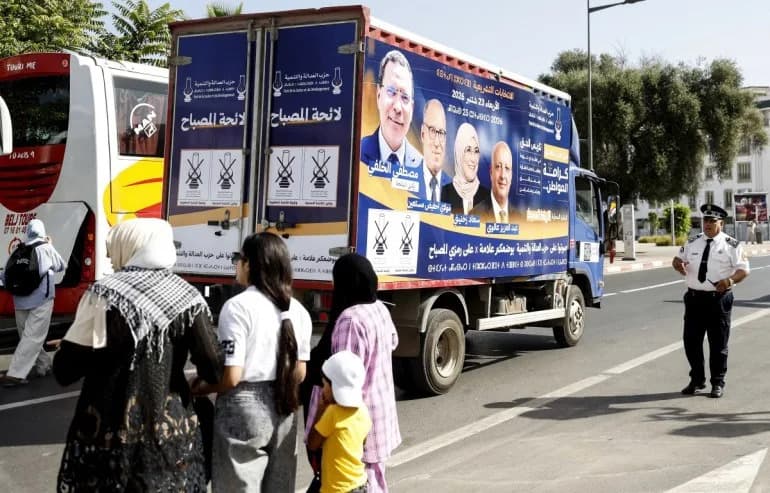
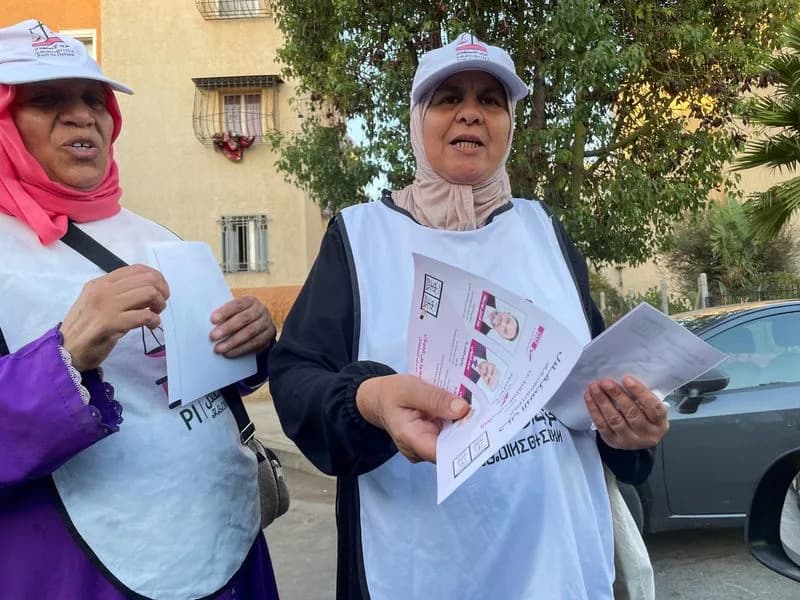
The PJD is campaigning on public services, jobs, purchasing power and political reform as it seeks to rebuild after its 2021 electoral collapse [Abdel Majid Bziouat/AFP]
Morocco's Justice and Development Party (PJD) rose to prominence after the 2011 constitutional reforms but suffered a dramatic collapse in the 2021 elections. Today the party is attempting to recover — drawing on Abdelilah Benkirane's visibility and a detailed 2026 programme — while confronting structural limits on government power and the need to reconnect with younger voters.
From Reform Beneficiary To Electoral Collapse
After the 2011 protests and constitutional changes, the PJD won 107 of 395 seats in November 2011 and led the government under Abdelilah Benkirane. The party increased its representation to 125 seats in 2016, but coalition deadlock led King Mohammed VI to replace Benkirane with Saadeddine Othmani in March 2017. Four years later, in September 2021, the PJD plunged from 125 seats to just 13 — a loss of 112 seats — while the National Rally of Independents (RNI) emerged as the largest party with 102 seats.
Can Benkirane Lead A Comeback?
Supporters describe Benkirane as a political "brand": a long public career, strong media presence and direct style that generate attention and loyal followings. But visibility alone is not the same as party renewal. The central challenge for the PJD is converting Benkirane's profile into durable organisational strength, voter trust and concrete electoral gains.
The PJD's 2026 Programme
The party's 2026 platform lists 467 measures across five priority areas: identity and family; political and institutional reform; public services and social protection; the economy and employment; and foreign policy. It emphasizes transparency in public procurement, rules against conflicts of interest and illicit enrichment, and improvements to housing, healthcare, education, and the security of food, water and energy supplies. The programme foregrounds practical concerns such as prices, jobs and corruption.
Internal Reform And Reconnecting With Youth
The PJD says one lesson from 2021 was the need to reorganise internally and to scrutinise its record in government. According to Saad al-Sabahi of the party's regional secretariat, the programme was developed through research, consultations and online submissions, and the party has moved to renew its structures and communication.
"These commitments form the basis of the agreement between the party and voters. We will work to fulfil and implement them with integrity and competence," Saad al-Sabahi told Al Jazeera.
Party youth figures stress the need for sustained pathways into politics rather than episodic outreach near elections. As Yassine Elachiri put it, earning the trust of a new generation is "a cumulative process built on sustained engagement, guidance, training and creating opportunities for young people to participate actively in public affairs."
Structural Constraints: "Ghosts and Crocodiles" And Normalisation With Israel
Benkirane has repeatedly warned of powerful, hidden interests — his metaphorical "ghosts and crocodiles" — that constrained his government's actions. A clear example of the limits of executive scope concerns Morocco's relationship with Israel. The PJD opposed Morocco's 2020 restoration of diplomatic ties with Israel but remained in government while the agreement proceeded; Othmani defended the move as a state decision. The arrangement was linked to US recognition of Moroccan sovereignty over Western Sahara.
Relations advanced further when Morocco and Israel agreed on September 16 to elevate their diplomatic missions to embassy level, expand air links and deepen economic cooperation. The PJD reaffirmed its longstanding opposition to normalisation, but the episode underscores the question that animates the party's comeback: if unseen actors and institutional limits constrained past governments, what — if anything — has changed?
What Comes Next?
Rebuilding for the PJD means more than regaining lost seats. It requires demonstrating lessons learned from a decade in government, converting personal leadership into organisational resilience, delivering on practical policy commitments, and navigating a constitutional system in which the monarchy retains decisive authority over strategic choices. Whether the PJD can reconcile those aims will determine whether its revival is substantive or merely symbolic.
Help us improve.