Venezuela's telecom regulator says access to a number of previously blocked news websites has been restored as US-backed transition talks resumed in Caracas. Digital rights monitors verified at least 17 sites are reachable, though around 188 domains — including 79 news outlets — remain blocked. Officials say the measure aims to reduce polarization; media leaders and opposition delegates call it a partial step and demand full, permanent restoration. Separately, former mayor Javier Oropeza was briefly detained and later released after returning from exile.
Venezuela Restores Access to Several Previously Blocked News Sites Ahead of Transition Talks
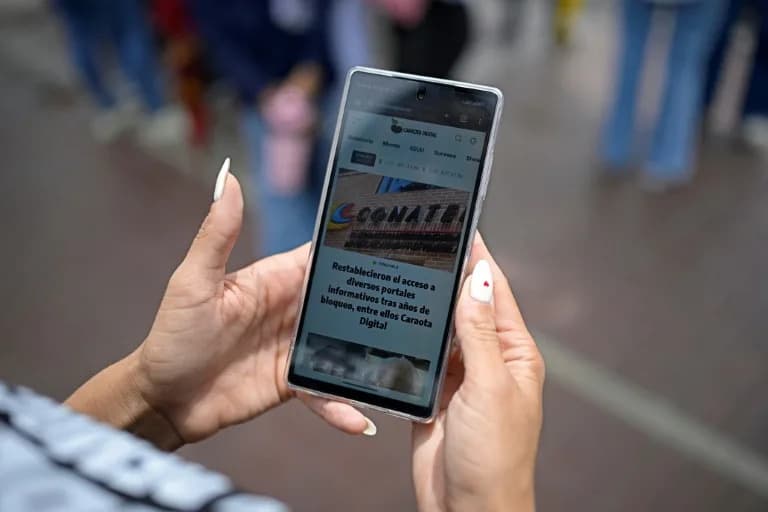
Almost 200 websites remain inaccessible after Venezuela's telecom regulator announced that some were being unblocked (Federico PARRA)
Venezuela's telecom regulator announced on Thursday that access has been restored to a number of news websites that had been blocked for years, a move timed as US-backed political transition talks were set to resume in Caracas.
Partial Unblocking And Remaining Restrictions
Telecom regulator CONATEL said it had implemented the "formal restoration of access to various national and international digital platforms and media outlets." Digital rights group VE Sin Filtro confirmed that at least 17 previously inaccessible news sites were reachable via several internet providers, but warned that at least 188 domains—including 79 news outlets—remain blocked.
Journalists and press freedom groups have long campaigned against censorship in Venezuela, where many users relied on virtual private networks (VPNs) to reach blocked content. Editors and media directors have described the lifting of some blocks as a welcome — but incomplete — step toward restoring open public debate.
Reactions From Officials And Media
Deputy Communications Minister Gustavo Villapol framed the measure as an attempt to reduce political polarization. In remarks broadcast on state television he said the government must avoid vilifying people without evidence and should not permit communication channels to be used for external interests that undermine the nation.
"We can never again vilify people without having proof in hand; we cannot use communication for interests that are external to the vital meaning of our nation," Villapol said.
Luis Ernesto Blanco, editorial director of Runrunes, a site that had been blocked, described the move as an implicit admission that public debate had been stifled. "They had censored them basically because they wanted to; there was no administrative ruling, no court order requiring it," he said.
Dinorah Figuera, head of the opposition delegation to the transition talks, called the partial restoration "a first step" and urged the full and permanent return of all outlets. Several media outlets reported intermittent access following CONATEL's announcement, suggesting the rollback may be uneven across providers or regions.
Impact On Outlets
Some outlets say their audiences and revenues were significantly damaged while their sites were blocked. Victor Amaya of TalCual, which was blocked in July 2024, said the site lost roughly 60% of its traffic and substantial advertising income. He remained skeptical that all blocked sites would be fully restored, comparing high-profile promises to partial or delayed prisoner-release announcements in the past.
Arrest Of Returning Opposition Figure
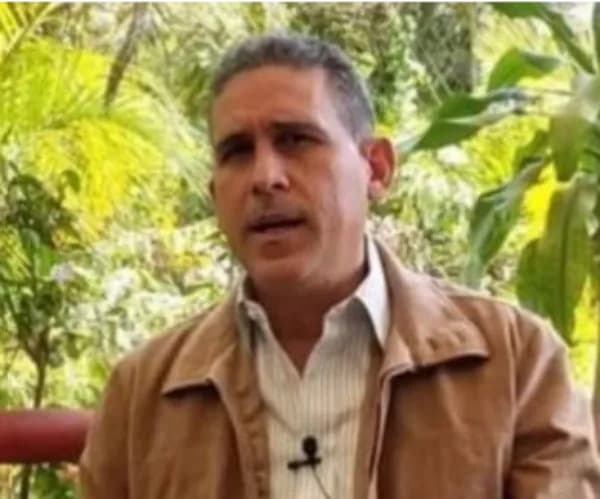
Separately, former Torres mayor Javier Oropeza — who had recently returned to Venezuela after two years in exile — was briefly detained on Thursday by agents from the Sebin intelligence service in the city of Barquisimeto after giving an interview to a local newspaper. He was released after several hours in custody. Opposition delegates said they protested the detention and were assured by authorities that he would be promptly freed.
Observers say the partial easing of restrictions comes amid a broader, cautious opening in some aspects of the political environment as transition talks proceed. Still, media groups, opposition leaders and rights monitors emphasize that lasting change will require the permanent removal of blocks, consistent access for all users, and legal guarantees for freedom of expression.
Reporting compiled from regulator announcements, statements by digital rights groups and media outlets.
Help us improve.