Key Takeaway: Malaysia's king has granted former prime minister Najib Razak a conditional pardon permitting him to serve the remainder of his graft sentence under house arrest until Aug. 23, 2028, provided he pays a 50 million ringgit fine and complies with undisclosed conditions. The hastily convened Pardons Board decision is an unprecedented use of house arrest as clemency and is expected to renew debate over royal powers and the rule of law. Najib still faces a separate conviction and appeal in the larger 1MDB case.
Malaysia’s King Grants Najib Rare Conditional Pardon — House Arrest Until Aug. 23, 2028
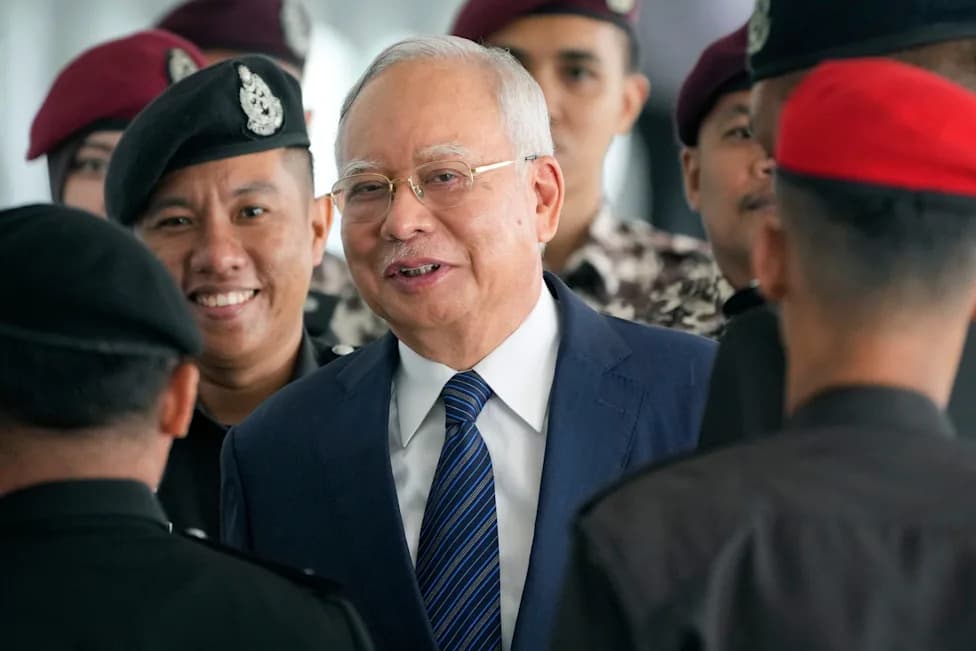
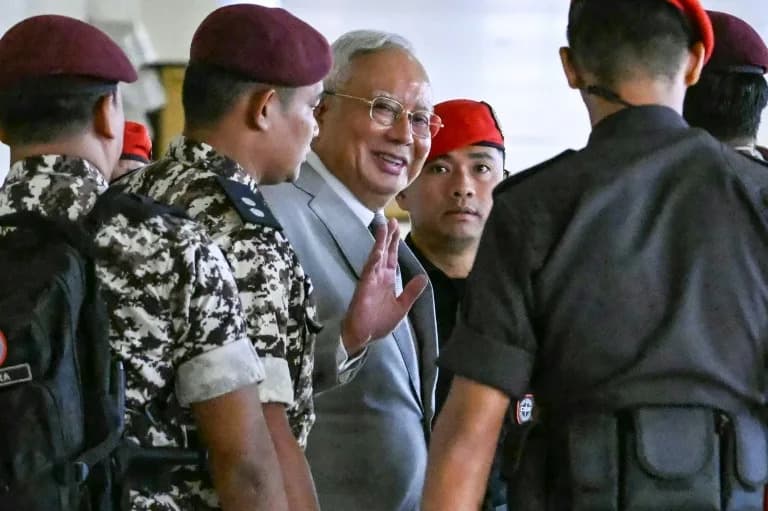
FILE - Former Malaysian Prime Minister Najib Razak arrives at the Kuala Lumpur High Court complex escorted by prison officers in Kuala Lumpur, Malaysia, on April 4, 2024. (AP Photo/Vincent Thian, File)
Malaysia's king, Sultan Ibrahim Iskandar, on Friday granted a rare conditional pardon allowing jailed former prime minister Najib Razak to serve the remainder of his graft sentence under house arrest until Aug. 23, 2028, provided he pays the 50 million ringgit fine imposed by the court and abides by conditions set by the Pardons Board.
The decision was announced after a Pardons Board meeting convened at short notice, one week after the board had postponed Najib's latest clemency application. Legal observers called the move an unprecedented use of house arrest as royal clemency in Malaysia and warned it could rekindle debate over the scope of royal prerogative, the rule of law and equal treatment before the courts.
A statement from the Legal Affairs Department under the prime minister's office said the pardon is conditional and will be forfeited if Najib fails to meet the undisclosed terms. No further details about the conditions were released.
Najib, 73, has been imprisoned since August 2022 after Malaysia's top court upheld his 1MDB-related conviction. He was initially sentenced in 2020 to 12 years in prison and fined 210 million ringgit for abuse of power, criminal breach of trust and money laundering linked to 42 million ringgit from SRC International, a former 1MDB unit. In January 2024 a Pardons Board chaired by the then-king reduced that sentence to six years and cut the fine to 50 million ringgit.
The issue of house arrest previously surfaced when Najib claimed an addendum from the former king ordered house detention; the High Court later ruled any such order was not enforceable because it had not been raised or discussed by the Pardons Board at the January 2024 meeting.
Complicating Najib's legal status further, in December 2025 he was convicted in his main 1MDB trial of abuse of power and money laundering over more than $700 million and sentenced to an additional 15 years in prison plus an 11.4 billion ringgit fine, a penalty scheduled to begin after his existing sentence. Najib is appealing that conviction.
The 1MDB scandal remains one of Malaysia's largest corruption cases: investigators allege at least $4.5 billion was misappropriated from the fund and laundered through international bank accounts, with some proceeds used to finance films and extravagant purchases including hotels, a luxury yacht, artwork and jewelry. Public outrage over the scandal helped drive the 2018 defeat of the long-ruling coalition.
Despite his convictions, Najib retains political influence within the United Malays National Organization (UMNO), which is part of Prime Minister Anwar Ibrahim's unity government. The pardon and the use of house arrest are likely to draw intense scrutiny from lawyers, lawmakers and civil society as Malaysia grapples with questions about judicial independence, clemency powers and transparency.
Help us improve.