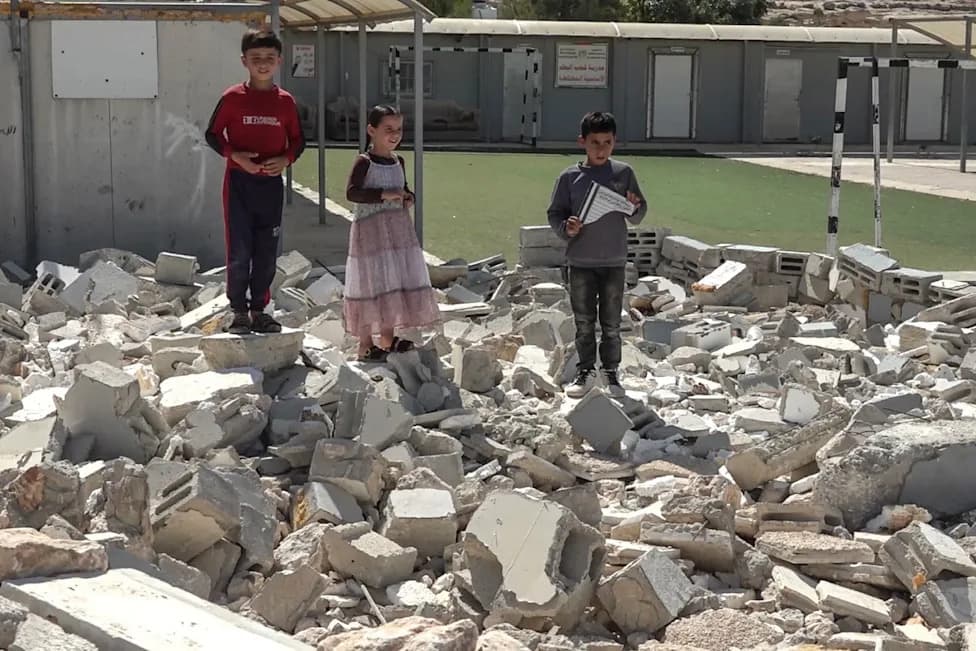
After the Israeli army demolished their houses, Mohammed Emar and his extended family converted two limestone caves in Masafer Yatta into a livable home with concrete floors, limewashed walls, solar panels and well water. The caves lie about 300 metres from the Avigayil settlement, where tensions and occasional attacks have been reported. Locals credit strong family and community ties for helping families rebuild after demolitions. Around 1,100 residents in the region continue to press for safer housing and the right to remain on their land.
Living Underground: Palestinian Family Converts Limestone Caves Into Home After Demolitions
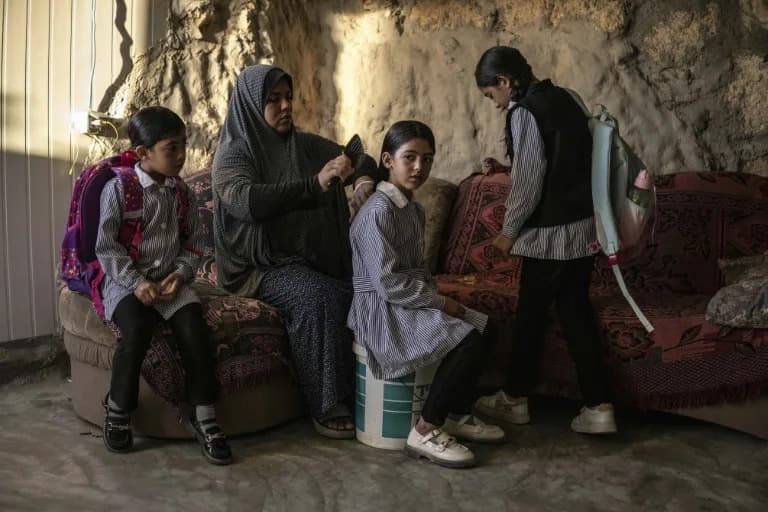
Arwa Emar brushes her daughter's hair as they prepare for school, inside a cave that the family has turned into their home (John WESSELS)
After Israeli forces demolished their two houses, 33-year-old Palestinian herder Mohammed Emar and his extended family have adapted two limestone caves in Masafer Yatta into a functioning home. The caverns, once rough and inhospitable, now have concrete floors, limewashed walls, solar-powered electricity and water from a nearby well — yet the family still longs for life above ground.
Emar, his two wives and their 11 children live about 300 metres from the Avigayil settlement, where flags, floodlights and fences mark the ridge above. Emar says some settlement residents periodically steal from the family and carry out attacks that make daily life difficult. Rubble from the demolished houses remains above the caves three years after the army removed the dwellings they had built in 2023.
Adapting the Caves
Emar smoothed the limestone floors with concrete and coated the brittle walls in white limewash. Over time the family installed solar panels for electricity and connected to well water, turning the grotto into a livable space where his daughters use a karaoke machine and help look after their younger siblings. The youngest son, Raz (short for Razeeq), was named after a Russian-Israeli man Emar met during a one-year jail term in Tel Aviv following an altercation with an Israeli settler.
Community Resilience
Locals say strong family and community ties are essential to remaining on the land after demolitions. "Whenever someone loses their homes to demolitions, neighbours and families come to help them build new shelters. The fact that we all live close to each other helps," Emar said. His wife, Fatima, recounted that the family initially lived in tents after their houses were destroyed and later moved into the cave because it is an ancient formation the army has allowed them to occupy.
Context
Masafer Yatta, a hilly, semi-arid area in the southern West Bank, has a population of roughly 1,100 Palestinians and is known for repeated home demolitions and tensions with nearby settlers. According to the Oslo Accords of the 1990s, much of the area falls under Israeli control. Israeli authorities say demolitions are carried out when construction is illegal in areas under their control; Palestinians say requests for building permits are almost always denied. Separately, Israeli forces sometimes demolish homes as punitive measures against families of Palestinians involved in attacks, though Emar's case was not described as such.
The situation in Masafer Yatta was the subject of the 2024 Oscar-winning documentary "No Other Land," which highlighted long-standing disputes over land, homes and livelihoods. Emar expresses a simple, urgent hope: "While the world moves forward, we here in Palestine, in Masafer Yatta, are moving backwards."
Help us improve.