Davidson County Schools identified fluency and automaticity—not decoding—as the main cause of declining third-grade reading proficiency. Rather than buy a costly commercial curriculum, the district partnered with teachers to design ELA knowledge-building units that integrate vocabulary, syntax, fluency, comprehension, and content knowledge. Iteratively developed and classroom-tested, the teacher-built units raised third-grade reading proficiency by 10 percentage points within a year and began expanding to other grades.
Teacher-Built Knowledge Units Reverse 3rd-Grade Reading Decline in Davidson County
Davidson County Schools faced a puzzling pattern: strong gains in K–1 reading accuracy but stagnation in grades 2–3, culminating in a drop in third-grade reading proficiency. A district review showed the core issue was not word recognition but fluency and automaticity—students could decode words but not read with the speed and ease needed for deep comprehension.
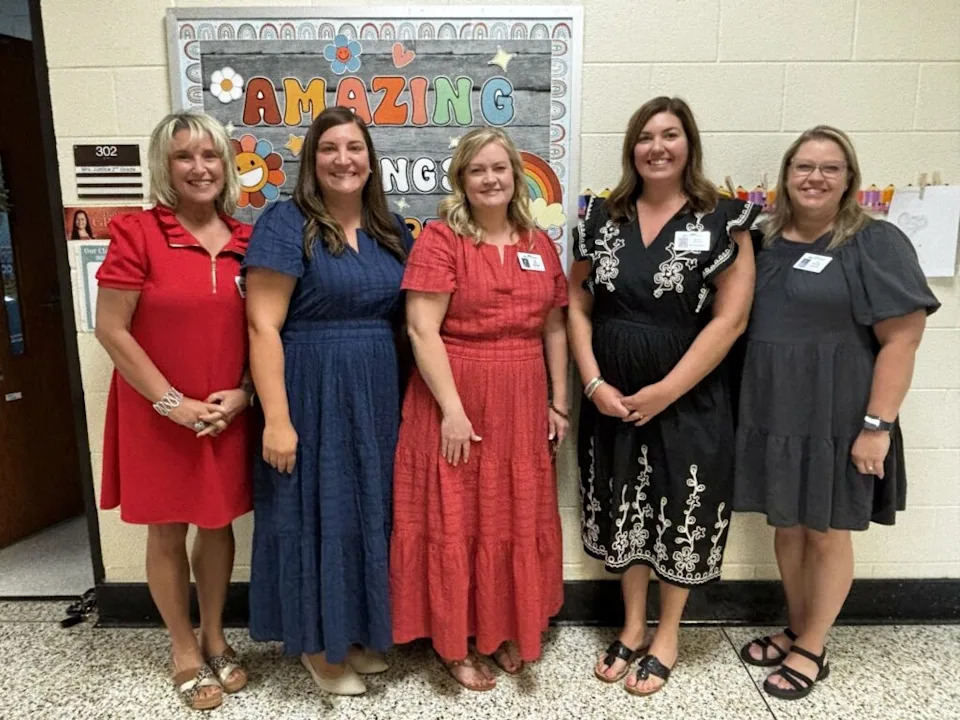
The Davidson/Davis-Townsend team. Left to right: April Willard, director of elementary education and federal programs; Amber Fitts, early literacy specialist; Jill Hunt, third grade teacher; Jennifer Beasley, principal; and Tina Hampton, instructional coach. Amy Rhyne/EdNC
From Research to the Classroom
Educators across the district had invested heavily in the science of reading. More than 200 teachers completed LETRS training; instructional coaches studied Nancy Hennessy’s The Reading Comprehension Blueprint; and teachers learned from Natalie Wexler about the role of background knowledge. Still, translating that knowledge into consistent daily practice proved difficult—teachers lacked a single, cohesive curriculum that integrated vocabulary, syntax, fluency, comprehension, and topic knowledge.
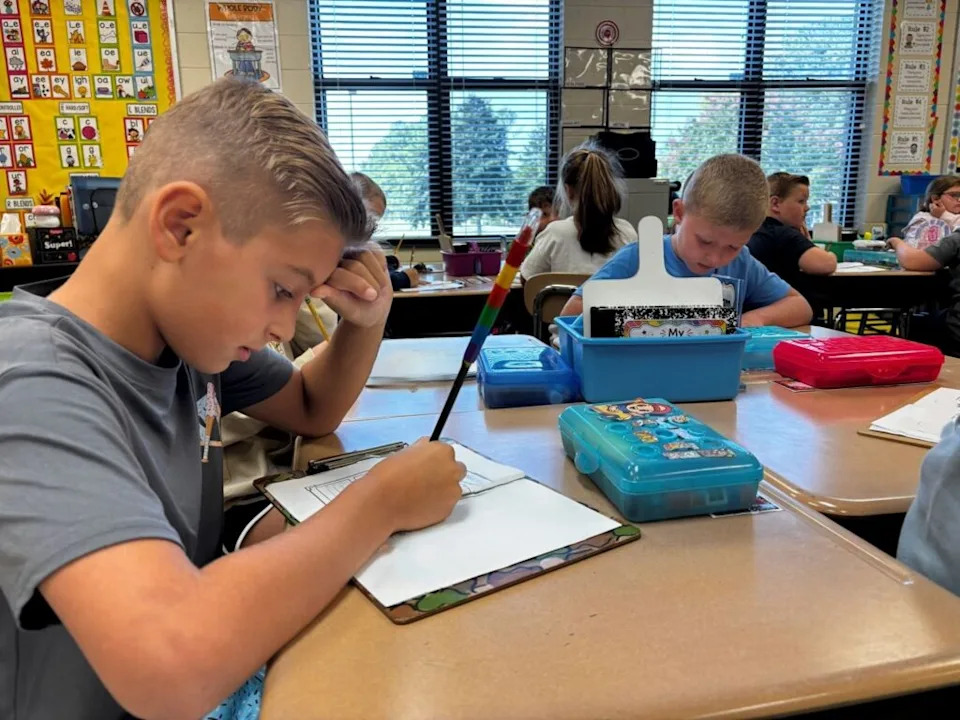
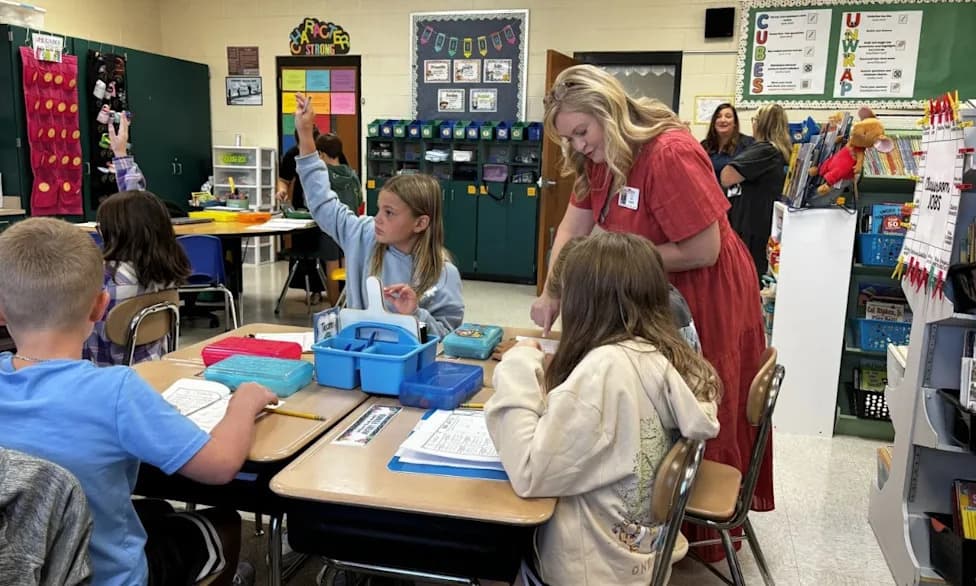
Clint Adams is focused on applying what he is learning in Jill Hunt's third grade classroom. Amy Rhyne/EdNC
A Teacher-Led Solution
Rather than wait for an expensive commercial adoption—estimated at nearly $1 million—or rely solely on more training, district leaders and classroom teachers co-designed ELA knowledge-building units. Starting with third grade, the district invited teachers to join a design team and built units "for teachers, by teachers." The units intentionally tied literacy instruction to science and social studies standards so students could build the background knowledge necessary for comprehension.
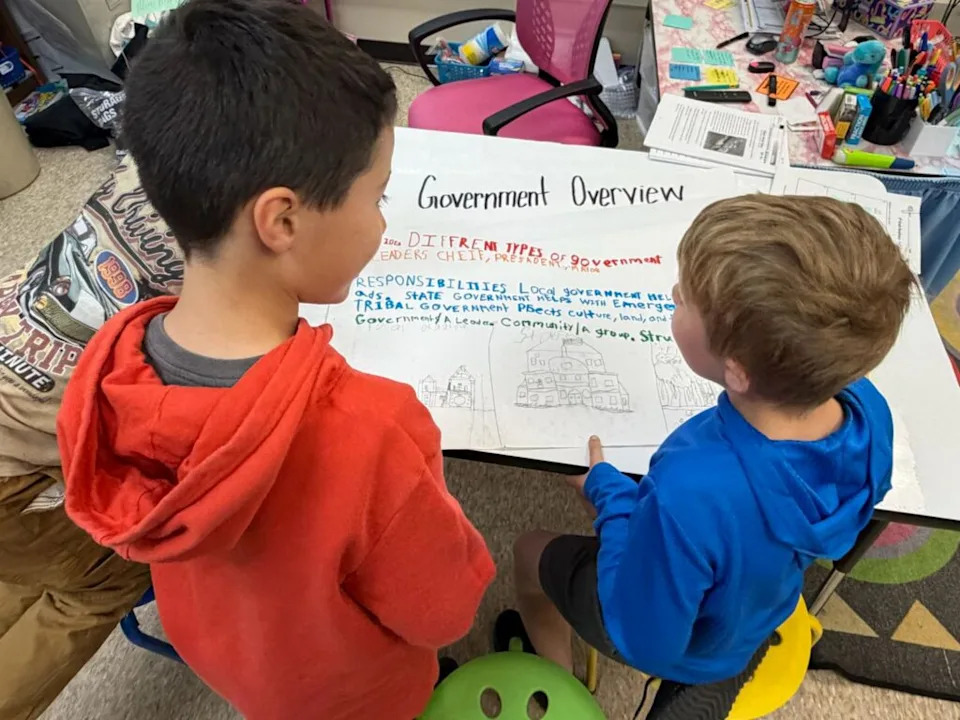
During their government knowledge-building unit, Ms. Buie's third grade students wrote about different types of government and the leaders associated with each. Courtesy of Davidson County Schools
How the Units Changed Instruction
The units shifted instruction in several important ways:
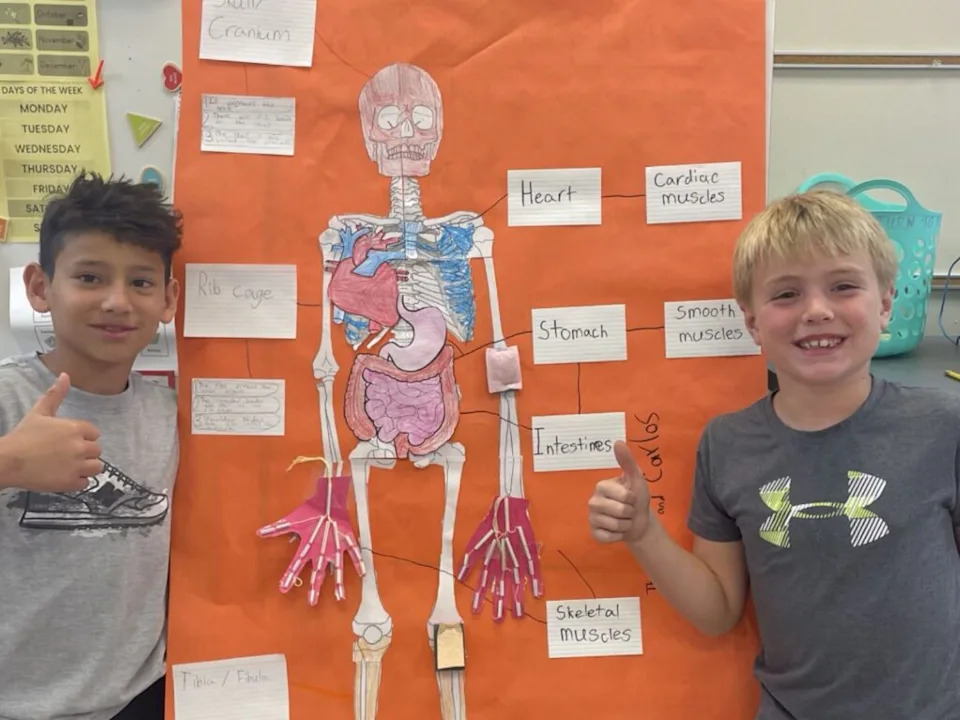
During their human body knowledge-building unit, Mrs. Wright's third grade students created and labeled a model showing how different parts of the body work. Courtesy of Davidson County Schools
Stay With Texts Longer: Students reread the same texts to deepen understanding rather than repeatedly moving to new passages.
Deliberate Complexity: Teachers selected texts using both quantitative and qualitative measures, sometimes choosing material a grade level or two above to stretch students—with scaffolds provided.
Integrated Practice: Vocabulary, sentence-level work (syntax), fluency routines, and comprehension strategies were taught in a coherent sequence instead of as isolated skills.
Repeated reading, partner work, and scaffolded access helped students engage with challenging texts: the text didn’t get easier, but students’ access to it did.
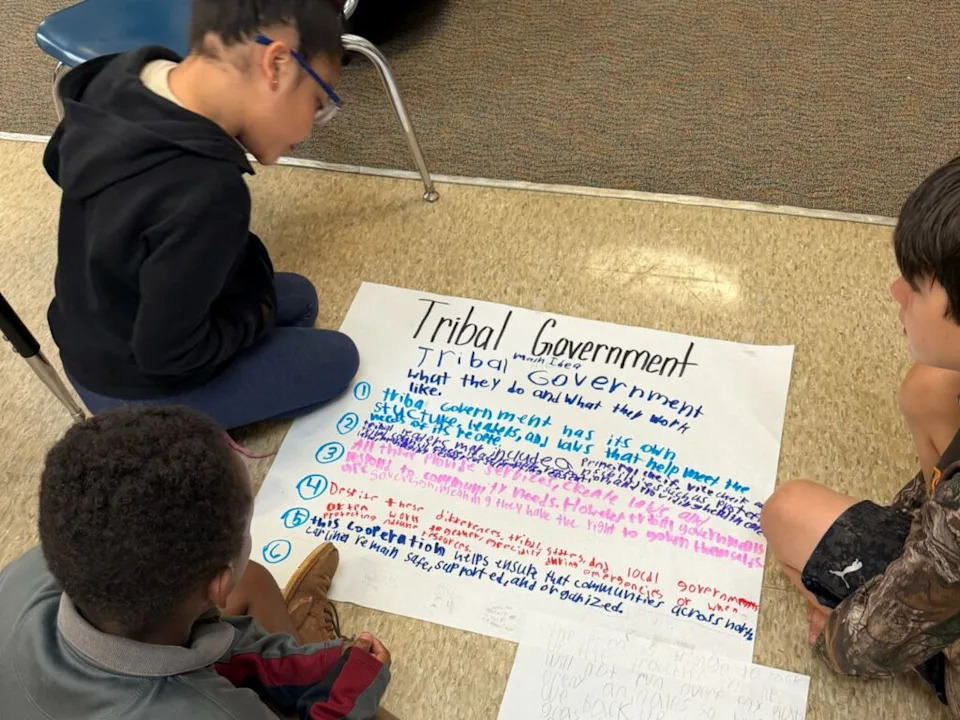
Third grade students shared their work with classmates, using what they had learned through reading and writing to explain their understanding of government. Courtesy of Davidson County Schools
Teacher Buy-In and Iteration
Teachers used the units while giving continuous feedback—"building the plane as they were flying it." Each quarter the design team revised lessons based on classroom experience. The structure also helped level instructional quality across classrooms: novice teachers used the detailed lessons as scaffolds while veteran teachers benefited from shared routines, texts, and expectations.

From Learning to Doing: Putting the Science of Reading Into Practice
Results and Expansion
Within one year, third-grade reading proficiency rose by 10 percentage points. The units, originally required for third grade, sparked broader demand: fourth- and fifth-grade teachers asked to adopt the approach. District leaders emphasize that the gains are meaningful but not a finish line; they plan to expand the ELA Knowledge Building Units, provide targeted supports, and continue iterative improvement.
Why This Matters: Davidson County’s experience shows that professional learning alone isn’t enough—teachers also need practical, classroom-ready tools and texts integrated into coherent units that make research-based practices usable every day.
This article was adapted from EdNC and is republished under a Creative Commons Attribution-NoDerivatives 4.0 International License.
Help us improve.