A new climate-model study finds targeted marine cloud brightening — spraying sea-salt into low eastern Pacific clouds to cool the ocean — can weaken El Niño in simulations, reducing swings by about 60% when started months before peak. Global stratospheric dimming had little effect on El Niño patterns in models. Researchers caution these results are model-only, untested at scale, and could trigger a powerful La Niña, reduce photosynthesis, and shift impacts unequally across regions; governance and ethical challenges remain unresolved.
Could We Turn Down El Niño? New Model Study Tests Marine Cloud Brightening — But The Risks Are Real
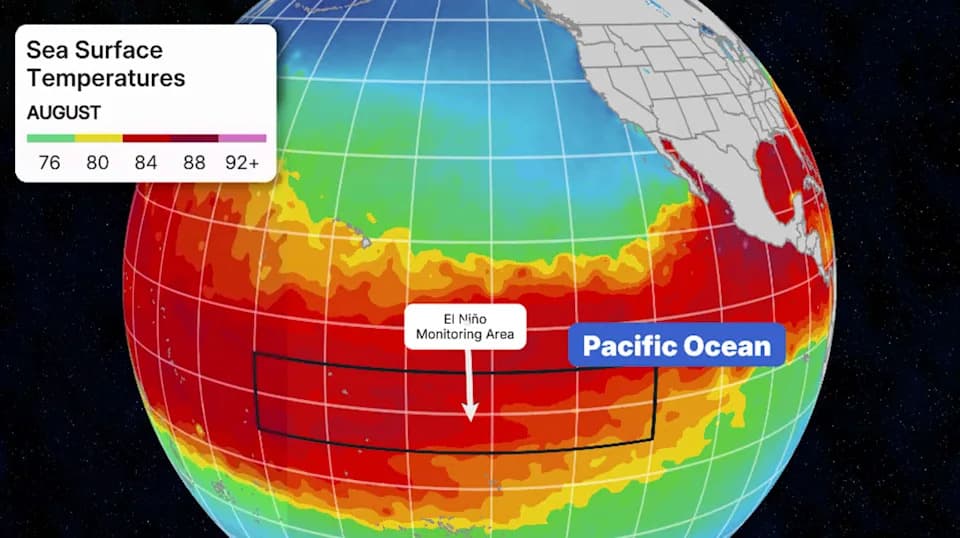
This image shows the sea surface temperatures in the equatorial Pacific. This is the area that drives El NIño and La Niña.
With a strong El Niño expected to shape weather this year, a new modeling study asks an urgent question: could humans deliberately weaken El Niño events? The short answer from climate models is: possibly — but only in simulations and with major uncertainties.
What Researchers Tested
Scientists used climate-model simulations to test a technique called marine cloud brightening. The method would spray fine sea-salt particles into low coastal and oceanic clouds to make them more reflective. Brighter clouds reflect more sunlight, cooling the sea surface beneath them. In the experiments, modelers applied this treatment over a patch of the eastern equatorial Pacific — a region that strongly influences El Niño and La Niña cycles.
Key Findings
In the model runs, targeted marine cloud brightening reduced the simulated El Niño swings by roughly 60% when started months before the event's peak. A separate modeling paper compared this targeted approach with global stratospheric aerosol injection (the so-called 'dim the sun' idea) and found that global dimming produced almost no measurable change to the El Niño pattern.
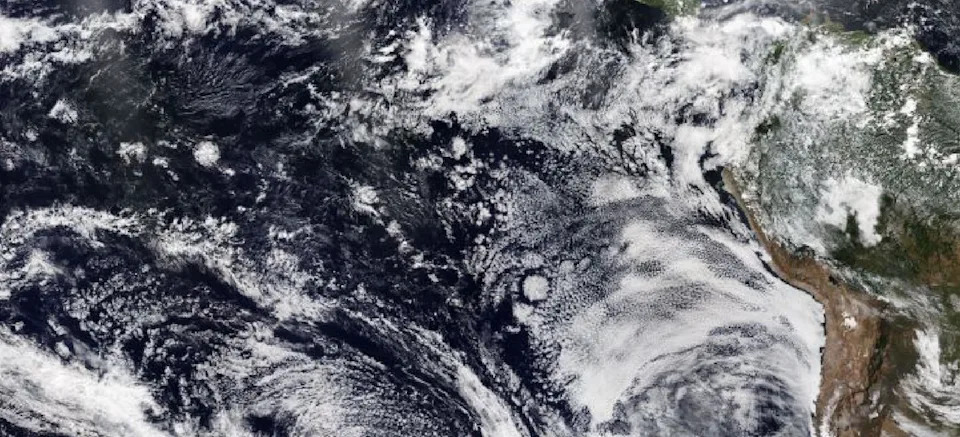
This image shows cloud cover over the Pacific Ocean.
Major Caveats And Potential Harms
All of these results are model-based. No one has attempted to weaken El Niño in the real world, and there are no near-term plans or field programs at the scale needed to test this safely. Model success does not guarantee real-world effectiveness.
Experts warn of significant risks. Cooling the eastern Pacific too strongly could backfire and trigger a powerful La Niña — potentially a 'mega La Niña' much stronger than historical events. Reflecting substantial sunlight also reduces photosynthesis, which could harm crops, forests and marine phytoplankton. Because El Niño and La Niña affect regions unevenly, benefits in one place could cause harm elsewhere, raising acute ethical and governance problems about who decides when and where to intervene.
Scientific And Policy Context
Researchers involved in these studies emphasize caution. Jessica Wan, who led the Scripps study, said marine cloud brightening 'isn't anywhere close to being on the menu' for deployment. Other scientists note the work is new and interesting but far from definitive. The American Meteorological Society's 2022 statement on climate intervention supports continued research so policymakers are informed, but it does not endorse deployment.
Bottom Line
Modeling suggests targeted marine cloud brightening could, in theory, reduce El Niño intensity — if applied early and precisely — while global solar-dimming approaches appear less effective for this goal. However, the technique remains untested at scale, could produce severe unintended consequences, and raises difficult governance and ethical questions. Whether humanity should attempt to modify El Niño is a far larger question than whether we can do it in a computer model.
Help us improve.