The discovery of a dead armadillo near Oxford, Ohio, in early September is believed to be the first confirmed natural arrival of the species in that state. A 2025 USGS study and wildlife biologists point to land-use change and milder winters as key drivers of a long-term northward and eastward expansion of nine-banded armadillos. Though not typically aggressive, armadillos can carry the bacterium that causes leprosy (rarely transmissible to humans) and can damage property through extensive digging, so researchers urge monitoring and cautious management.
Why Armadillos Are Pushing North: Ohio Roadkill May Mark Natural Range Expansion
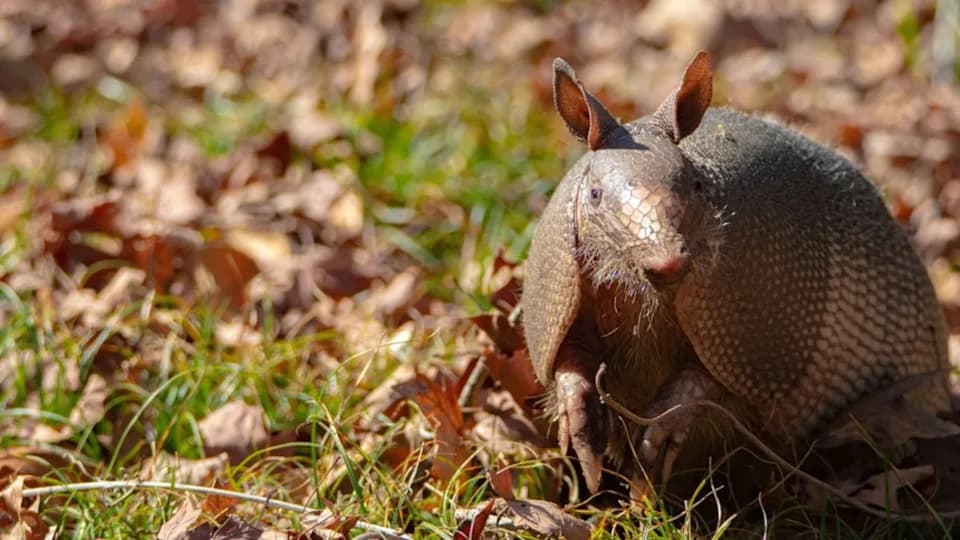
Armadillos are sparsely furred and have a hard outer shell, as seen in this photo from the National Park Service. An armadillo found dead in Ohio is believed to be the first natural occurrence of the animal in that state.
An armadillo was discovered dead beside a road near Oxford, Ohio, in early September. Wildlife investigators believe this specimen is the first confirmed instance of the nine-banded armadillo reaching Ohio through natural range expansion rather than human transport. The animal was taken to Miami University for examination after being found, and officials suspect it was struck by a vehicle.
Range Shift Driven By Climate And Land Use
Scientists and members of the public have documented a steady northward and eastward spread of the nine-banded armadillo in North America. A 2025 U.S. Geological Survey (USGS) study notes that the species—first recorded in Texas in 1849—has expanded its range gradually over decades. Researchers attribute that expansion primarily to changes in land use and a warming climate that has reduced the frequency and severity of historically limiting cold winters.
"This rapid range expansion has been a result of land use change, climate change, and at least one human-facilitated release in Florida," the USGS study states.
What Armadillos Are Like
Armadillos are small, armored mammals roughly the size of a house cat. They have sparse fur, a hard external shell, strong digging forelimbs and an unusual reproductive trait: females often give birth to identical quadruplets. The National Park Service also notes that armadillos are capable swimmers and can hold their breath for up to six minutes.
Why Cold Matters
Because armadillos have little insulating fur, they are vulnerable to hypothermia and historically could not survive in regions with harsh, prolonged winters. Warmer average temperatures and fewer extreme cold events appear to be lowering that barrier, allowing animals to survive and move into previously unsuitable areas.
Where Armadillos Are Established—and Where They Are Appearing
The USGS lists the following states as places where nine-banded armadillos are already established: Texas, Louisiana, Mississippi, Alabama, Georgia, Florida, South Carolina, North Carolina, Tennessee, Kentucky, Indiana, Illinois, Missouri, Iowa, Kansas, Oklahoma and Arkansas. Occasional reports have come from Nebraska, Michigan, Ohio and Virginia.
The study projects likely directions of continued spread: Ohio may be colonized by animals moving east across Indiana; Michigan could be reached from Indiana or from Illinois; and Virginia is already documenting arrivals likely coming from North Carolina.
Impacts And Management
Armadillos are generally not aggressive, but they may bite or scratch if handled. Wildlife officials advise avoiding direct contact because armadillos can carry Mycobacterium leprae, the bacterium that causes leprosy. Documented transmission to humans is rare and typically associated with prolonged, close contact with an infected animal.
Armadillos can also be a nuisance: their digging and burrowing can damage lawns, golf courses and agricultural land. The USGS study notes a single animal may excavate as many as 10 burrows, which can pose risks to livestock and create human-wildlife conflicts. For these reasons, land managers in newly affected areas are encouraged to monitor sightings, document evidence of establishment, and prepare management plans to reduce property damage and health concerns.
Despite their expanding range, nine-banded armadillos are not currently classified as an invasive species in the U.S. Researchers in Ohio and neighboring states will continue to track sightings to determine whether recent records mark isolated events or the beginning of established, reproducing populations farther north.
Note: If you encounter an armadillo, do not handle it. Report sightings to local wildlife authorities and, when possible, provide photos and location details to help researchers track the species' spread.
Help us improve.