A survey of over 1,600 pediatricians by the American Academy of Pediatrics found 40% reported children in immigrant families avoided medical care because of immigration-related fears. About 31% of respondents said families avoided applying for benefits such as Medicaid or CHIP, and just over 20% reported children were kept out of school. Pediatricians warn these trends — coupled with recent policy changes that broaden discretion around "public charge" determinations — are leading to delayed care and more advanced illnesses among children.
Survey: 4 in 10 Pediatricians Say Children From Immigrant Families Are Avoiding Medical Care Amid Immigration Fears
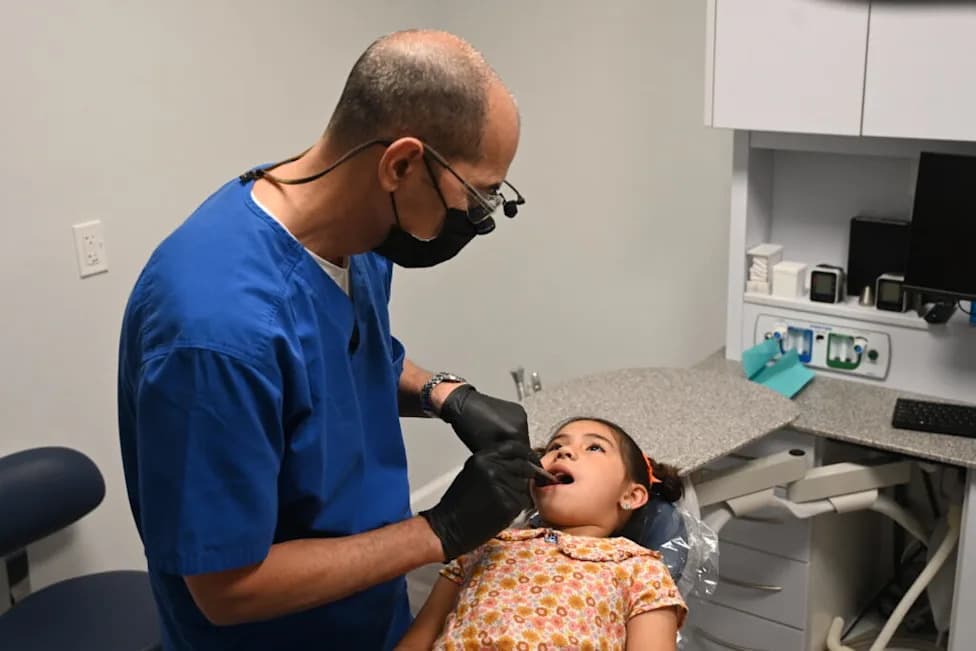
A Treasure Coast Community Health Center clinician in Florida conducts a dental exam on a child. Four in 10 pediatricians surveyed by researchers at the American Academy of Pediatrics report immigrant families retreating from healthcare for their kids amid President Donald Trump's immigration crackdown. (Photo courtesy of Treasure Coast Community Health Center)
A new survey of more than 1,600 pediatricians finds that many children in immigrant families are skipping medical visits, avoiding public benefits and even staying home from school because of fears tied to immigration enforcement.
Researchers from the American Academy of Pediatrics collected responses between April and June and asked pediatricians whether, during the prior year, patients or the families they treat had avoided medical care for a child because of concerns about the immigration status of a household member. Respondents were also asked whether families avoided sending children to school or applying for safety-net programs such as Medicaid, the Children’s Health Insurance Program (CHIP) or food assistance for the same reason.
Key Findings
Care Avoidance: Forty percent of pediatricians reported that immigrant families had avoided seeking medical care for their child because of concerns about the immigration status of a household member.
Benefits And School: About 31% of pediatricians said families avoided applying for government benefit programs, and just over 20% reported families had kept children out of school.
Patient Panels: On average, pediatricians estimated roughly one-quarter of their patient panels are children from immigrant families.
Variation By Practice
Responses varied by practice setting and specialty. Nearly 45% of pediatric subspecialists and 48% of pediatricians practicing in urban, inner-city settings reported care avoidance among immigrant families, compared with 32% of rural pediatricians.
Policy Context And Clinical Impact
Clinicians across the country say heightened immigration enforcement and policy changes are harming children’s health: doctors report seeing more advanced illnesses, skipped preventive visits and postponed surgeries as families avoid interacting with public institutions. The American Academy of Pediatrics cautioned the survey likely underestimates the problem and that even more children may be going without necessary care.
In recent months, federal authorities removed certain restrictions that had limited where immigration agents generally could make arrests, including at hospitals, clinics and schools. Health professionals have also raised alarms about a federal policy change broadening immigration officers’ discretion when reviewing green-card and certain visa applications. Under the change, officers may consider enrollment in public benefits—such as housing and food assistance, Medicaid and CHIP—as a "public charge" factor that could affect admissibility.
"Pediatricians have long spoken out against changes to the public charge policy because we know that it leaves families fearful of accessing programs and services that are critical for their health and well-being," said Dr. Sural Shah, chair of the Academy’s Council on Immigrant Child and Family Health.
The survey was based on voluntary responses from more than 1,600 pediatricians collected between April and June. Researchers noted that in 2024 about one-quarter of children nationwide lived in immigrant families with one or both parents born outside the United States, though shares vary by state.
Implications: Public health experts say reducing fear and ensuring access to care and benefits are critical steps to protect children’s immediate and long-term health. Pediatricians and advocacy groups are urging clear protections and public outreach so families know when and where it is safe to seek care.
Help us improve.