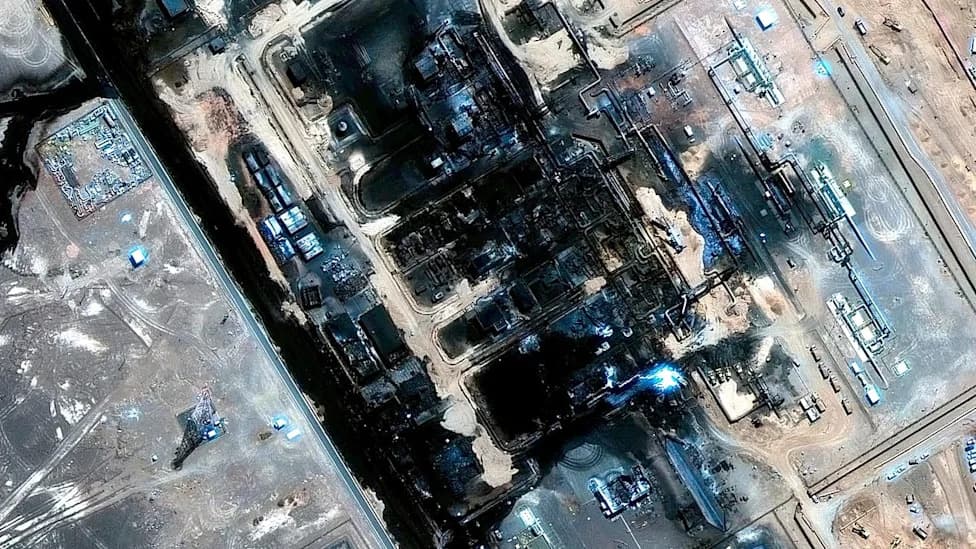
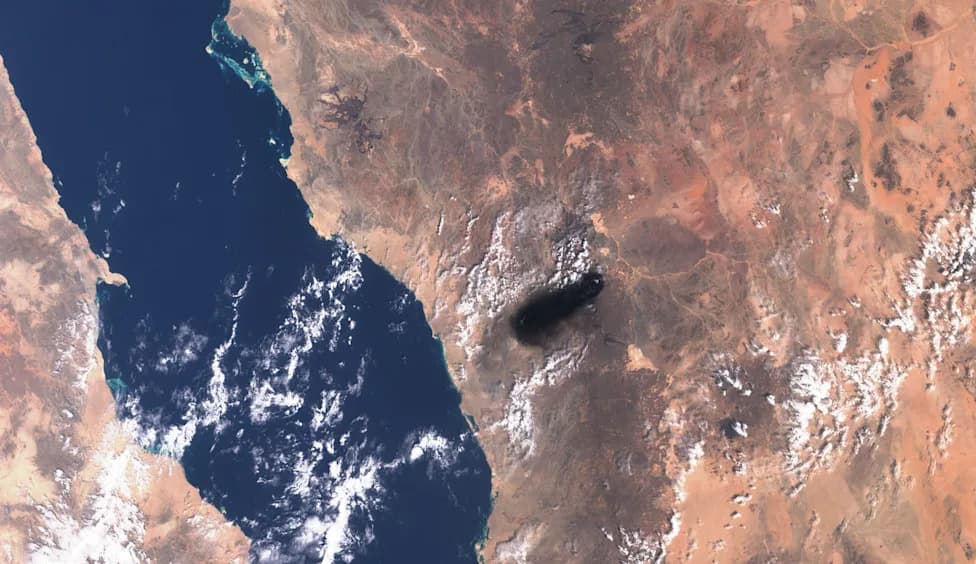
Saudi Arabia has taken its East–West crude pipeline offline after drone strikes in the Riyadh and Medina regions, forcing the kingdom to tap onshore stocks to sustain exports while technicians assess and secure the route.
What Happened
The energy ministry said the pipeline was shut as a precaution following attacks last Thursday. Emergency and technical teams were dispatched to inspect and secure the line, but officials did not provide a timeline for restarting pumping or a full damage assessment. Saudi and Iraqi authorities told investigators the drones originated in Iraq.
Immediate Impact
Market sources and Saudi buyers warned a prolonged outage could threaten roughly 4 million barrels per day — about 4% of global oil supply — though Riyadh has not confirmed that estimate. Stocks held at the Red Sea port of Yanbu are reported by traders to be sufficient for about five to seven days of exports; Saudi authorities have not verified these figures.
Why This Matters
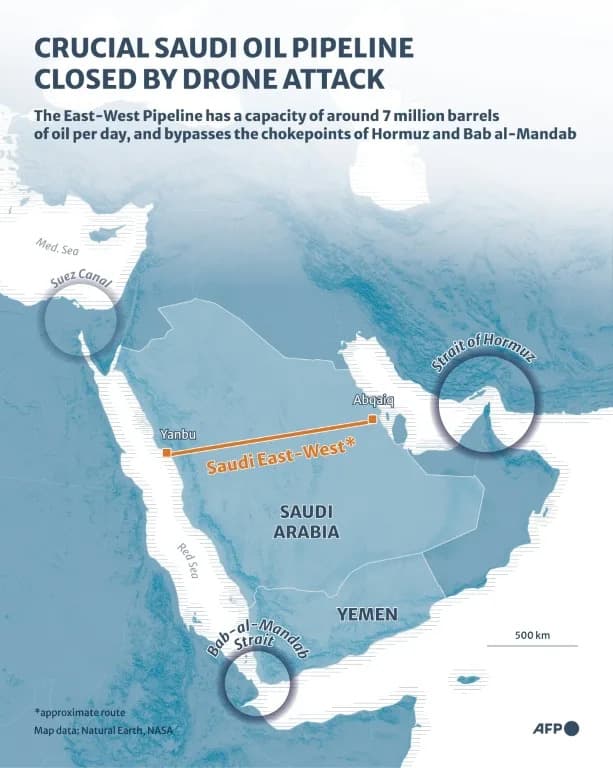
The roughly 1,200 km East–West pipeline carries crude from Saudi Arabia's eastern fields to the Red Sea port of Yanbu, enabling shipments to avoid the Strait of Hormuz. Aramco said earlier in the year it had pumped the line up to its reported maximum of 7 million barrels per day to offset disruptions through Hormuz. However, because the pipeline also feeds domestic refineries on the west coast, its flow capacity does not equal the exact volume exported.
Important: A shutdown does not automatically cut global supply by the pipeline's full capacity. Tankers can load stored crude near export terminals, but those inventories will fall unless fresh supplies reach the ports.
Routes, Risks and Market Reaction
From Yanbu, tankers to Europe sail north through the Red Sea to the Suez Canal (or via the SUMED pipeline). Tankers bound for Asia normally transit south through Bab el-Mandeb into the Gulf of Aden and the Indian Ocean. That southern route is under added strain because Yemen's Houthi forces have seized Perim Island and portions of the Red Sea coast, threatening safe passage. Rerouting around Africa via Suez adds time and cost and does not address the near-term need to replenish stocks at Yanbu.
Brent crude futures rose roughly 3% in early trading following the pipeline shutdown and further attacks on energy assets in the region. The International Energy Agency (IEA) reported global inventories have dropped by about 507 million barrels since February, including a 95 million-barrel decline in August, and estimated Gulf exports near 13 million barrels per day in August — roughly half their pre-war level.
What To Watch
- Official damage assessment and timeline for resuming pumping.
- How quickly additional crude can be moved to Yanbu to replenish export stocks.
- Further regional attacks or shipping disruptions that could push oil prices higher or lengthen shipping routes.
Bottom line: The shutdown heightens near-term supply risk and market volatility. Stored oil can smooth flows temporarily, but the duration of the outage and regional security dynamics will determine the broader impact on global fuel markets.