Ukrainian footage shows a Sargan 3000 USV firing a stabilized 12.7 mm Protector remote weapon station and sinking a vessel in the Black Sea. Kyiv says the target was a Russian MBeK‑class drone and calls the strike the world’s first recorded drone‑vs‑drone naval clash, though independent verification is lacking. The attack was human‑directed and supported by ISR assets, underscoring growing demand for counter‑USV defenses and unresolved legal questions about remote lethal systems at sea.
Ukrainian Sargan 3000 USV Reportedly Sinks Russian Drone in First Claimed Drone‑vs‑Drone Naval Clash
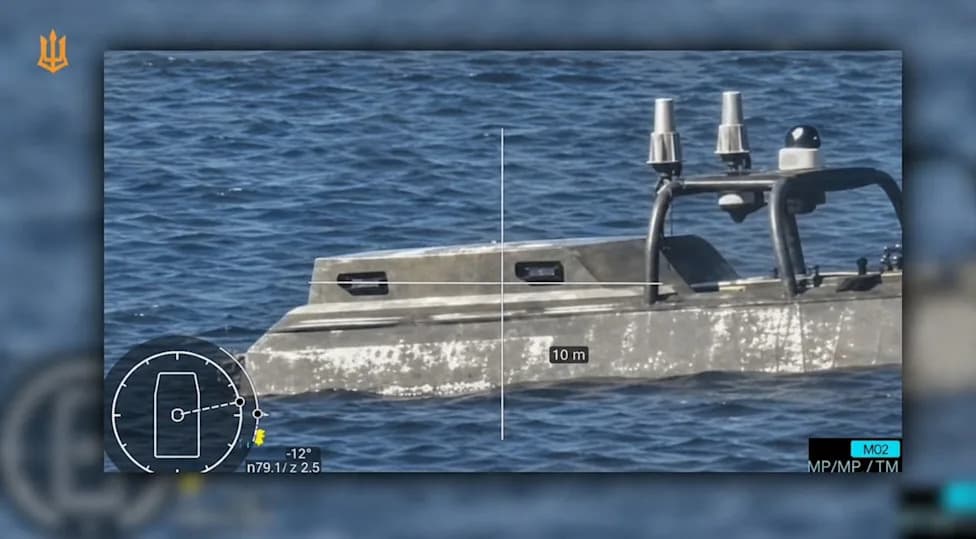
Image: YouTube - Euromaidan Press (Enahnce)
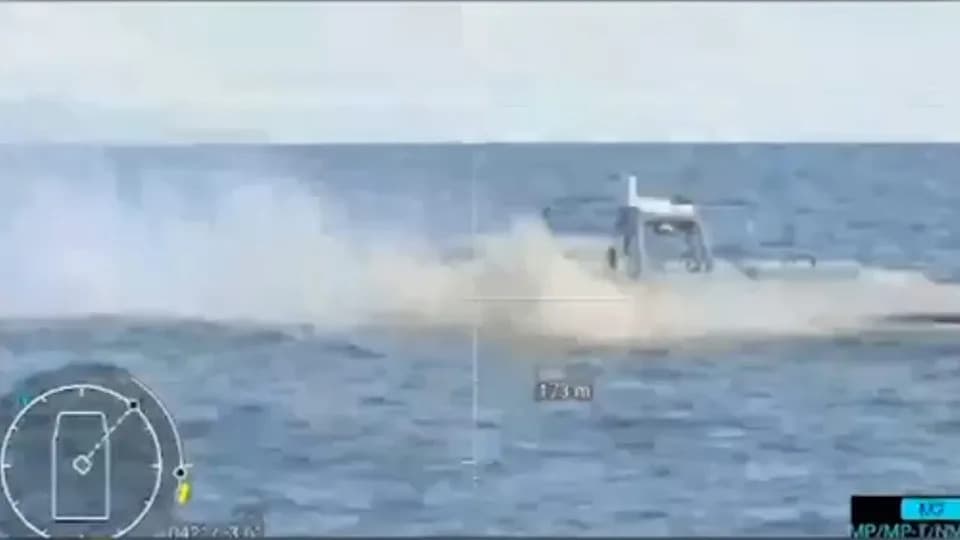
Footage released by the Ukrainian Navy shows a small, fast unmanned surface vessel closing on another craft in the Black Sea and firing multiple bursts from a mounted automatic weapon. The video shows smoke, at least one visible explosion, and the target pitching forward and sinking; overhead aerial drone footage provides a confirming perspective of the engagement.
What Ukraine Says Happened
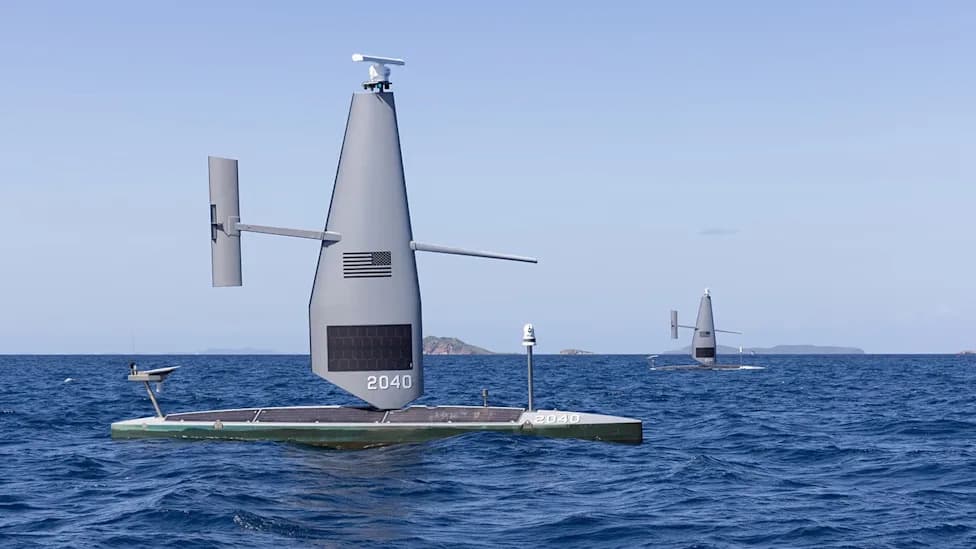
Ukrainian officials say the attacker was a domestically developed Sargan 3000 unmanned surface vessel (USV) equipped with a stabilized 12.7 mm Protector remote weapon station. Kyiv characterizes the struck vessel as a Russian MBeK-class unmanned surface vessel. That identification—and the claim this is the world’s first drone‑vs‑drone naval battle—comes from Ukrainian sources and has not been independently verified.
Sargan 3000: Key Specifications (Open Sources)
- Length: ~6.9 m (about 23 ft)
- Combat Radius: Up To 1,600 km (Nearly 1,000 Miles)
- Top Speed: Around 50 Knots
- Payload Capacity: ~450 kg (About 990 lb)
- Modular Design: Configurable With Weapon Stations, Missile Containers Or FPV‑Drone Launchers
- Estimated Production Rate: Reported ~25 Units Per Month (Unconfirmed)
Weapon System And Human Control
The weapon shown is reported to be a 12.7 mm Protector remote weapon station (RWS), a stabilized, remotely operated gun turret with integrated optics. Ukrainian officials emphasize this was not an autonomous kill: human operators were in the loop, directing the Sargan 3000 and firing the weapon remotely.
How The Operation Was Coordinated
Ukraine's Defense Intelligence directorate (GUR) reportedly detected the target, and intelligence, surveillance and reconnaissance (ISR) assets—including aerial drones providing real‑time overhead imagery—tracked the vessel before handing targeting to the Sargan 3000. Ukrainian statements describe the event as a coordinated action across multiple unmanned platforms rather than a chance encounter.
Context And Implications
In mid‑July 2026, a Sargan 3000 reportedly sank the crewed Russian FSB patrol vessel Izumrud; that incident involved a drone against a manned ship. This September engagement is cited by Kyiv as the next step: drone‑vs‑drone. Whether this is truly the first such encounter in recorded history or simply the first publicly documented case, the episode is an operational proof of concept for armed, modular USVs integrated with ISR networks.
Analysts say the incident could accelerate demand for counter‑USV defenses—hard‑kill naval gun systems, electronic warfare suites, and purpose‑built anti‑drone surface platforms—as navies adapt to the new threat profile. Legal and doctrinal questions also arise: rules of engagement for remote lethal systems at sea are not yet codified in international law.
Open Questions
Several details remain unconfirmed: the exact date and location of the engagement have not been publicly disclosed by Ukraine, Russia has not commented, and open‑source technical data on the alleged MBeK class are sparse. Independent verification from neutral military authorities has not yet appeared.
Whether or not this is the very first drone‑vs‑drone naval battle in history, the encounter highlights a growing operational challenge for navies: how to detect, deter and defeat armed unmanned surface vessels when there are no crews aboard to protect.
Help us improve.