Mohammad Eslami, head of Iran's Atomic Energy Organization, is not expected at the IAEA General Conference in Vienna because he remains subject to a U.N. travel ban; Austria's request for an exemption was denied. The situation highlights rising tensions after June strikes on Iranian nuclear sites by Israel and the U.S., and IAEA inspectors have been denied access to the damaged facilities. The IAEA also says it cannot verify Iran's 440.9 kg stockpile of uranium enriched to 60% purity. Iran maintains its nuclear program is peaceful despite the sanctions reinstated by European powers last year.
Official: Travel Ban Likely Keeps Iran's Nuclear Chief From IAEA General Conference
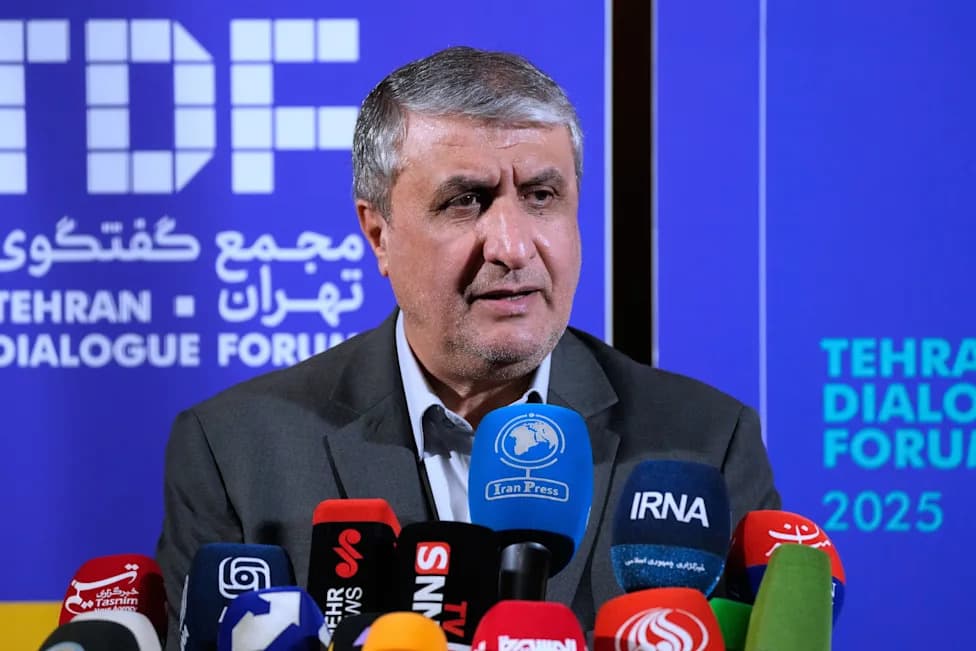
FILE - Head of Iran's Atomic Energy Organization Mohammad Eslami speaks at a news briefing in Tehran, Iran, Nov. 16, 2025. (AP Photo/Vahid Salemi, File)
An official briefed on the matter said Mohammad Eslami, head of Iran's Atomic Energy Organization, is not expected to attend the International Atomic Energy Agency's (IAEA) annual General Conference in Vienna because he remains subject to a U.N. travel ban.
Austria, acting as host for U.N. meetings in Vienna, requested an exemption from the U.N. sanctions committee to allow Eslami to travel, but the waiver was not granted, the official — who spoke on condition of anonymity because the matter is sensitive — said.
The development underscores sharply deteriorating relations between Iran and Western countries. Tensions have flared again after a fragile ceasefire collapsed in July and intermittent fighting resumed between the United States and Iran.
IAEA Access and Verification Issues
Inspectors from the IAEA have been denied access to nuclear facilities that were damaged during strikes in June, when Israel and the United States struck sites in Iran during a 12-day conflict. Under the Nuclear Non‑Proliferation Treaty (NPT), Iran is legally obliged to cooperate with IAEA inspections, but access to the affected locations has not been provided.
The IAEA has said it cannot verify the condition of a stockpile of uranium enriched to near-weapons-grade levels since the June attacks.
According to the IAEA, Iran currently maintains about 440.9 kilograms (972 pounds) of uranium enriched up to 60% purity — a technical step away from the roughly 90% enrichment typically considered weapons-grade. Iran continues to insist its nuclear program is peaceful and that it is not pursuing nuclear weapons.
Sanctions Background and Conflicting Reports
Last year, France, Britain and Germany invoked a so‑called "snapback" mechanism that automatically reinstated U.N. sanctions tied to Iran's nuclear activities, saying Tehran wilfully departed from the 2015 nuclear deal that previously suspended those measures. The restored U.N. sanctions include a travel ban, a conventional arms embargo, restrictions on ballistic missile development, asset freezes and limits on producing certain nuclear-related technologies.
Despite the official's assertion that Eslami is unlikely to attend, Iran's state news agency IRNA reported that Eslami had left Tehran for Vienna to participate in the IAEA conference and meet foreign representatives. Eslami has regularly attended and addressed the IAEA General Conference since his appointment in 2021.
Senior officials from IAEA member states are scheduled to meet Monday through Friday at the agency's Vienna headquarters to consider and approve the IAEA budget and discuss policy issues, including nuclear safeguards across the Middle East.
Help us improve.