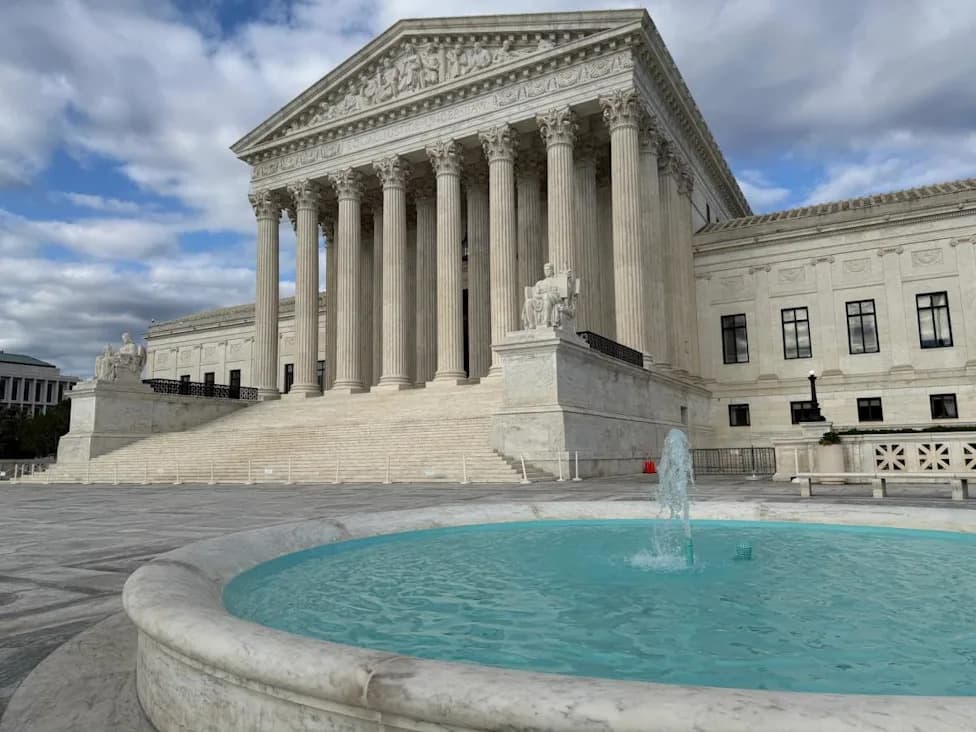
The Supreme Court’s private deliberations and justices’ personal papers play a crucial role in how the Court functions. Mandatory or accelerated disclosure could prompt self-censorship or destruction of records, shrinking the space for honest negotiation. The May 2022 leak of the Dobbs draft shows how exposure can harden positions and limit compromise. Thoughtful, narrowly tailored reforms may be preferable to blanket disclosure mandates.
Why Forcing the Supreme Court to Disclose Justices' Papers Could Backfire
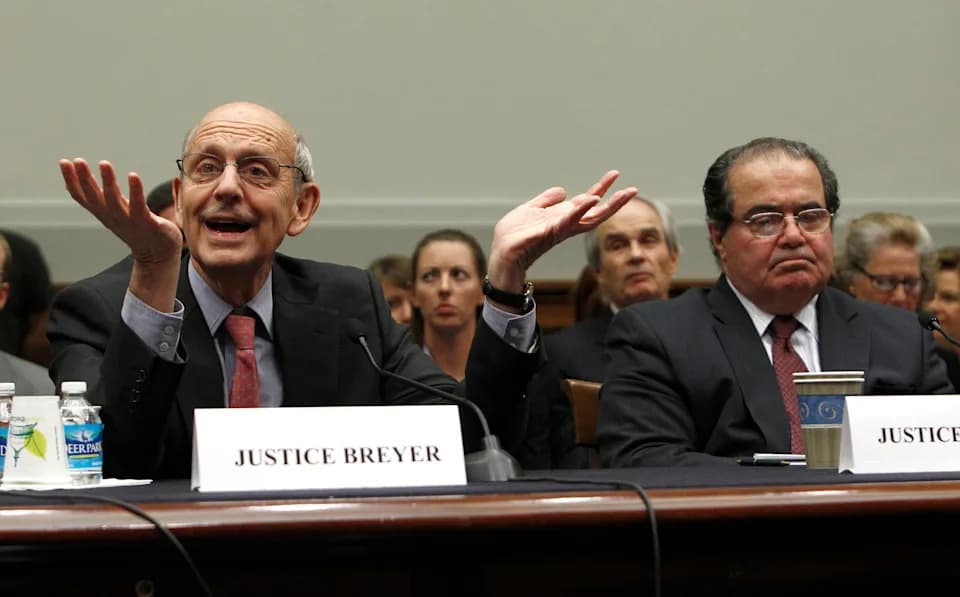
Supreme Court Justices Stephen Breyer and Antonin Scalia testify before a House Judiciary Commercial and Administrative Law Subcommittee hearing on ÒThe Administrative Conference of the United StatesÓ on Capitol Hill in Washington on May 20, 2010.
The Supreme Court is famously opaque, and that secrecy frustrates many who want a clearer view of how justices reach life-altering decisions. A recent New York Times report spotlighted one source of that opacity: the justices' personal papers. Those materials—draft opinions, clerk notes and inter-justice correspondence—can offer invaluable historical context, yet they remain the private property of each justice and may be preserved, donated or destroyed at their discretion.
Calls for a uniform rule or mandatory disclosure are understandable, but they carry risks that deserve careful consideration. The court’s capacity to function amid deep ideological disagreement depends in part on private deliberation. Forcing earlier or compulsory disclosure could shrink the space for candid exchange, encourage destruction of records, or prompt justices to stop recording frank thoughts altogether.
Secrecy and Compromise
Personal papers often reveal bargaining, changing views and tentative concessions—details that help scholars understand how decisions were built. But those same records also show private hesitation and compromise. Deliberations conducted out of the public eye make it easier for justices to explore concessions without the fear that a stray draft or offhand note will be used to score political points.
"In contrast with the executive branch, which is required to preserve and ultimately make public a record of its inner workings, there are no laws to determine what the justices save, shred, burn or reveal, or when." — Jodi Kantor, The New York Times
The executive branch is subject to preservation rules that often require records to be opened five or twelve years after a president leaves office. The Supreme Court is a different institution: a private deliberative body whose effectiveness rests in part on confidentiality. If justices expect their notes to surface quickly, they may curb written candidness. A private concession offered to a colleague may never be recorded; the compromise would exist only in memory, not on paper.
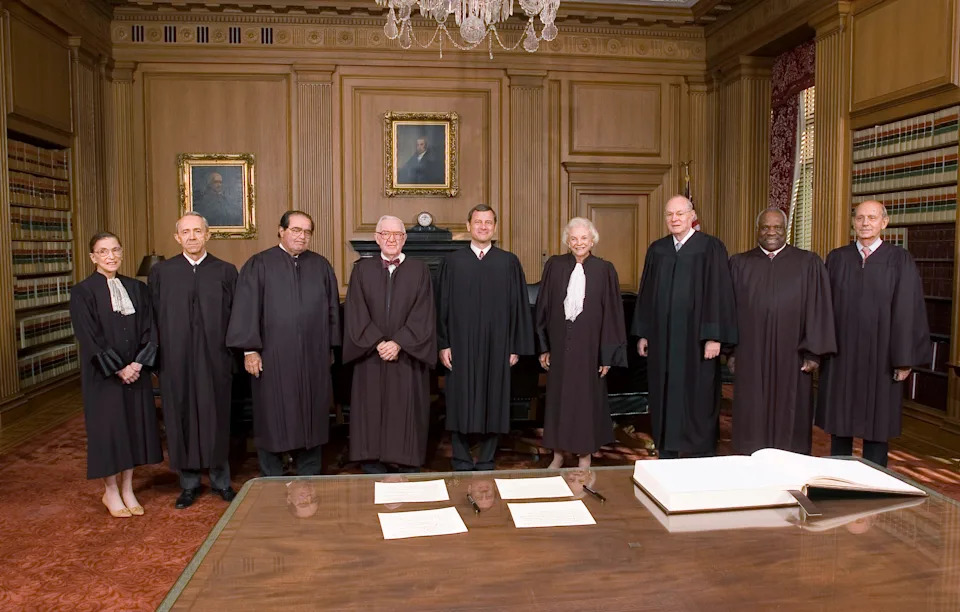
Supreme Court Justices Ruth Bader Ginsburg (L-R), David H. Souter, Antonin Scalia, John Paul Stevens, Chief Justice John Roberts, Justices Sandra Day O'Connor, Anthony M. Kennedy, Clarence Thomas and Stephen G. Breyer pose for the first picture of with Roberts in his position in the Chief Justice Conference Room on Monday Oct. 3, 2005, at the Supreme Court in Washington, D.C.
Real-World Consequences: Leaks and Self-Censorship
The May 2022 leak of Justice Samuel Alito’s draft opinion in Dobbs v. Jackson Women’s Health Organization illustrates how exposure can alter internal dynamics. Reports say Chief Justice John Roberts was exploring a narrower approach that might have preserved aspects of Roe v. Wade. Once a decisive draft leaked, the public scrutiny made it far more difficult for justices to shift positions without facing immediate political backlash, arguably hardening the majority.
There are other extreme reactions as well: Justice Byron White destroyed his papers so they could never be reviewed, and Justice Antonin Scalia left no formal instructions; his family later donated his papers to Harvard with a delayed opening plan. A uniform disclosure mandate could encourage more such outcomes—either destruction or silence on the record.
Weighing Transparency Against Institutional Function
Transparency has clear virtues. Public understanding of how powerful institutions reach decisions is essential in a democracy. But reforms should weigh the potential benefits against the costs to the Court’s ability to deliberate candidly. Lawmakers could attempt to prohibit destruction or create disclosure timelines, but these measures risk unintended consequences: fewer written records, more guarded conversation, and less material for future historians to analyze.
Rather than imposing a blunt, one-size-fits-all requirement, a more nuanced approach could be considered. Options include voluntary archival agreements, standardized guidance about preservation, or incentives for timely donation without making disclosure automatic or immediate. Any reform should preserve the core capacity of justices to deliberate in private while improving public access to historical records in ways that do not undermine candid judicial exchange.
Author: Dace Potas, opinion columnist, USA TODAY.
Help us improve.