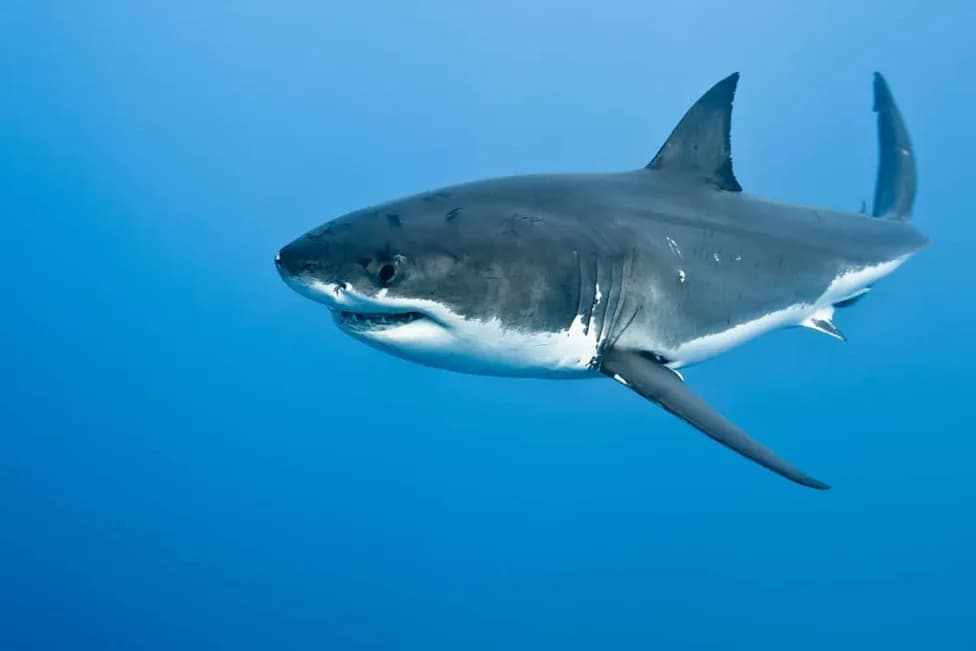
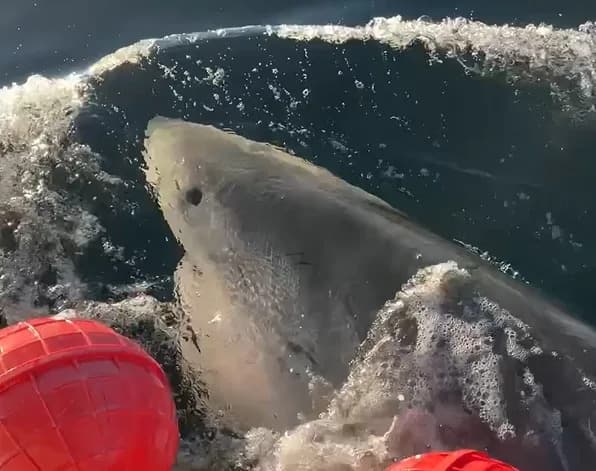
A genomic study by OCEARCH and collaborators found three full-sibling pairs and seven likely half-sibling pairs among Western North Atlantic great white sharks. DNA showed Jekyll and Olympia are full siblings born five years apart. Researchers are pairing genomics with satellite tracking to explore whether family ties shape seasonal habitat use, and caution that more research is needed before drawing conclusions about population size or behavior.
DNA Study Reveals Sibling Pairs Among Western North Atlantic Great Whites — Jekyll and Olympia Are Full Siblings
The OCEARCH logo on a boat during a shark tagging in 2020.
A genomic analysis led by OCEARCH and collaborating scientists has revealed close family ties among great white sharks in the Western North Atlantic, including a confirmed full-sibling pairing between two well-tracked sharks, Jekyll and Olympia. The research combines DNA data with years of satellite tracking to begin building a family tree that may help explain repeated habitat use and migration patterns.
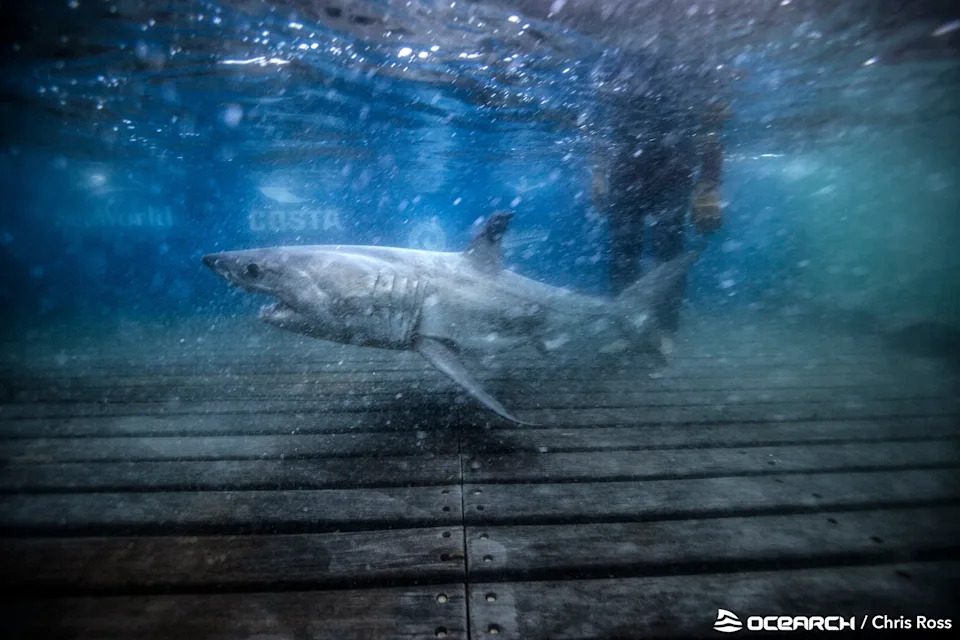
2021 photo of Olympia swimming underwater during her tagging.
Key Findings
The study identified three pairs of full siblings and seven likely half-sibling pairs among sampled white sharks. One full-sibling pair appears to be from the same litter; the other two full-sibling pairs are separated by roughly five and 19 years of age. Notably, genetic analysis showed that Jekyll and Olympia share the same parents despite being born five years apart.
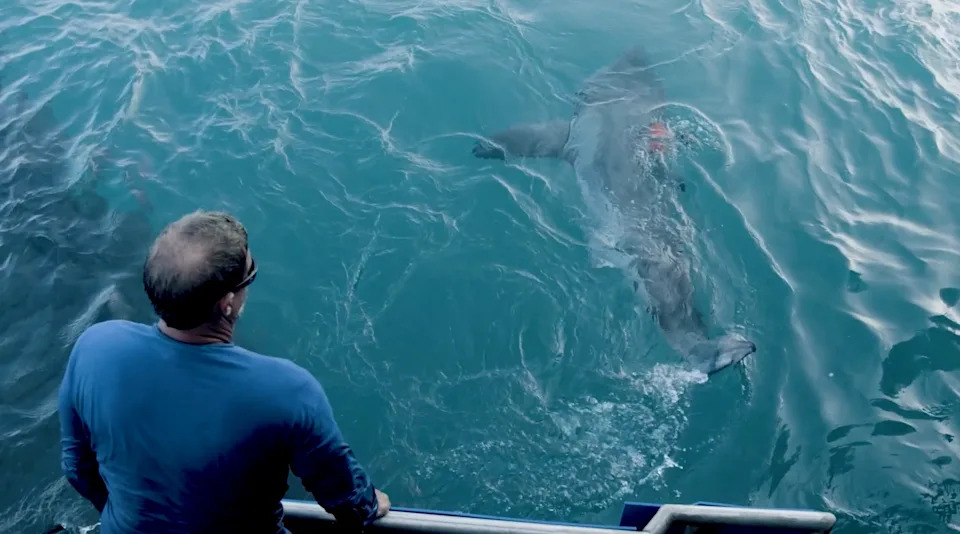
Jekyll swimming in the ocean on the day of his tagging in 2022.
Seasonal Habitats and Movement
Researchers observed that full sibling pairs were sampled in similar seasonal habitats: typically one sibling in the southeastern United States during winter or spring and the other in New England or New York during summer or fall. While this pattern is intriguing, scientists caution that it does not prove sharks recognize relatives, intentionally travel together, or inherit fixed migration routes.
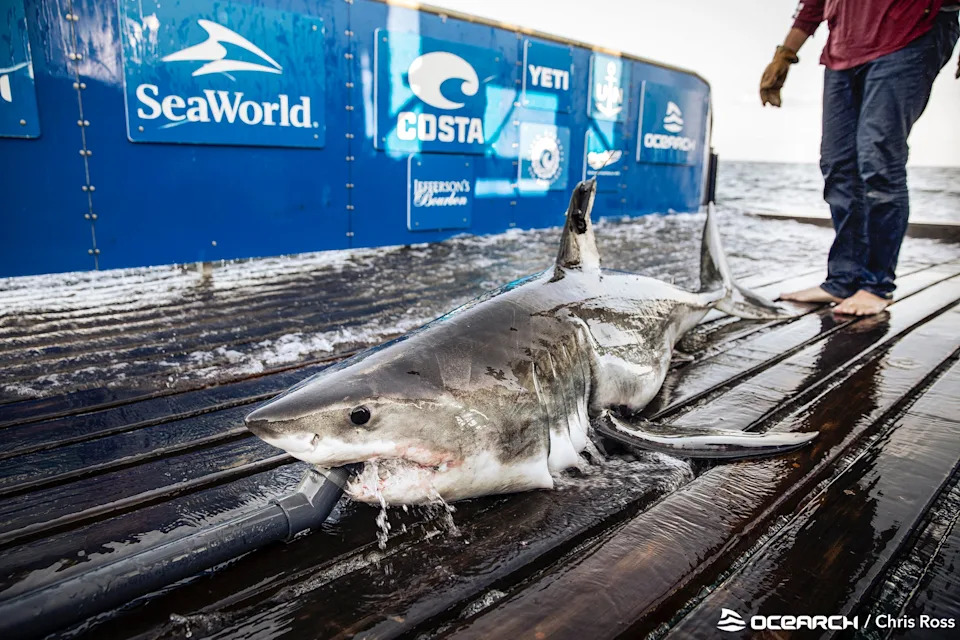
Olympia during her tagging with OCEARCH back in 2021 in New England.
"For most people, white sharks are the ultimate lone predator. But every expedition reminds us the ocean is more complex than we imagine," said Chris Fischer, founder and expedition leader of OCEARCH. "Now we're beginning to understand the families behind those journeys."
Implications for Conservation
Finding multiple sibling pairs in a relatively small sample raises questions about the overall population size of Western North Atlantic white sharks. If further analysis supports a smaller effective population, that could carry meaningful conservation implications and influence strategies aimed at rebuilding and protecting the population.
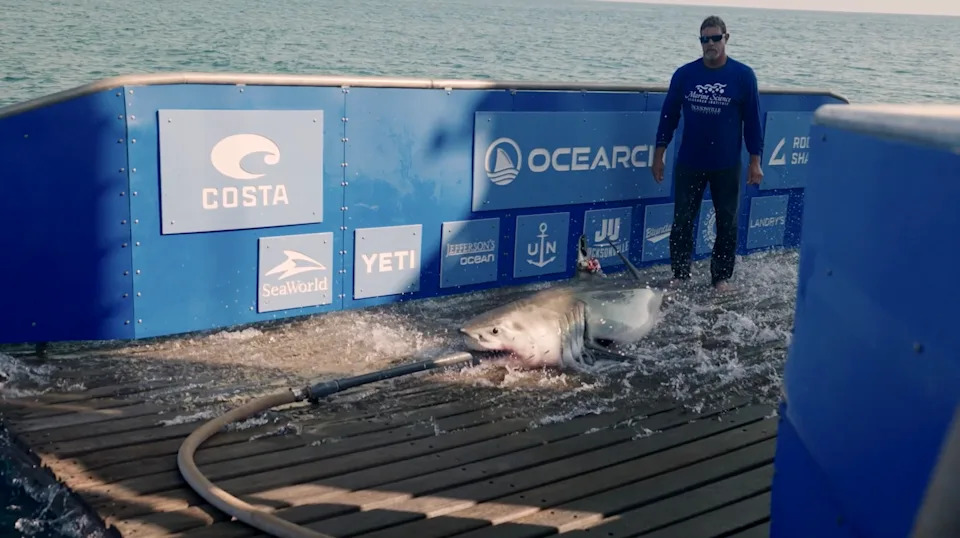
White shark Jekyll at his tagging in 2022.
"We've identified close family relationships among Western North Atlantic white sharks, but we've only scratched the surface," said Dr. David Portnoy, principal investigator at Texas A&M University-Corpus Christi. "Integrating genomics with satellite tracking will help determine whether related sharks share habitat-use or migration patterns, but more work is needed."
Study Background and Tracking
Genetic samples were collected during OCEARCH expeditions and analyzed in collaboration with scientists at academic institutions. Olympia was tagged in 2021 off Cape Cod as a juvenile; public tracker data for Olympia stopped in 2022. Jekyll was tagged in 2022 off Jekyll Island, Georgia; his public tracker stopped releasing data in 2024. OCEARCH maintains an open-access database of white shark movement and biological data and offers a free global shark-tracker app for the public to follow tagged individuals.
This research opens new questions and lines of inquiry about white shark biology, reproduction, and movement. Further genomic sampling, longer-term tracking, and broader regional coverage will be needed to confirm population estimates and to clarify whether family ties help shape seasonal migration and habitat use.
Follow the tagged sharks: Track animals such as Olympia and Jekyll via OCEARCH’s free global shark-tracker app to see real-time movement data and learn more about ongoing research.
Help us improve.