The Supreme Court of Sri Lanka has revoked a presidential pardon and ordered hardline monk Galagodaatte Gnanasara to serve the remaining portion of a six-year sentence for contempt of court and intimidating Sanya Eknaligoda, wife of missing cartoonist Prageeth Eknaligoda. Gnanasara had served under a year after a pardon by then-president Maithripala Sirisena. Prageeth disappeared in 2010; his wife continues to campaign for answers. In 2025 Gnanasara also received a separate nine-month sentence for insulting Islam and inciting religious hatred.
Sri Lanka's Supreme Court Revokes Pardon, Orders Hardline Monk to Serve Remaining Prison Term
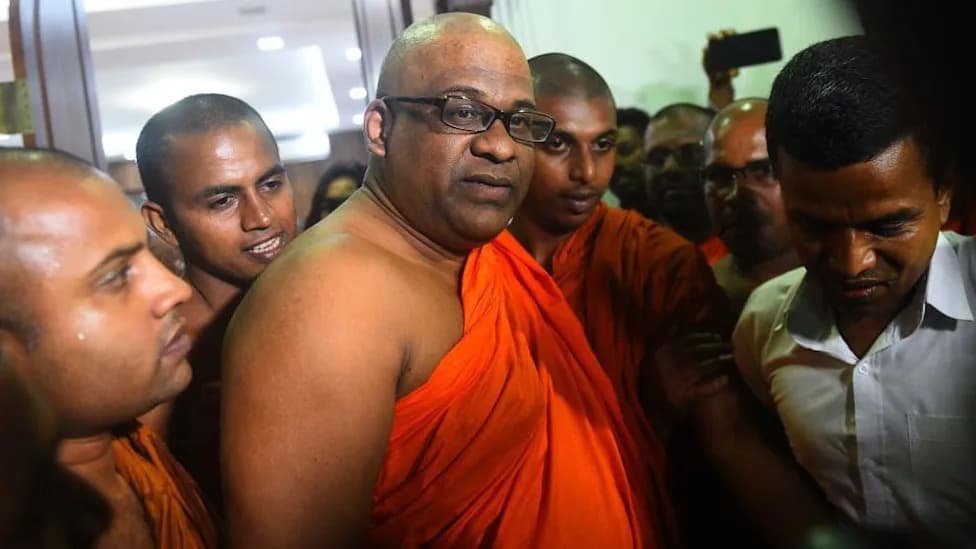
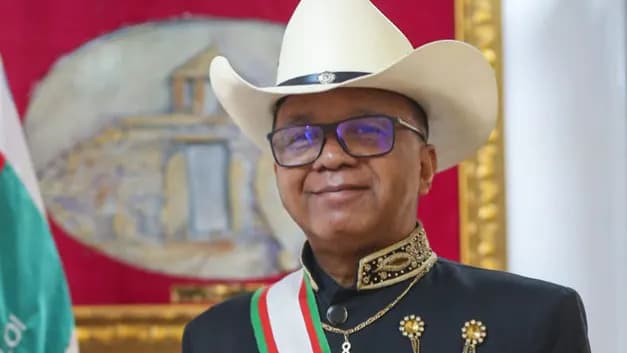
Galagodaatte Gnanasara was a trusted ally of former president Gotabaya Rajapaksa [Getty Images]
Sri Lanka's Supreme Court has annulled a presidential pardon and ordered hardline Buddhist monk Galagodaatte Gnanasara to serve the remainder of a six-year prison sentence for contempt of court and for intimidating Sanya Eknaligoda, the wife of missing political cartoonist Prageeth Eknaligoda.
Gnanasara was originally convicted in 2018 after he interrupted a court hearing to publicly defend military intelligence officers who had been accused of abducting Eknaligoda, who disappeared in 2010. He served less than a year of the six-year sentence after receiving a presidential pardon from Maithripala Sirisena.
Prageeth Eknaligoda was known for cartoons that criticized political power, media restrictions and social inequality; his work often targeted former president Mahinda Rajapaksa. He vanished in 2010 and has not been seen since. His wife, Sanya Eknaligoda, has led a long-running campaign to find answers and accuses authorities of failing to investigate his disappearance thoroughly.
Gnanasara is the leader of the hardline group Bodu Bala Sena (BBS), or "Buddhist Power Force," and was an outspoken supporter of Mahinda Rajapaksa and his brother Gotabaya Rajapaksa, who later served as president. In a separate case in 2025, Gnanasara received an additional nine-month prison sentence for insulting Islam and inciting religious hatred.
Convictions of Buddhist clergy are rare in Sri Lanka, and custodial sentences for monks are almost unheard of, making this a notable development for accountability, the rule of law and communal relations in the country. The Supreme Court's decision raises broader questions about the limits of presidential pardons, judicial independence and protections for victims and families of enforced disappearances.
What happens next: The court has ordered that Gnanasara return to prison to serve the outstanding portion of his sentence. The ruling may prompt renewed debate over pardons and influence perceptions of justice in Sri Lanka.
Help us improve.