Bacteria can record past environmental exposures and use that information to shape future behavior, even without neurons. Experiments tracking tens of thousands of E. coli show that cells from fluctuating nutrient conditions adapt faster to identical nutrient pulses than cells from stable environments, indicating stored memory. Mathematical modeling implicates ribosome population dynamics — fast and slow responders working across minutes to hours — that implement a gated logic similar to recurrent neural networks. The findings connect cellular information processing to AI and could inform new antimicrobial strategies.
Learning Without a Brain: How Bacteria Store Memories Like Neural Networks
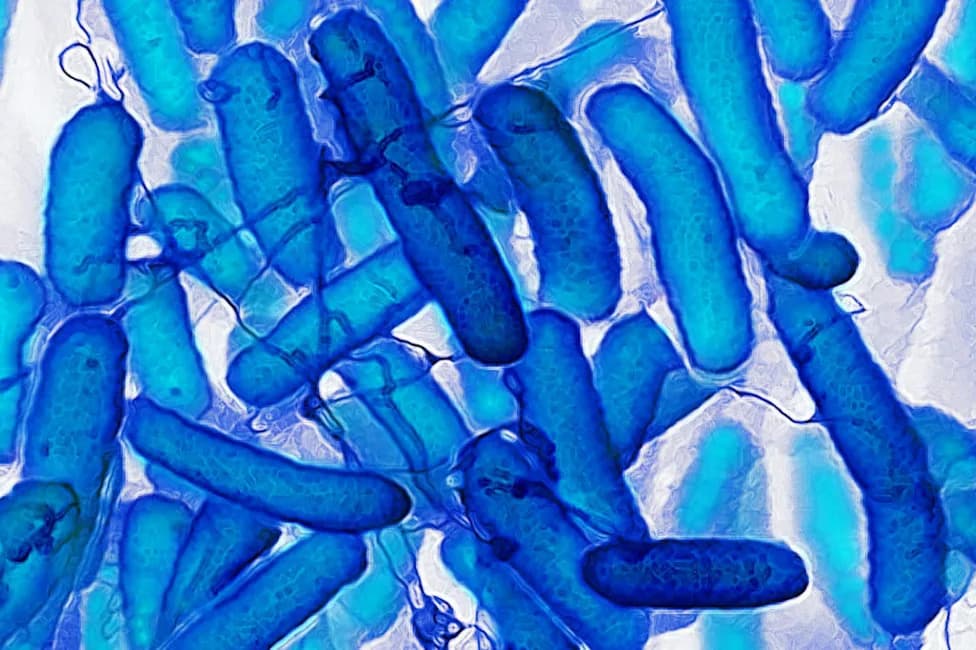
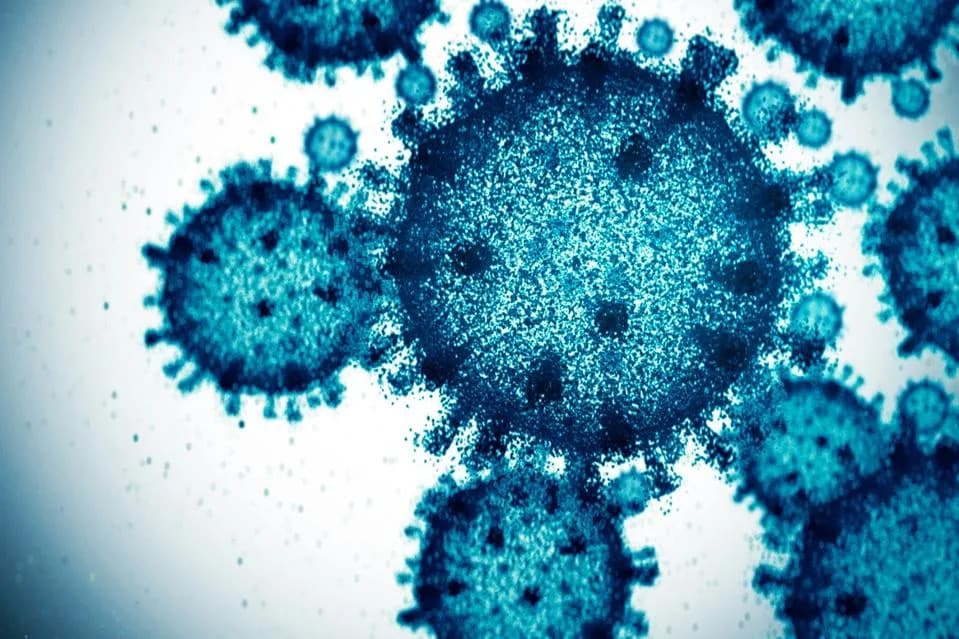
_E. coli_ uses memories of the past to inform its present behavior.Cavallini JamesBSIP/Universal Images Group via Getty Images
Learning is usually associated with brains and neurons, but it can be defined more broadly: any organism that uses past experiences to shape future decisions is learning. New research published in PRX Life shows that even single bacterial cells can record past events, retain memory traces and use those memories to adapt to future conditions.
Bacteria live in environments that fluctuate across many timescales. In the human gut, for example, nutrient levels rise and fall, temperatures vary and exposure to antibiotics can appear and disappear. To survive, an individual cell must respond rapidly to present conditions while preserving useful information about recent history. Adapt too quickly and it risks being unprepared for recurring changes; forget too readily and it cannot anticipate repeating threats.
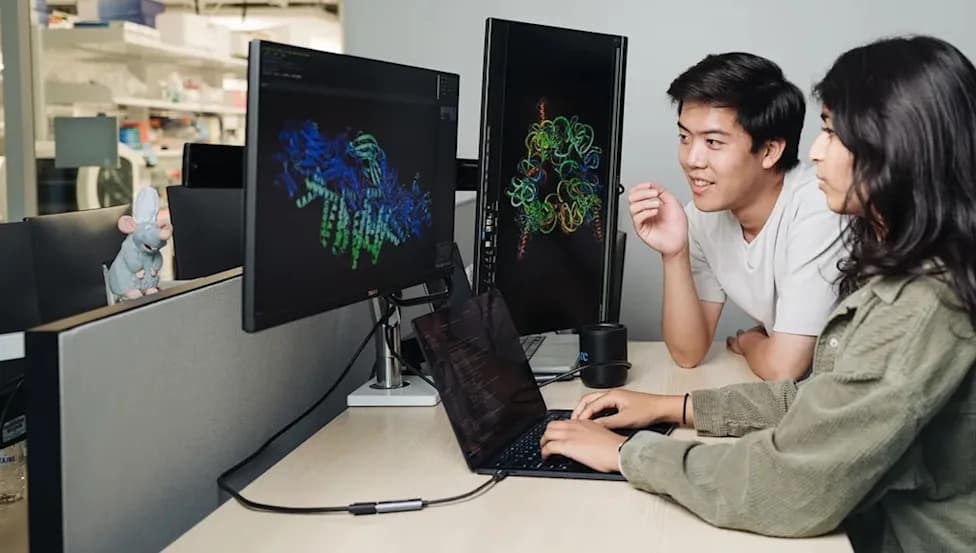
As a computational biophysicist interested in how living systems process information, my team and I asked whether single-celled organisms can learn from past experience. We tracked tens of thousands of Escherichia coli cells in a microfluidic device while switching their nutrient supply on and off at different rates.
Our experiments showed that bacteria do more than react to immediate nutrient levels: they also encode aspects of their nutrient history. If cells were purely reacting to present conditions, a sudden pulse of food would trigger the same response regardless of prior history. Instead, cells that had experienced alternating feast-and-famine cycles adjusted their behavior much faster when exposed to the same nutrient pulse than cells that came from a stable environment. Because the instantaneous conditions were identical, the behavioral differences point to an internal record of past experience — a cellular memory.
Where Is the Memory Stored?
To find where this memory might reside, we built a mathematical model of the molecular network that controls bacterial growth. The model reproduced the experimental behaviors across different nutrient regimes and pointed to a likely substrate: ribosomes, the cell’s protein factories that determine growth rate.
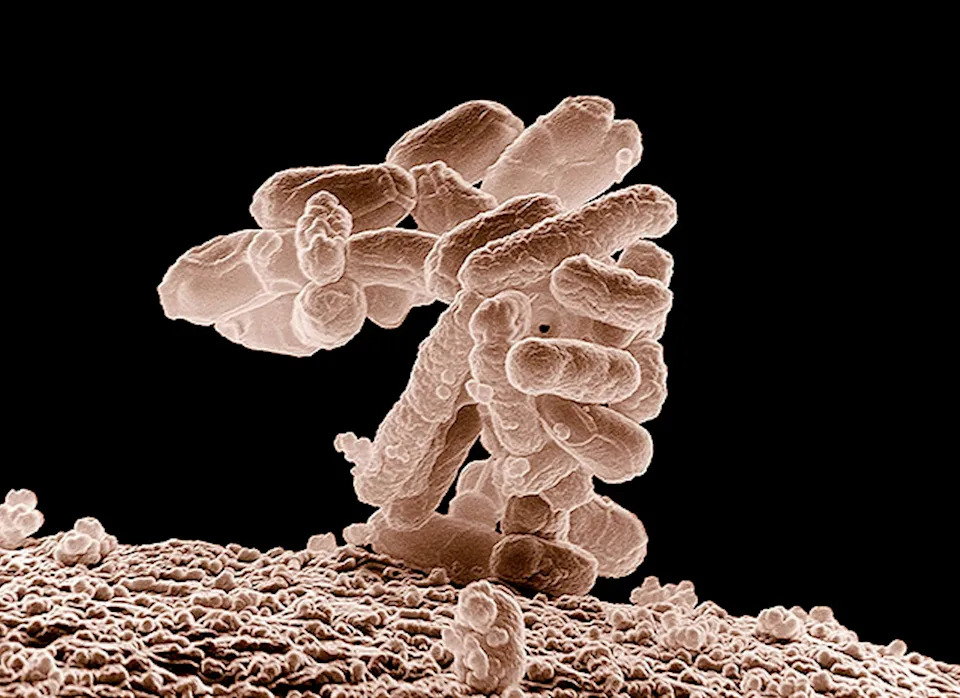
E. colican grow at remarkable rates.Eric Erbe, Christopher Pooley/USDA
Within that ribosome network, we identified separable populations that operate on different timescales: some ribosomes respond rapidly to nutrient changes and reflect the current environment, while others turn over more slowly and retain traces of past conditions. Together, these fast and slow responders give the cell a memory that spans minutes to hours and helps balance responsiveness with stability.
Ribosomes Behave Like Gated Neural Networks
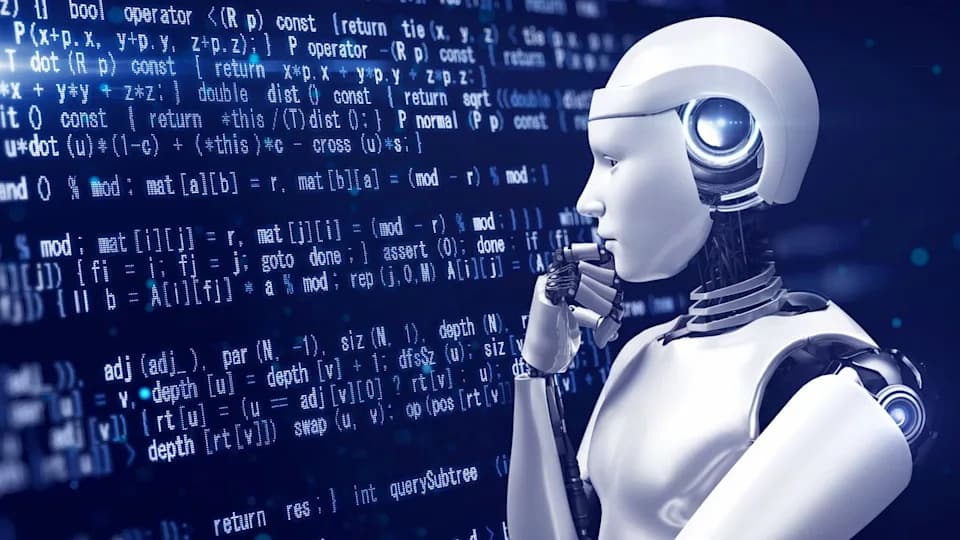
When we compared the computational logic of the ribosome network to artificial intelligence architectures, it resembled a gated recurrent neural network (GRU). The essential feature is a gate — a mechanism that decides how much of an existing memory to keep and how much to overwrite when new information arrives. In bacteria, this gating emerges from chemical kinetics and regulatory interactions rather than software.
Retaining memory carries a cost: maintaining readiness to adapt consumes resources that could otherwise support growth. By tuning molecular gates, cells actively balance the benefit of memory against the cost to growth, enabling efficient, history-dependent computation without neurons.
Implications for Biology, AI and Medicine
This work forges an unexpected connection between cellular biophysics and artificial intelligence. For biology, the mathematical model provides a precise, testable framework for describing how cells process information and make decisions. For AI, it suggests a biological blueprint for designing energy-efficient systems that learn continuously across multiple timescales.
There are also potential medical implications. Many pathogenic bacteria persist by adapting to changing conditions inside hosts. If that adaptability relies on cellular memory, future antimicrobials might target the molecular mechanisms — such as ribosome dynamics or gating interactions — that allow cells to store and use environmental information.
Study details: The paper was written by Shiladitya Banerjee (Georgia Institute of Technology) and published in PRX Life. It combined single-cell microfluidic tracking of E. coli with mathematical modeling to show how ribosome population dynamics can implement gated, history-dependent computation.
Note: This article summarizes research findings and does not constitute medical advice.
Help us improve.