Family-location apps meant to help parents monitor children are increasingly being used by teens to track their parents — a trend Life360 calls "fambushing." Surveys show widespread parental use of tracking tools, and many teens report checking relatives' locations multiple times a day for reassurance. Experts worry that constant digital verification can reinforce anxiety and that location data may be vulnerable to third-party access, forcing families to weigh safety against privacy.
Teens Turn Family-Tracking Apps on Parents — The Rise of "Fambushing"
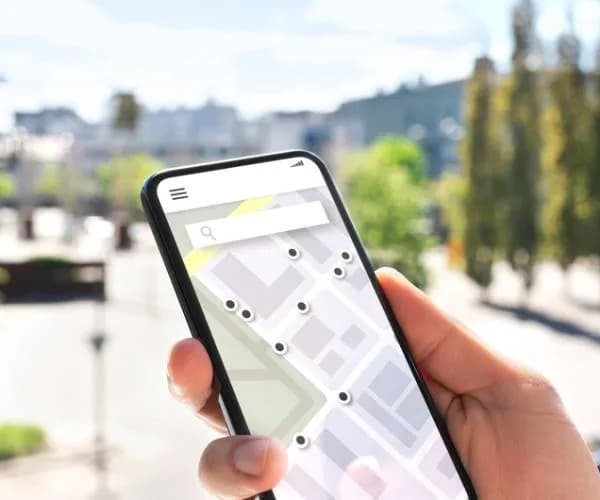
Apps originally designed to help parents monitor children are increasingly being used the other way around: teens and older children are checking relatives' locations to keep tabs on Mom and Dad. The phenomenon, dubbed "fambushing," raises questions about privacy, safety and the emotional costs of constant digital reassurance.
What Is "Fambushing"?
Life360, a popular family-location app, says teenagers — especially those old enough to drive — view relatives' locations more frequently than adults. The company coined the term "fambushing" (a blend of "family" and "ambushing") to describe teens who monitor parents at restaurants or coffee shops, then show up unannounced or ask parents to bring back food or snacks.
"We dug into the data and found that teens, especially those of driving age, check their family's location on the app at higher rates than their parents/adults do," Sheldon Bachan, Life360's director of communications, told The Washington Post.
How Common Is Family Tracking?
Surveys indicate that location-tracking within families is widespread. Roughly one-third of parents report using an app or other technology to track their children's locations, according to a Pew Research Center poll, while a Duke University study found about half of parents surveyed used tracking technology to monitor adolescents.
Why Teens Use Location Sharing
Many teens say they use location sharing for reassurance. Abbie Pruitt discovered how closely her children monitored her when she briefly disabled precise location sharing while shopping for Christmas. Within minutes, her college-age daughter, Kylie, called asking where she was. Kylie told reporters she checks family members' locations 10 to 12 times a day, calling it "comfort and security" — a calming way to confirm loved ones are safe.
"It's the comfort and security knowing that they are OK, and that they are going where they are supposed to be going, and that nothing is wrong," Kylie said. "Anything could happen to anybody on any day. Seeing their icon, it's very calming."
Expert Concerns: Anxiety and Privacy
Psychologists warn about the emotional downsides of constant reassurance. Angela Narayan, a psychology professor at the University of Denver, says relying on apps to allay worry can undermine a young person's ability to tolerate uncertainty and may reinforce anxious behaviors.
"It's an exercise in our own distress tolerance to be able to have some uncertainty and still see that things are going to turn out OK," Narayan said. "If a parent tells a worried child, 'Here, look at the phone... I'll reassure you,' that's just going to continue to reinforce that anxiety."
Privacy experts also urge caution. Andrew Ferguson, a law professor at George Washington University and author of Your Data Will Be Used Against You: Policing in the Age of Self-Surveillance, warns families to consider who else might gain access to location data and what lessons are being taught about constant tracking.
"I am more worried about how that data can be accessed by investigators and the lessons we teach our kids that everyone should be tracked at all times," Ferguson said.
Reporting by The Markup in 2021 found Life360 had sold location information involving adults and children. The company later said it had restricted the sale of user data and that it does not sell or share personal information for members it knows to be under 18. Still, experts emphasize the difficult trade-off between safety and privacy.
Bottom line: Family location apps can provide real reassurance and safety benefits, but they also pose privacy risks and may encourage dependence on constant digital verification that can exacerbate anxiety. Families should discuss boundaries, consider privacy settings, and weigh the emotional as well as practical consequences of shared location services.
Help us improve.