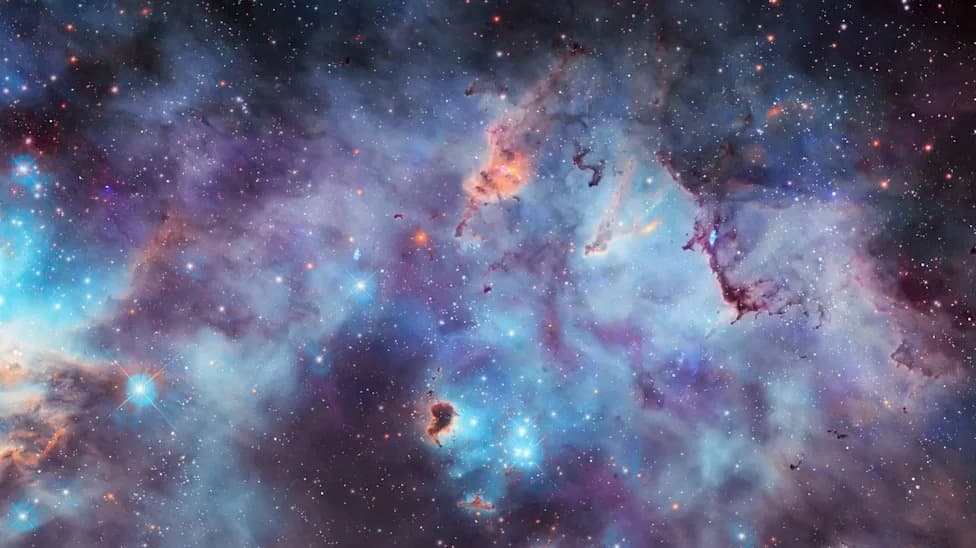
Only a few thousand stars are visible to the naked eye, but astronomers estimate far more across the observable universe. By counting galaxies in deep-sky images (about 2 trillion) and using the Milky Way as a typical model (≈100 billion stars), scientists estimate roughly 200 sextillion stars in the observable universe. These figures are approximate and apply only to the observable portion of the cosmos; future observations may refine them.
How Many Stars Are There in the Universe? — A Simple Guide to 200 Sextillion Suns
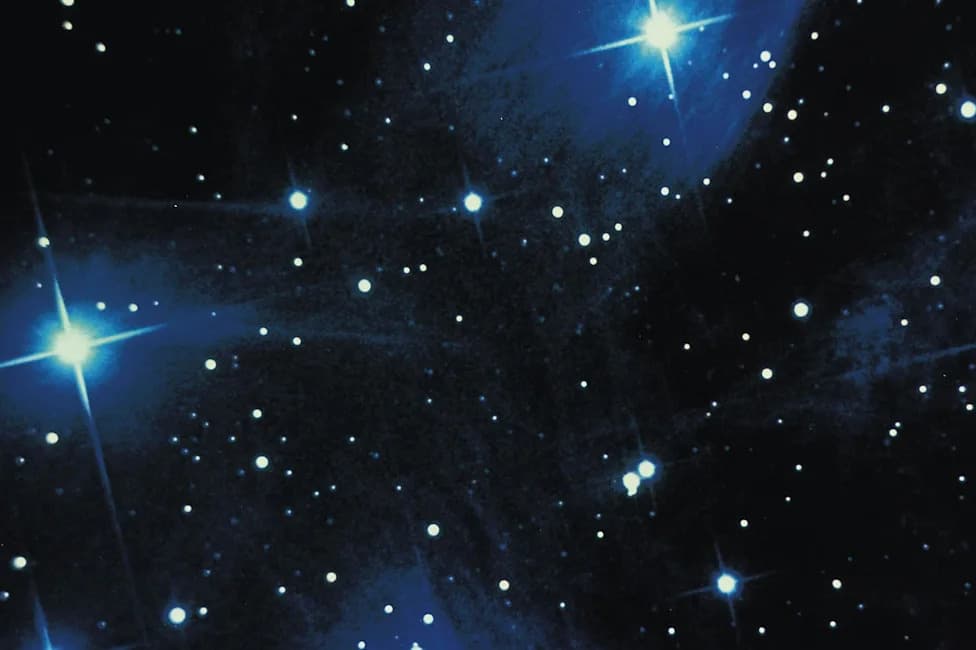
Astronomers have found a way to estimate the number of stars in the universe.Comstock Images via Getty Images
Look up on a clear night and you can see only a few thousand stars — roughly 6,000 at most with the unaided eye. But those visible points are just a tiny sample of the cosmos. Most stars are far too faint and distant for us to see.
The Sun Is a Star — and it’s the closest one to Earth, about 93 million miles away. Like other stars, the Sun is a glowing ball of gas with a core temperature near 27 million degrees Fahrenheit (about 15 million degrees Celsius).

The Sun is a star, the closest one to us – 93 million miles away.Roman Studio/Moment via Getty Images
Stars Live In Galaxies. Instead of being scattered uniformly through space, stars are gathered into enormous systems called galaxies — vast collections of stars, planets, gas and dust held together by gravity. Galaxies come in many shapes and sizes: spirals (like our Milky Way), elliptical (egg-shaped) and irregular.
How Astronomers Estimate Numbers
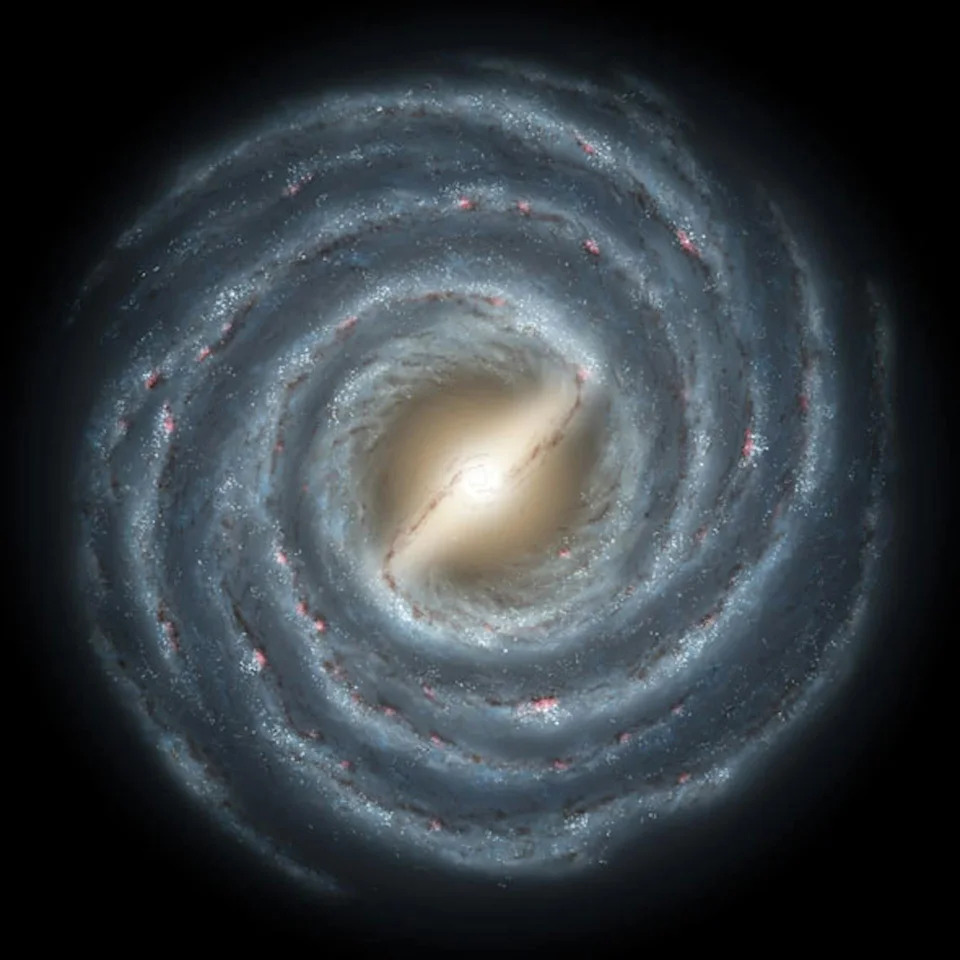
Artist's concept of a face-on look at the Milky Way. Note the spiral arms.NASA/JPL
To estimate the total number of stars in the observable universe, astronomers first estimate how many galaxies there are. They take very deep, detailed images of small patches of sky (for example, Hubble Deep Field–style observations), count the galaxies in those images, and then extrapolate to the whole sky. Using these methods, current estimates put the number of galaxies in the observable universe at roughly 2 trillion (about 2 × 10¹²).
We cannot count every star in each galaxy, since most are too distant to resolve individually. Instead, astronomers estimate the typical number of stars per galaxy by measuring a galaxy’s combined light (its brightness and color) and comparing that to well-studied galaxies like the Milky Way. Measurements suggest our Milky Way contains on the order of 100 billion (1 × 10¹¹) stars.
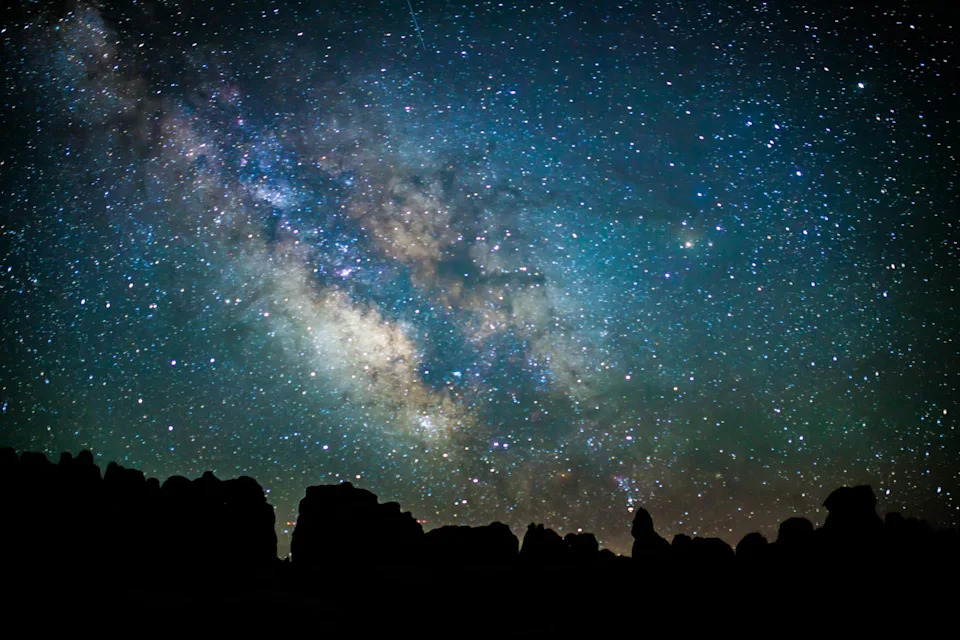
From Canyonlands National Park in Utah, a view of a small part of the Milky Way.National Park Service/Emily Ogden
Putting It Together
Multiplying a typical galaxy’s star count (≈100 billion) by the estimated number of galaxies in the observable universe (≈2 trillion) gives an enormous total: roughly 2 × 10²³ stars. That’s about 200 billion trillion stars — written out as 200,000,000,000,000,000,000,000 — often called 200 sextillion.
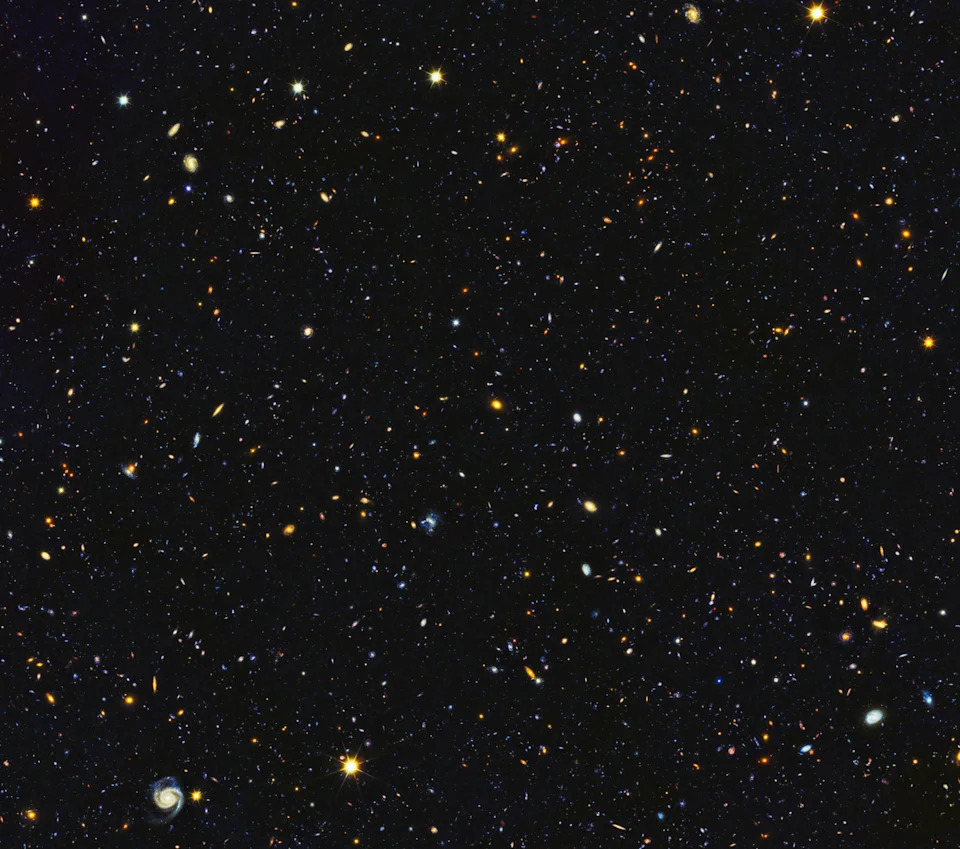
15,000 galaxies appear as small dots and blots in this NASA photograph of the nighttime sky. Each galaxy contains billions of stars.NASA/ESA/P.Oesch/M.Montes
What This Really Means
Those numbers are mind-boggling, so here’s one way to picture it: the estimated number of stars in the observable universe is on the order of ten times the number of cups of water in all Earth’s oceans. Keep in mind these are estimates for the observable universe — the portion of the universe from which light has had time to reach us. The entire universe beyond that could be much larger or even infinite.
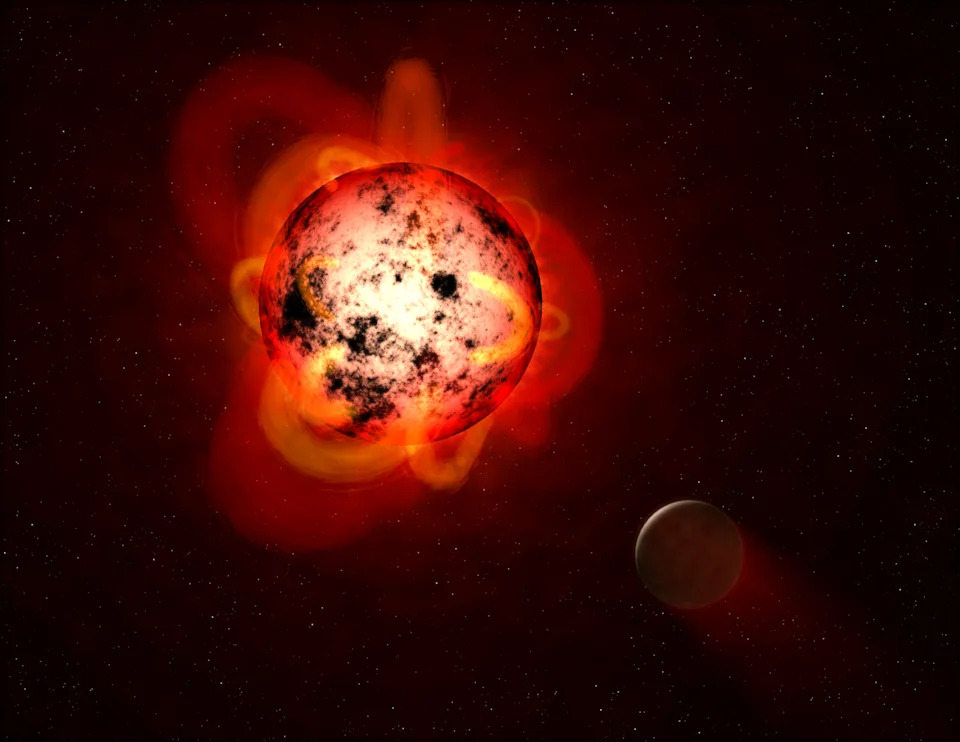
Artist's concept of a red dwarf star with an exoplanet in orbit. About two-thirds of the stars in the Milky Way are red dwarfs. Exoplanet is the name for worlds outside our solar system.NASA/ESA/G.Bacon/STScI
Uncertainties and Ongoing Work
All of these figures carry uncertainties. Better telescopes and surveys (for example, the James Webb Space Telescope and future wide-field missions) refine galaxy counts, reveal faint galaxies, and improve our estimates of stars per galaxy. As observations improve, the numbers may be revised.
So next time you gaze at the night sky, remember: the few thousand stars you see are just a tiny window into a universe that likely holds around 200 sextillion suns — and perhaps many more beyond our observational horizon.
Answer provided by Brian Jackson, Boise State University. Republished from The Conversation.
Help us improve.