NASA has installed a new 114‑foot (34‑meter) antenna, DSS‑23, at the Goldstone Deep Space Network complex to help handle rising communications demand from more than 40 deep‑space spacecraft. The antenna came online Aug. 3 and tracked the Chandra X‑ray Observatory after activation. DSS‑23 is the fifth of six 34‑meter dishes in the Aperture Enhancement Project, which has seen cost increases and delays; the final antenna is expected in 2029. While this expansion improves capacity, prioritization for Artemis crewed missions and growing international use mean DSN will remain resource‑constrained.
NASA Adds 114‑Foot (34‑Meter) Antenna at Goldstone to Expand Deep Space Network Capacity
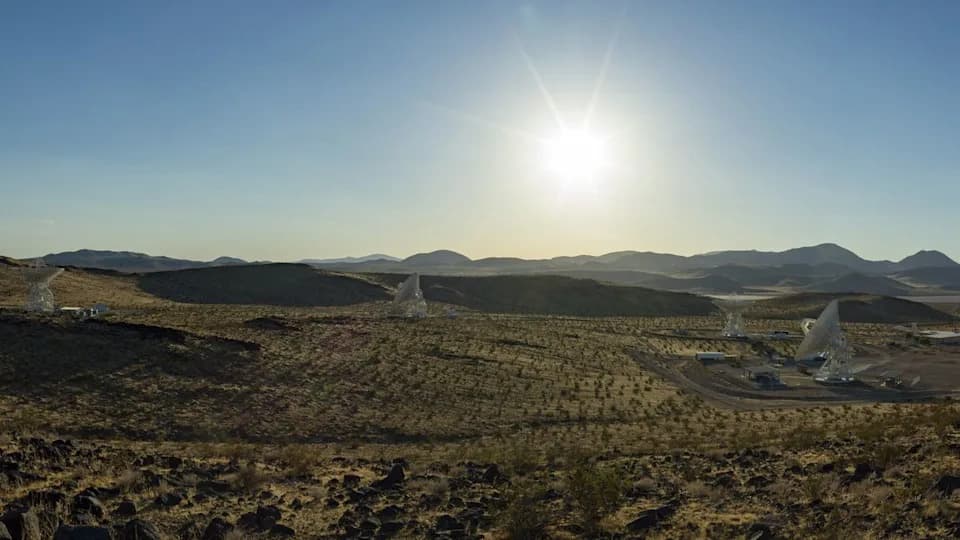
Antennas at the Deep Space Network's Goldstone complex near Barstow, California. The recently completed Deep Space Station 23 is in the foreground to the right. | Credit: NASA/JPL-Caltech
NASA has boosted the capacity of its Deep Space Network (DSN) with a new 114‑foot (34‑meter) radio antenna at the Goldstone complex in the California desert. The newly completed Deep Space Station 23 (DSS‑23) went online Aug. 3 and immediately began tracking the Chandra X‑ray Observatory, adding critical communications bandwidth to a network that supports dozens of distant missions.
Why the Upgrade Matters
The DSN is the agency's primary system for talking with spacecraft beyond Earth orbit — from Mars rovers to interstellar probes such as Voyager 1 and Voyager 2. More than 40 spacecraft currently rely on DSN resources, and growing traffic has strained the network's ability to serve every mission simultaneously. High‑priority crewed missions in the Artemis program have further tightened availability for robotic flights.
Prioritization and Capacity Challenges
NASA gave priority to communications for Artemis missions — including Artemis 1 in 2022 and the crewed Artemis 2 mission currently planned for 2026 — while those flights looped around the Moon. As Brad Arnold, DSN manager at JPL, warned in a presentation reported by Space News:
"We're trying to add capacity and more antennas, but we can't keep up with the demand that's currently out there, so missions should expect to be getting less availability."Arnold also described Artemis as "the gorilla in the room," noting that human spaceflight must be prioritized over robotic operations when necessary.
History and The Aperture Enhancement Project
The DSN traces its roots to early radio‑tracking stations deployed by JPL in the late 1950s. The modern network, formally established in 1963, now operates three complexes: Goldstone (California), near Madrid (Spain), and Canberra (Australia). Each site hosts large 230‑foot (70‑meter) dishes plus a suite of smaller antennas.
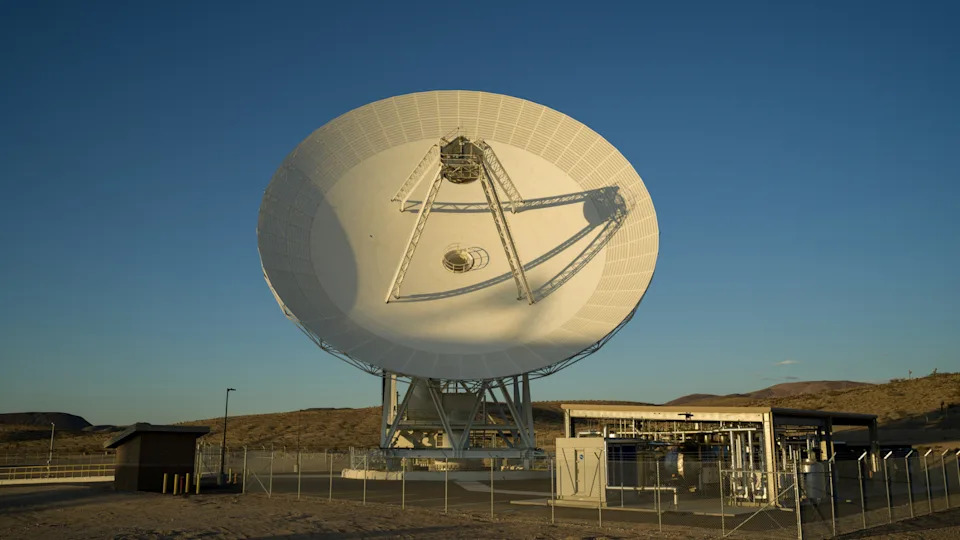
The recently completed Deep Space Station 23 at the Deep Space Network's Goldstone complex near Barstow, California. | Credit: NASA/JPL-Caltech
DSS‑23 is the fifth of six new 34‑meter antennas being added under the DSN Aperture Enhancement Project, which began in 2009. The final enhancement antenna, DSS‑33, is expected to come online at Canberra in 2029.
Costs, Delays and Outlook
The multi‑antenna expansion has taken longer and cost more than initially projected. A 2015 NASA Office of Inspector General estimate put the project at $362.4 million; by the start of fiscal year 2023 projected costs had risen by roughly 68% to about $706 million, and the program was nearly five years behind schedule. NASA continues to proceed with the upgrade program to address growing demand from both NASA and international partners.
What This Means for Missions
Adding DSS‑23 increases scheduling flexibility and helps relieve pressure on the larger 70‑meter dishes, but it does not eliminate capacity constraints. As lunar operations, international missions and future projects such as a planned lunar base increase communications needs, the DSN will remain a critical and heavily used asset. Continued investment and careful prioritization will be necessary to balance crewed and robotic mission requirements.
Bottom Line: DSS‑23 expands DSN capacity at a key U.S. site, providing immediate gains for mission support, but broader demand and schedule pressures mean the network will continue to face tough tradeoffs in the coming years.
Help us improve.