
Summary: SpaceX completed single- and six-engine static-fire tests on Ship 41 at its Starbase site on Aug. 19–20 as part of preparations for Starship Flight 14, which aims to reach orbit. The single burn lasted about 15 seconds and the six-engine run about 60 seconds. Flight 14 is tentatively targeted for early–mid September, though final prelaunch checks remain. Ship 41 and Booster 21 are now expected to perform soft ocean splashdowns instead of immediate return-to-launch-site recoveries.
SpaceX Fires Up Starship as Ship 41 Completes Static Fires Ahead of Possible First Orbital Flight
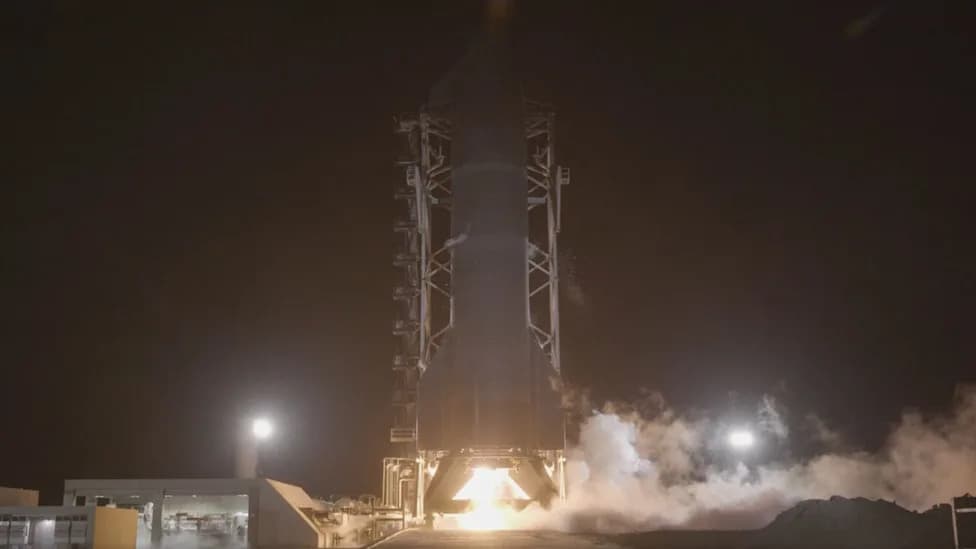
A tall finned black rocket fires an engine on a test stand in the black of night.
SpaceX accelerated preparations for the next Starship mission this week, running static-fire engine tests on Ship 41 — the upper stage slated for Flight 14, the vehicle’s planned first attempt to reach orbit.
What happened: On the night of Aug. 19, SpaceX performed a single-engine static fire on Ship 41 to demonstrate a deorbit-style burn for upcoming orbital missions. Video released by the company shows one of the craft’s six Raptor 3 engines igniting and burning for roughly 15 seconds at SpaceX’s Starbase site in South Texas.
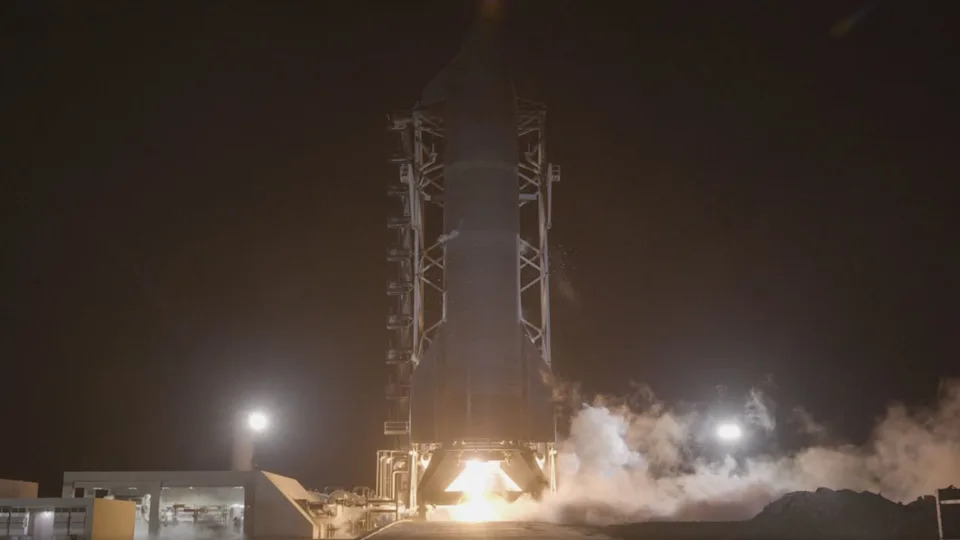
Credit: SpaceX
The test sequence continued on Aug. 20, when SpaceX conducted a full six-engine static fire that lasted about 60 seconds, with additional footage shared by NASASpaceFlight.com. These burns are meant to validate Ship 41’s engine performance and procedures ahead of an orbital attempt.
What’s next: With the initial static fires complete, Flight 14 is tentatively targeted for early to mid-September, pending a battery of prelaunch checks on Ship 41 and its Super Heavy booster, Booster 21. Because Flight 14 is intended to be Starship’s first orbital insertion, SpaceX is expected to proceed cautiously.
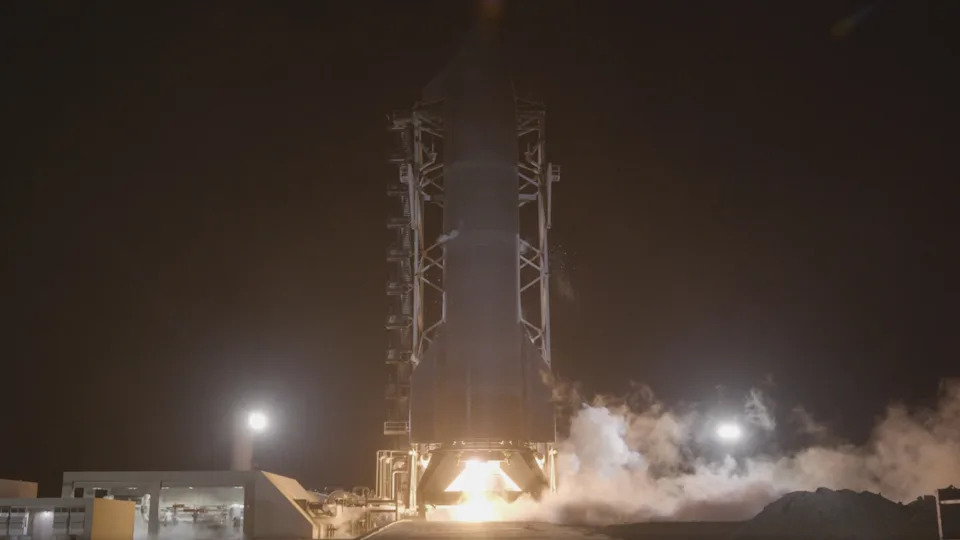
SpaceX conducts a static fire test with Ship 41, the upper-stage spacecraft slated to fly Starship's 14th test flight. | Credit: SpaceX
SpaceX now plans for Ship 41 and Booster 21 to perform soft ocean splashdowns at the end of the mission rather than attempting an immediate return-to-launch-site recovery. CEO Elon Musk has suggested a return-to-launch-site catch may follow in a few months. SpaceX has previously used the tower’s catch arms — nicknamed “Mechazilla” — to recover three Super Heavy boosters at Starbase and has reflown two of them; however, a V3 Super Heavy catch has not yet been attempted.
Context: Flight 14 will be the third Starship flight of 2026 and the third using the Version 3 (V3) configuration introduced in May. SpaceX is also modifying a V3 Starship to dock with NASA’s Orion spacecraft for the Artemis III mission. NASA selected SpaceX as one of two commercial providers for Artemis moon lander development, and a Starship-based lunar lander is planned for Artemis IV, currently targeted for late 2028.
Ambition and cadence: Reusing both stages of Starship is central to SpaceX’s cost and cadence goals. Musk has said the system could eventually support very high launch rates — from one flight per day to an aspirational goal of dozens per day — once development and operational hurdles are resolved.
Bottom line: Ship 41’s successful single- and six-engine static fires mark important milestones on the road to Starship’s first orbital attempt, but several critical checks and decisions remain before a launch date is confirmed.
Help us improve.





















