Attorney‑General Gali Baharav‑Miara says weakened enforcement of conscription among ultra‑Orthodox men is harming IDF recruitment and producing unequal application of the law. The August 3 review found a roughly 53% rise in haredi enlistment in the 2025 draft year (4,298 vs. 2,811) but concluded that fewer arrests have reduced prosecutions and left recruitment potential unrealized. The IDF and police have agreed to resume proactive operations and were ordered to submit an enforcement plan by August 30, while the review urges a rapid expansion of personal economic sanctions.
Enforcement Gap Harming IDF: Attorney‑General Urges Renewed Arrests and Economic Sanctions For Haredi Draft Evaders
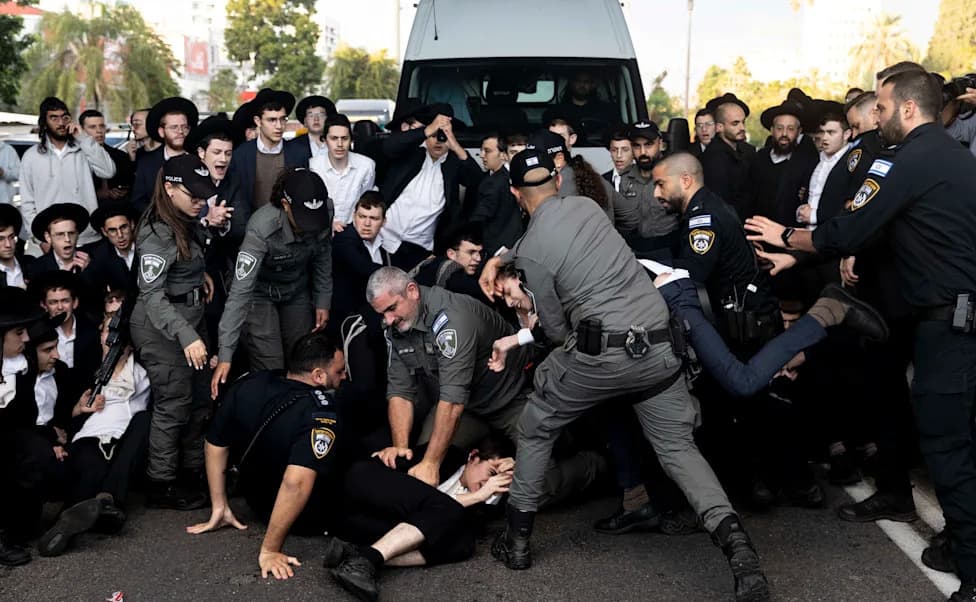
Israel's ultra-Orthodox Jewish sector has been protesting over the attempts to draft young haredi men into the military. (photo credit: Amir Levy/Getty Images)
Attorney‑General Gali Baharav‑Miara has urged renewed arrests and a broad expansion of economic sanctions against ultra‑Orthodox (haredi) draft evaders, saying weakened enforcement is undermining Israel’s conscription system and producing unequal application of the law.
Review of 2025 Draft Year
The Attorney‑General's Office on Tuesday published a summary of an August 3 review meeting that examined enforcement during the 2025 draft year (July 1, 2025 – June 30, 2026). Participants included professional representatives from the IDF, the Defense Ministry, the Finance Ministry, the Justice Ministry, the Israel Police, the Population and Immigration Authority and other government bodies.
Military officials told the meeting the primary driver of the enforcement gap is a fall in arrests: criminal proceedings typically begin only after an evader is detained or reports to a military facility, so fewer arrests translate into fewer prosecutions. Baharav‑Miara concluded that the current level of criminal enforcement falls short of the state’s obligations.
Impact On Recruitment And Equality
According to the summary, the enforcement shortfall causes tangible harm to effective draft enforcement, reducing the pool of recruits the IDF could otherwise obtain and producing disproportionate enforcement pressure on other segments of the population.
Statistic: Haredi enlistment increased by roughly 53% in the 2025 draft year — 4,298 men enlisted, up from 2,811 the previous year.
Professional officials identified four factors that contributed to the increase in enlistment: broader issuance of draft orders across the eligible haredi population; stronger personal economic enforcement; criminal enforcement, including arrests; and expansion of military service tracks adapted for haredi recruits. Officials said the combination of enforcement and tailored service options has been effective and warned that scaling back enforcement could weaken recruitment and deterrence.

Attorney-General Gali Baharav-Miara attends a House committee meeting at the Knesset, the Israeli Parliament in Jerusalem on, June 8, 2026. (credit: YONATAN SINDEL/FLASH90)
Legal And Political Context
In July the Knesset passed a temporary law that suspended arrest, investigation and prosecution of qualifying haredi yeshiva students who fail to report for military service. The government told the High Court it needed "haredi recruits, not haredi detainees," arguing that arrests could reverse recent enlistment gains and inflame tensions. The High Court froze that law a day after it passed and maintained the freeze after a July 28 hearing before a nine‑justice panel; a final ruling has not yet been issued.
The review recalled a series of High Court rulings directing equal enforcement: in June 2024 the court held the state could not refrain from applying conscription law to haredi yeshiva students without a statutory exemption; in November 2025 the court ordered effective and equal criminal and economic enforcement; and in April the court required ministries to implement specific economic measures and ordered police to assist military enforcement.
Operational Decisions And Next Steps
The IDF and the Israel Police told the review that proactive enforcement in haredi communities can provoke large‑scale disturbances and requires substantial resources. Baharav‑Miara said those operational challenges do not remove the state's obligation to enforce the law equally. According to the summary, the IDF and police agreed to resume planned proactive operations against haredi draft evaders in the near future and were instructed to submit an updated, detailed enforcement plan by August 30 describing intended operations and resource allocation among different groups of draft evaders.
The review also called for rapid expansion of personal economic measures — principally loss or restriction of state benefits — aimed at individuals who have not regularized their status with the military. Officials said such measures can be particularly persuasive, but the government has not yet adopted a single comprehensive policy and inter‑ministerial work on additional measures is ongoing.
Bottom Line
Baharav‑Miara’s assessment is that the past year shows both enlistment gains and persistent enforcement gaps: while tailored service tracks and increased enforcement coincided with a significant rise in haredi enlistment, disparities in arrests and prosecutions remain. Those disparities, she says, mean the draft is still not being applied equally and that the IDF is missing recruits it might otherwise obtain.
Help us improve.