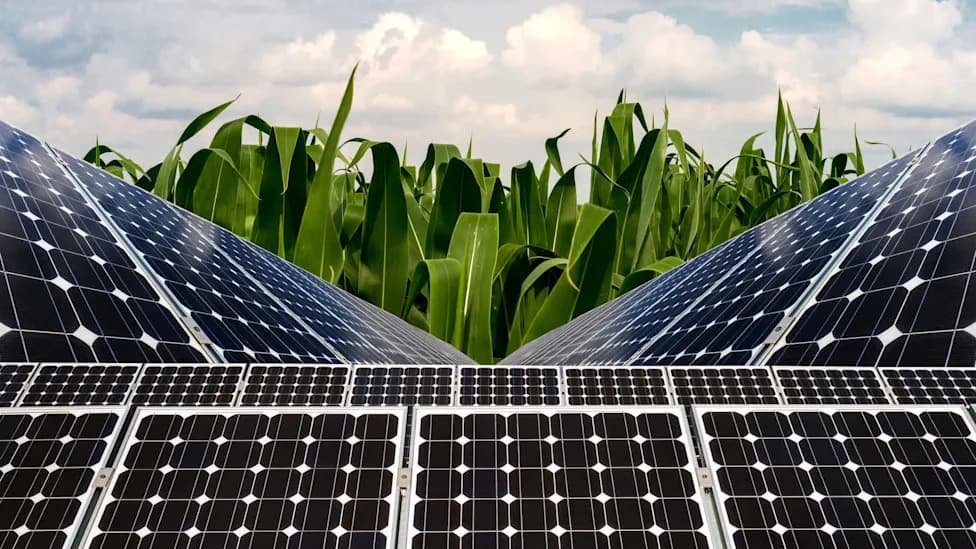
Egypt is testing agrivoltaics: solar panels elevated above crops to provide shade, reduce evaporation and generate electricity. Two pilot farms in South Sinai and Al Moghra, Marsa Matrouh, are operating under a consortium that includes 3E, Engazaat and Alexandria University. Early benefits include on-site irrigation powered by solar and reports of thriving watermelon; comprehensive data on yields, water use and power output are still being collected.
Agrivoltaics in Egypt: Solar Shade That Saves Water and Powers Farms
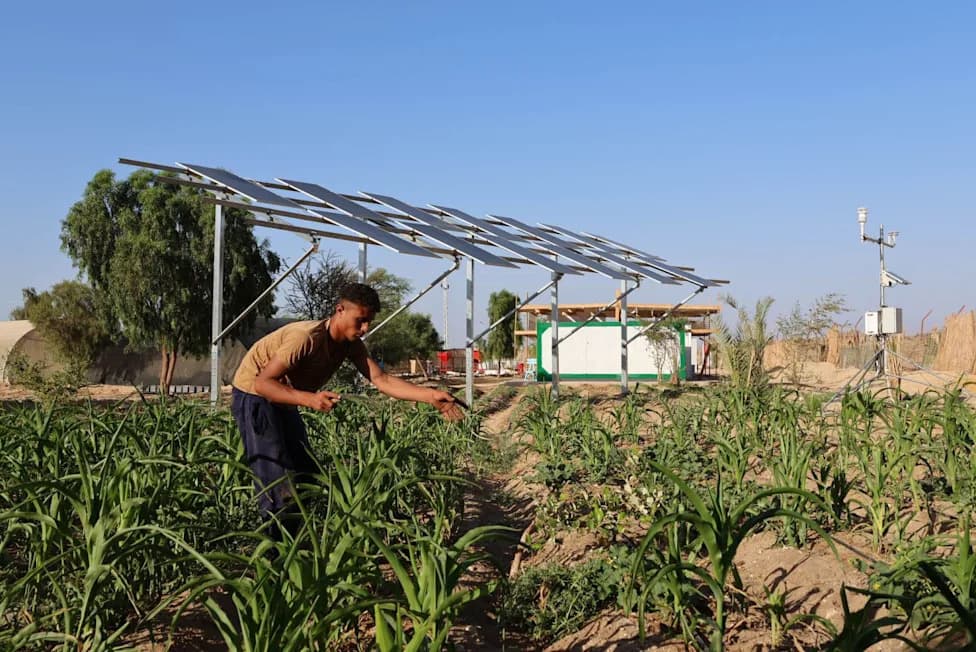
Image: 3e.eu
Egypt's farmers face two mounting pressures: brutal heat that can scorch crops and tightening water scarcity each season. While the Nile remains the backbone of Egyptian agriculture, conventional farming is under increasing stress. A new approach — agrivoltaics, which mounts solar panels above active fields — is being piloted to turn that challenge into an opportunity by combining shade, water savings and power generation on the same land.
How the Pilots Work
Agrivoltaic systems elevate photovoltaic panels above crops so a single parcel can both produce electricity and remain in agricultural use. In Egypt’s intense sun, the shade these panels provide is intentional: it reduces soil evaporation and eases heat stress on plants. Two on-farm pilots are now testing the idea in real-world conditions — a smaller installation in South Sinai and a larger follow-on project in Al Moghra, Marsa Matrouh.
The consortium behind both pilots includes 3E, Engazaat, ORG Infrastructure, Habiba Community and the Alexandria University Center of Excellence for Water. Organizers are measuring performance across different panel layouts, crops and microclimates to find practical trade-offs between energy and agriculture.
Operational Details
- Electricity generated so far is being used to power on-site irrigation equipment.
- Project teams are exploring whether the electricity could run desalination systems to treat brackish groundwater in the region.
- At the South Sinai site, watermelon has been reported as thriving under the panels’ shade, an encouraging early sign.
- Teams are still collecting comprehensive data on crop yields, panel output, water-use efficiency and local microclimate effects.
“It’s too early to call it a success,” a South Sinai farm operator said. That measured caution matters: denser panel arrays increase power but reduce sunlight for crops, while wider spacing favors plants but lowers electricity generation. These pilots test multiple spacing strategies to identify where both needs can be met.
Why This Matters
Egypt combines very high solar irradiance with acute water constraints, making it a consequential real-world proving ground for agrivoltaics. Research from organizations such as ICARDA suggests that, in drylands, agrivoltaics can reduce water consumption, improve yields and lower irrigation costs. If the approach proves effective across Egyptian farms, it could be scaled to other semi-arid regions facing similar trade-offs between land for food and land for energy.
The pilots are not definitive yet, but early operational success — including reports of watermelon thriving under panels — provides a practical, locally grounded first test of agrivoltaics in conditions that matter for global food and water security.
Help us improve.