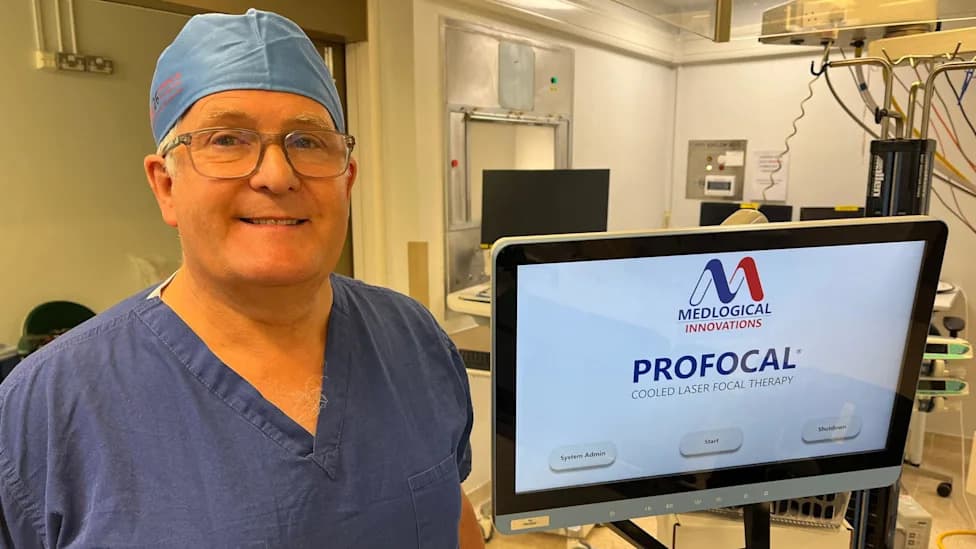
Aquablation—an AI-assisted robotic water-jet procedure—has become a centrepiece of care for enlarged prostates at Cheltenham General Hospital, treating hundreds of patients from across the UK. Using ultrasound mapping and an AI system trained on over 100,000 cases, surgeons program a high-pressure (up to 8,000 psi) water jet to remove excess prostate tissue with millimetre precision. Patients report faster recoveries, preserved sexual function (ejaculation preserved in ~90%) and very low continence issues (<0.5%). Surgeons stress the AI suggests plans but the clinician makes the final decision.
AI-Guided Robotic Water-Jet Surgery Helps Men With Enlarged Prostates Reclaim Their Lives
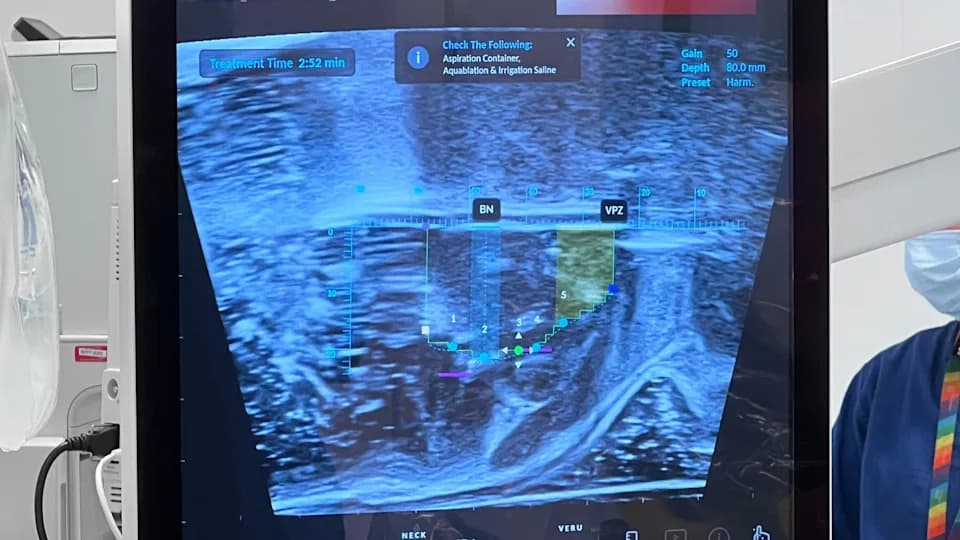
Aquablation uses AI to assist the surgeon with programming a high powered precise water jet at 8000psi to remove prostate tissue [BBC]
Cheltenham General Hospital has become the South West's centre of excellence for NHS Aquablation, a novel AI-assisted robotic procedure that uses a high-pressure water jet to remove excess prostate tissue while aiming to preserve sexual function and urinary continence.
How Aquablation Works
Aquablation combines real-time ultrasound mapping, robotic control and an AI-informed treatment plan. Surgeons first image the enlarged prostate with ultrasound and mark the areas to be removed. An AI system—trained on more than 100,000 prior procedures—proposes a plan that the surgeon reviews and finalises.
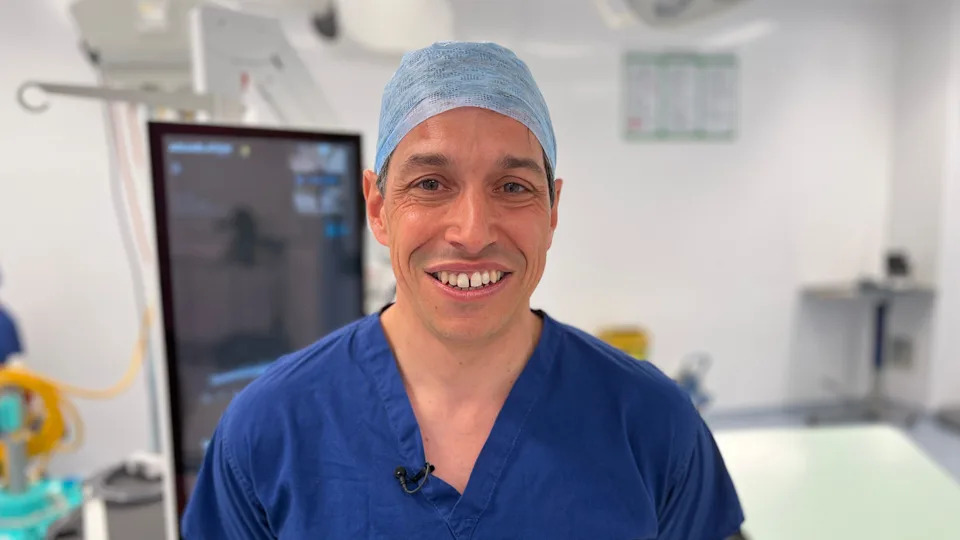
Consultant Urologist, Jeremy Nettleton, says Aquablation allows him to treat more patients and there are better outcomes for the majority of cases than other forms of treatment [BBC]
“Essentially it’s using a high speed pressure washer under ultrasound imaging to very accurately wash out some of the prostate tissue,” said consultant urologist Jeremy Nettleton.
The system delivers a focused water jet at forces up to about 8,000 psi. According to clinicians, the jet is controlled to within a millimetre and its effect is monitored continuously on ultrasound, allowing precise tissue removal with minimal thermal damage compared with techniques that use heat or cutting.
Patient Outcomes and Experience
Aquablation treats benign prostatic hyperplasia (BPH), a condition affecting more than four million men aged over 50 in England. Cheltenham has performed hundreds of procedures and now attracts patients from across the UK.

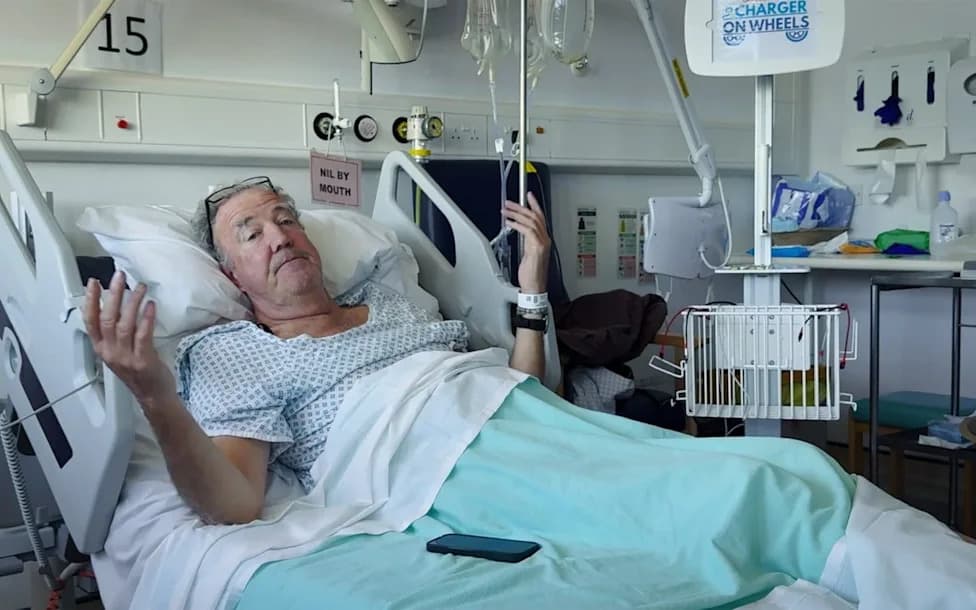
Patient Ian Kemp opted for the procedure over a traditional operation after more than 20 years of urinary infections due to an enlarged prostate [BBC]
Andy Ocock, 57, from Cheltenham, spent nearly a year with a catheter and lost confidence in running and cycling. After Aquablation—his very large prostate measured well over 100cc—surgeons removed roughly 80% of the obstructing tissue. Although his recovery took longer because of gland size, he says the procedure "gave me a normal life again" and that he has had to "relearn certain bodily functions" as they recover.
Ian Kemp, 67, from North Cornwall, had recurrent urinary infections for about 20 years. His operation took less than an hour and he returned home the next day. He reports quick recovery and the disappearance of infections.
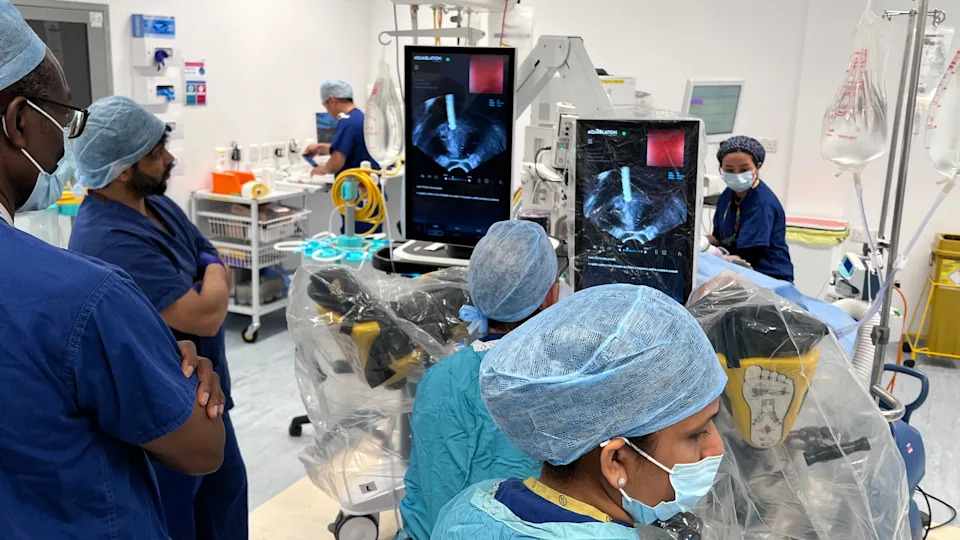
Cheltenham General Hospital has become a centre of excellence in the South West for the Aquablation procedure [BBC]
Clinical Benefits
Surgeons cite several advantages: faster recovery, low rates of certain complications and improved preservation of sexual function. Published literature and local experience suggest:
- Very low risk of new erectile dysfunction in some series (reported as 0% in selected studies),
- Ejaculation preserved in roughly 90% of patients, compared with much lower preservation rates with older techniques,
- Stress incontinence (leakage with coughing or exertion) reported at under 0.5% in many reports.
Dr Nettleton says the technology has been game-changing for his practice, letting him treat more patients in a day with improved outcomes in the majority of cases. He emphasises that the AI proposes a plan but the surgeon retains final control and responsibility for treatment decisions.
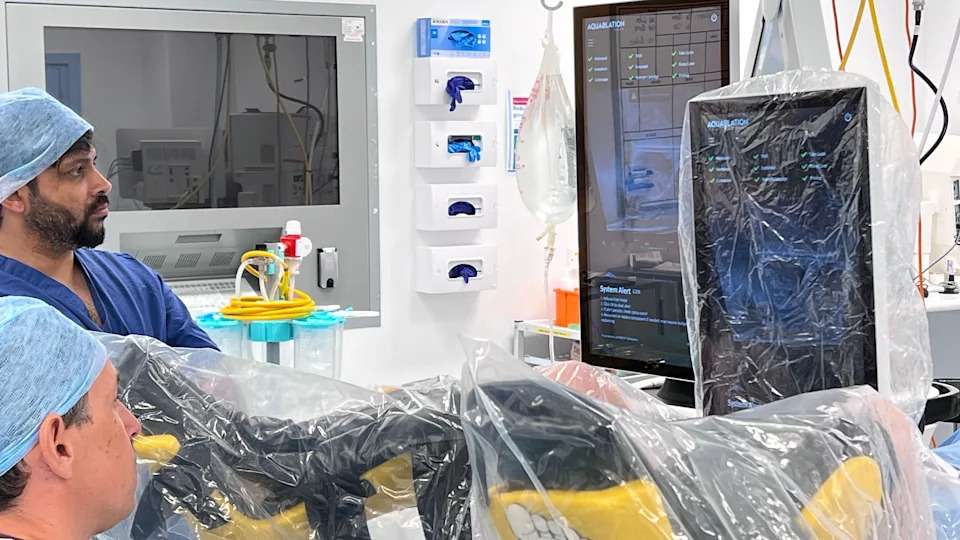
Aquablation can preserve sexual function in around 90% of patients. [BBC]
Access and Future Adoption
Demand for Aquablation is growing as more men seek alternatives to traditional transurethral resection of the prostate (TURP). While outcomes are promising, wider adoption will depend on further clinical data, training and local NHS provision.
Bottom line: AI-guided Aquablation is a precise, minimally invasive option that is restoring quality of life for many men with enlarged prostates, with encouraging functional outcomes and short hospital stays in experienced centres.
Help us improve.