Summary: Giovonni Santiago helped found the G.I.V.E. Clinic at the Louis Stokes Cleveland VA Medical Center to provide coordinated, knowledgeable care for transgender veterans. Since 2025, the Trump administration has rescinded VA guidance on respectful treatment, halted most new hormone prescriptions, and removed gender-identity initiatives — moves that curtail services and reshape coordinator programs. The changes jeopardize access to care for transgender veterans, threaten clinicians who provide that care, and also affect LGB veterans who used shared resources.
A Trans Veteran Built the VA's First Trans Clinic — Now Its Services Are Being Rolled Back
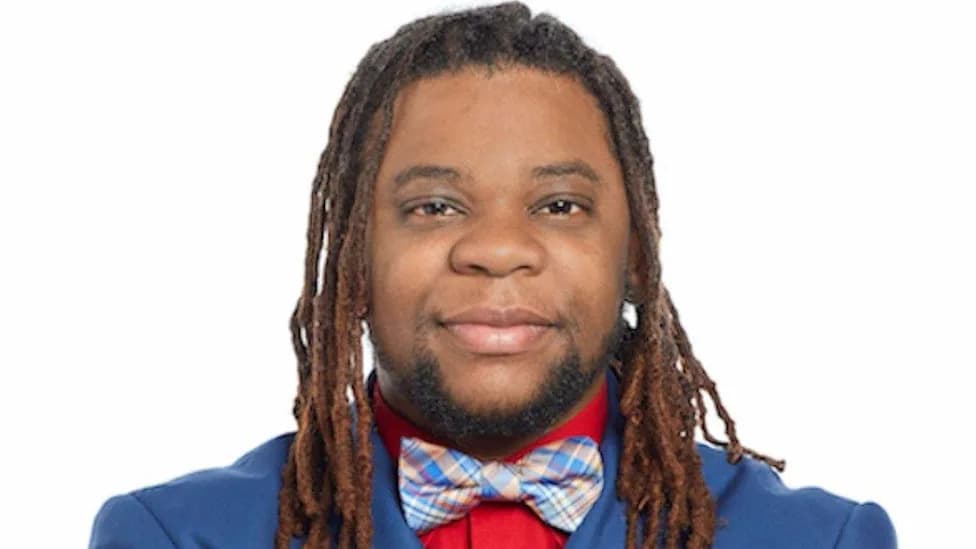
gio santiago
A decade ago, Giovonni Santiago pushed the Department of Veterans Affairs for something new: a dedicated clinical space where transgender veterans could see clinicians who understood their needs. The VA answered, creating the Gender Identity Veterans Experience (G.I.V.E.) Clinic in Cleveland — and now, Santiago says, policies from the Trump administration are dismantling much of what he and clinicians built.
From a small request to a pioneering clinic. Santiago, an Air Force police officer from 2006 to 2010, identified as a lesbian while serving under "don't ask, don't tell." After a medical discharge for a back injury, he began transitioning through the VA in 2013 and became the first transgender patient to tell Dr. Megan McNamara, his primary care physician, about his transition. McNamara — who led the G.I.V.E. Clinic at the Louis Stokes Cleveland VA Medical Center — began seeing more transgender patients, and Santiago helped organize support groups and advocate for a dedicated space.
The G.I.V.E. Clinic opened in November 2015 as what was described at the time as the VA system's first transgender-specific clinic. It combined primary care, hormone therapy, mental health services and social supports under one roof. In 2016 Santiago founded META Center Inc., an Ohio nonprofit supporting transgender youth and adults.
"It's frustrating, but not surprising," Santiago told The Advocate. "We did all of this hard work to get here, and she's done all of this hard work sustaining it, to see it possibly start to crumble."
Policy Changes and Their Effects
The rollback has unfolded in stages. In March 2025, the administration rescinded a VA directive that had established standards for respectful treatment of transgender and intersex veterans, including rules on access to gender-aligned facilities. Days later, the VA halted new hormone prescriptions for most transgender veterans and eliminated supports such as voice training and prosthetics — services major medical organizations recognize as medically necessary for many transgender patients.
The department allowed veterans already receiving hormones from the VA, or those continuing prescriptions from the military at separation, to remain on their regimens, and it said general and mental health care would continue. Officials claimed any savings would be redirected to paralyzed veterans and amputees but acknowledged the department lacked records quantifying past spending on transgender care. Transgender veterans account for under 0.1% of the VA's roughly 9.1 million enrollees.
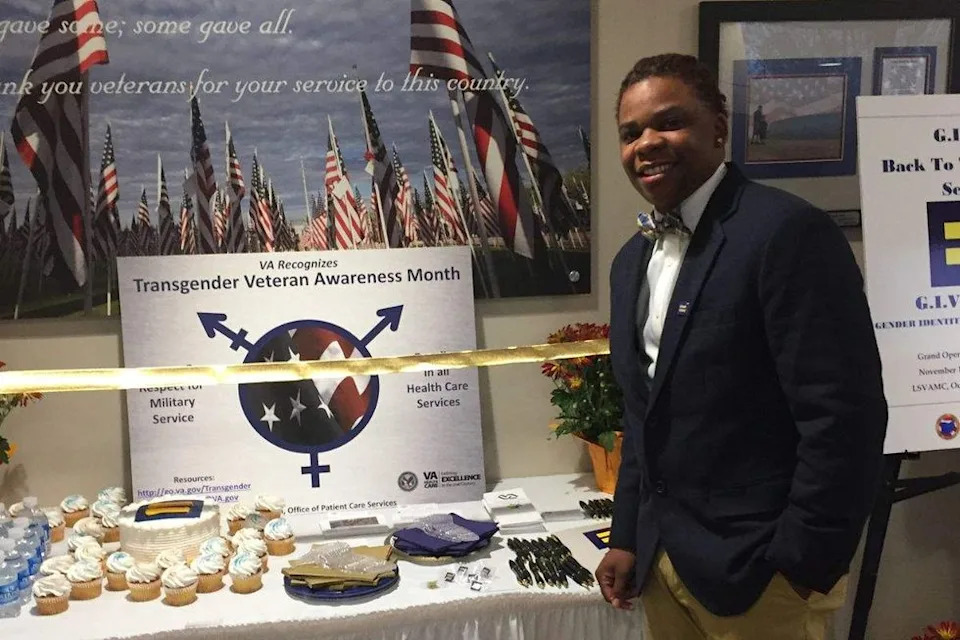
gio santiago at a table with a sign that states va recognizes transgender veteran awareness month
Restrictions expanded further. The VA prohibited clinicians from writing letters in support of gender-affirming surgery even when veterans planned to obtain and pay for those procedures outside the system. In June 2026, an internal memorandum directed facilities to eliminate gender identity–based initiatives and remove "LGBTQ+" from the Veteran Care Coordinator program; a July email curtailed specialized meetings, training and shared resources, converting LGBTQ+ coordinators into general care coordinators.
Human Consequences
For Santiago — a veteran with a 100% VA disability rating — losing access to VA-covered care would be life-altering. "It would look exponentially different because it would cost so much more," he said, noting private care would reduce his take-home pay and leave him facing bills for hormones, primary care and other services his military service earned him.
He also worries about clinicians and staff. "I would never want my healthcare to cause her to lose her job," Santiago said of Dr. McNamara. Nurses, social workers and schedulers who supported transgender patients now face the risk of professional repercussions for providing care they believe their patients need.
Beyond transgender patients, Santiago warned that the dismantling of coordinator networks and inclusive initiatives affects lesbian, gay and bisexual veterans too. The coordinator program served many groups across the LGBTQ+ spectrum, and its removal could narrow access for other veterans who relied on those resources.
Current status: Santiago says the clinic's work continues but no longer operates from a dedicated space; he has seen McNamara recently and has appointments scheduled, but he and providers face uncertainty as policy changes reshape who can receive, refer, and provide gender-affirming care within the VA.
Note: This article synthesizes reporting on local care innovations and national policy shifts affecting transgender and LGBTQ+ veterans, highlighting both individual consequences and system-level changes.
Help us improve.