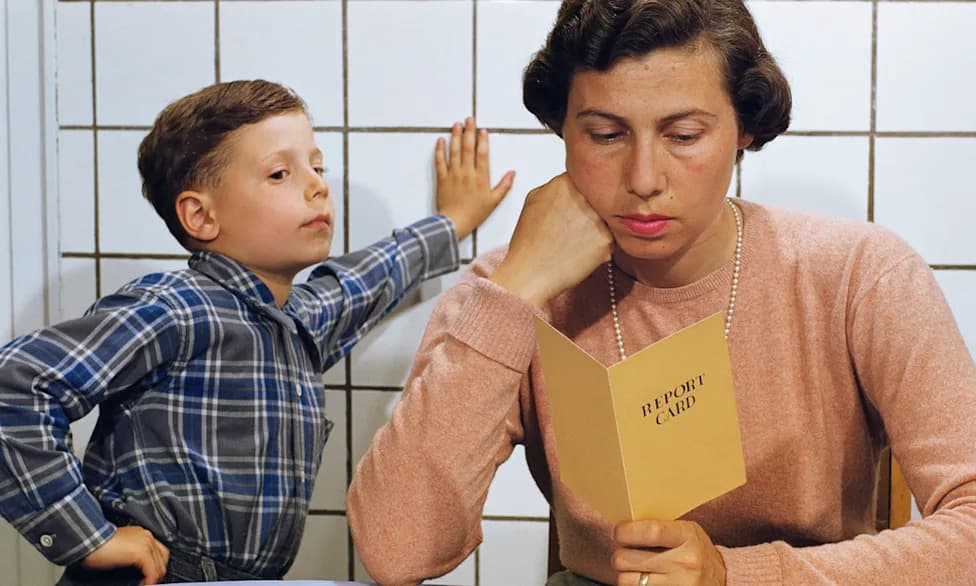
South Carolina's law that took effect July 1, 2026, bars districts from forcing minimum grades and allows teachers to record zeros when no work is submitted. No-zero or minimum-grade policies have spread widely in recent years, but evidence on their effects is mixed: some studies link them to higher graduation rates, while others say they inflate grades and hide missing work. The author recommends three reforms: define what grades are meant to measure, separate work habits from academic mastery, and replace the 100-point scale with a simpler proficiency rubric.
South Carolina Lets Teachers Give Zeros Again — But America's Grading Problem Runs Deeper
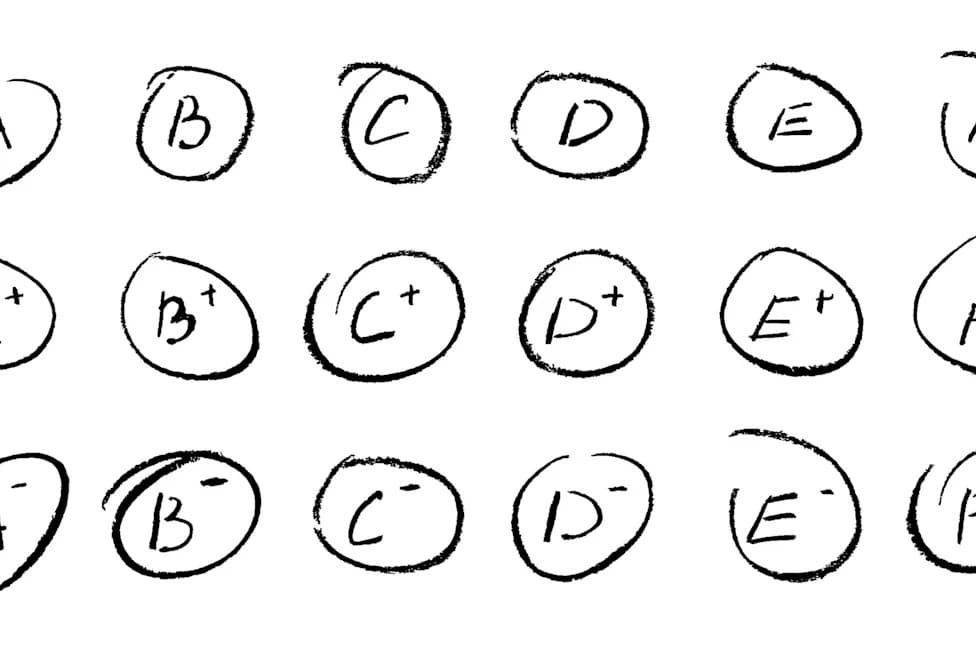
Because course grades get averaged, a student who receives just one zero can be dragged down more than a perfect score can lift them.Mariia Vdovychenko/iStock/Getty Images Plus
Grades in high school and college can shape students' futures: they influence GPAs, class rank, college admissions, athletic rosters and scholarship awards. Yet many U.S. districts have adopted "no-zero" or minimum-grade policies that prevent teachers from recording a true zero — even when students submit nothing.
South Carolina recently changed that. A law that took effect July 1, 2026, prohibits districts from forcing teachers to impose minimum grades and allows instructors to record grades that reflect a student's actual performance, including a zero when no work is submitted. Districts that require teachers to inflate grades face a penalty: the loss of 10% of a category of state classroom funding.
Why Schools Adopted No-Zero Policies
Over the past decade, thousands of schools adopted grade floors — commonly 50 or 60 points — or outright bans on zeros. Advocates say these policies prevent a single missed assignment from wrecking a student’s semester and provide more consistent outcomes across teachers who grade differently. In one 2025 study, about half of K–12 teachers reported their districts used some version of a minimum-grade policy.

South Carolina is the first state to pass a law that prohibits no-zero grading, allowing teachers to give below a minimum grade of 50 or 60.Lisa-Blue/iStock/Getty Images Plus
The Mathematical Problem
On a 0–100 percentage scale, a passing grade typically begins at 60. The D–A letter-range fits into the 40 points from 60 to 100, while failure occupies the 60 points below. Because course grades are averaged, a single zero can drag an otherwise strong set of scores dramatically downward. For example: four assignments at 90+ points plus one zero average to about 72 — roughly a C — demonstrating how a single zero can be disproportionately punitive.
Evidence Is Mixed
Research on minimum grades produces mixed findings. Some studies link grade floors to higher graduation rates and suggest they help struggling students stay engaged. Other work warns that grade floors can inflate marks and hide missing work or lack of learning. A 2024 analysis even called grade floors a "band-aid on a wound that never heals."
Key tension: Are we helping students recover, or are we masking poor performance?
The Deeper Problem
Both grade floors and South Carolina's law treat the symptom — unfair or punitive outcomes from single zeros — without fixing the underlying issues: ambiguity about what a grade should communicate and the limitations of the 100-point percentage scale.

Teachers are asked to measure both what students learned and how students worked with a single grade – separate factors that might not be possible to assess with one single score.Maskot/iStock Photos/Getty Images Plus
Three Practical Reforms
My research suggests three actionable changes that can make grading fairer and more meaningful:
- Agree On What Grades Mean. Schools should adopt a clear, written policy stating whether grades report learning (mastery of content) or include behavioral measures like homework completion. Clarity reduces inconsistencies across classrooms.
- Separate Work Habits From Academic Mastery. Record effort, participation and punctuality on a distinct line of the report card so a course grade reflects actual learning. Blending both can shift a final grade by an entire letter.
- Move To A Proficiency Scale. Replace the 100-point system with a four- or five-level rubric (e.g., Beginning, Developing, Proficient, Advanced). On a compact scale, the lowest level represents insufficient mastery without creating a 60-point recovery gap.
Where This Might Head
South Carolina is the first state to ban district-mandated minimum-grade policies, but other states are watching. North Carolina has public debate on the subject, and Texas law since 2009 protects teachers who record the grades students actually earned. At the college level, debates over grade meaning continue — Harvard recently capped the proportion of A's awarded.
Conclusion
Allowing teachers to record zeros restores a form of accuracy, but it will not solve the deeper fairness problems in grading. Real reform means clarifying the purpose of grades, separating academic mastery from work habits, and rethinking the percentage scale. With those changes, report cards would give parents, colleges and employers clearer, more useful information.
Laura Link is a researcher at the University of North Dakota and consults with school districts through GradingRx. This article was originally published by The Conversation.
Help us improve.