Summary: USS George Washington transited the Singapore Strait on Aug. 13 and is reportedly headed to the Middle East to relieve USS Abraham Lincoln, which will hit nine months on deployment. The move temporarily leaves the Indo‑Pacific without a U.S. carrier, highlighting strain on the carrier fleet and munitions stocks. Abraham Lincoln and George H.W. Bush remain active in CENTCOM, enforcing a maritime "steel wall"—Lincoln has flown 10,000+ sorties and delivered over 1.5 million pounds of ordnance. PCU John F. Kennedy completed acceptance trials and is 98% complete ahead of a planned 2027 delivery.
Where Are the Aircraft Carriers? — U.S. Temporarily Leaves Asia Without a Carrier as George Washington Heads to Middle East
TWZ/IAN ELLIS-JONES
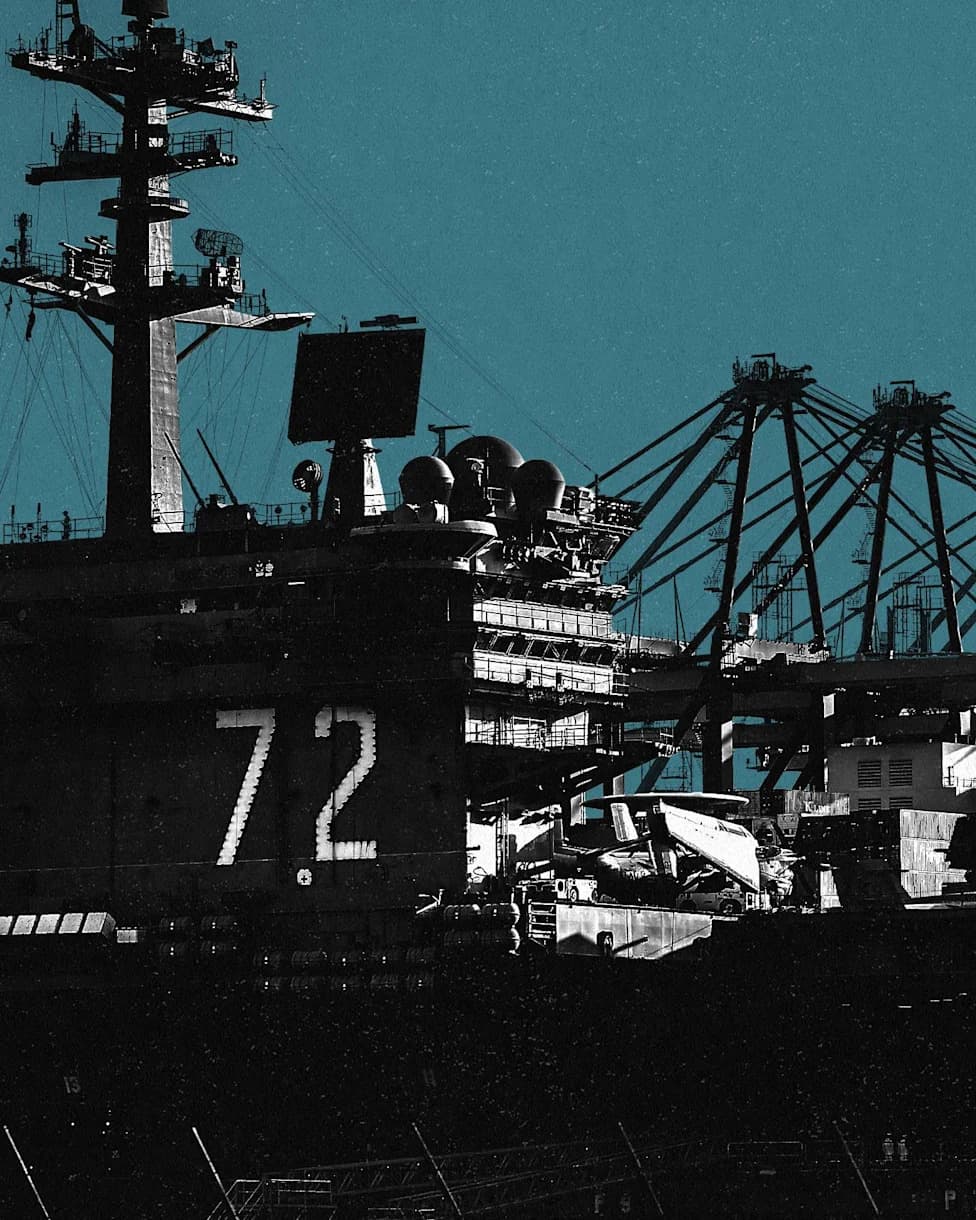
Relief may be coming for the crew of USS Abraham Lincoln, who have conducted continuous operations without a liberty port call since the carrier deployed in November 2025. On Aug. 13, USS George Washington's Carrier Strike Group transited the Singapore Strait and is reportedly sailing to the Middle East to relieve Abraham Lincoln, which will reach the nine-month deployment milestone this week, according to reporting by The Wall Street Journal.
Key Movements and Operational Context
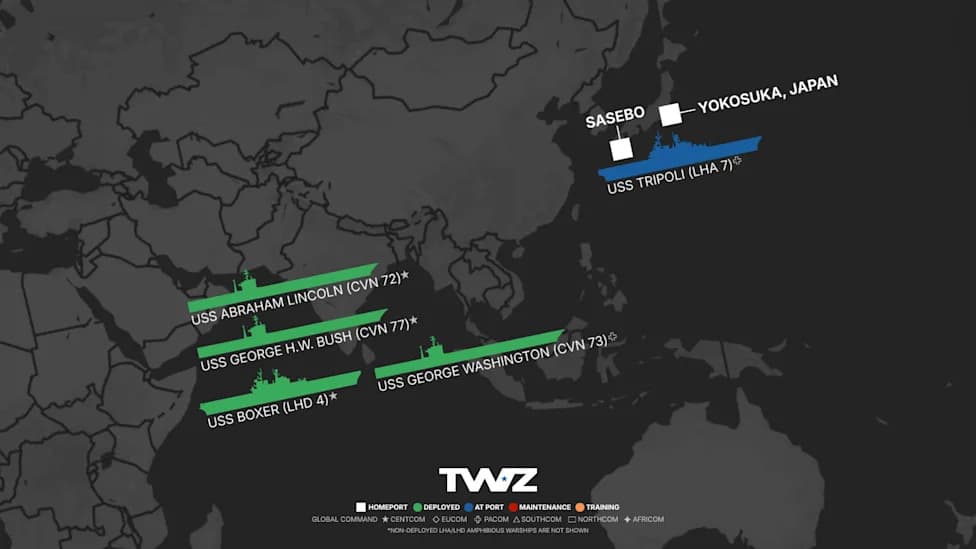
The three-ship strike group led by Nimitz-class flagship USS George Washington (CVN 73) transited northbound through the Malacca Strait, entered the Andaman Sea, and has been steaming west into the Indian Ocean. The transit to U.S. Central Command (CENTCOM) can take days to weeks depending on speed, route and logistics stops; the strike group could arrive in CENTCOM as soon as this week, though no official arrival date has been announced.
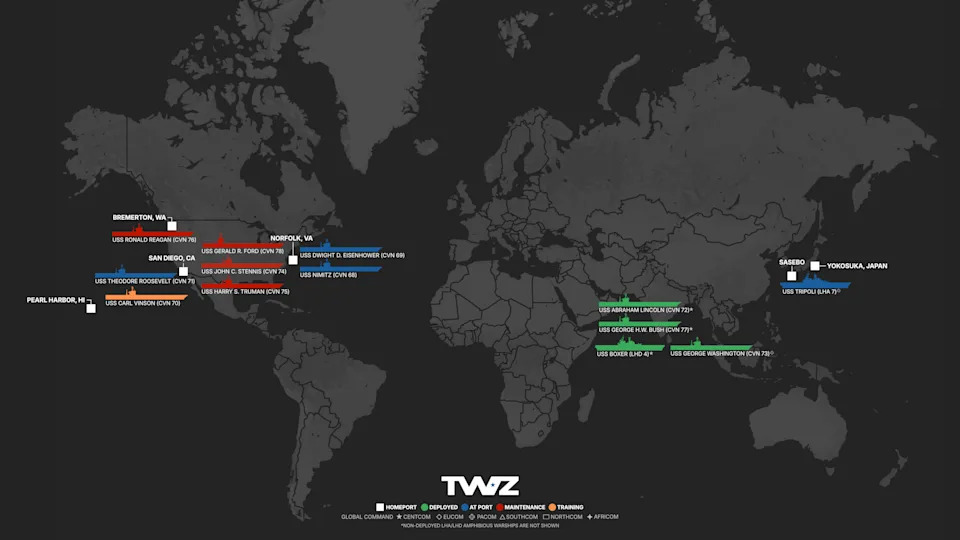
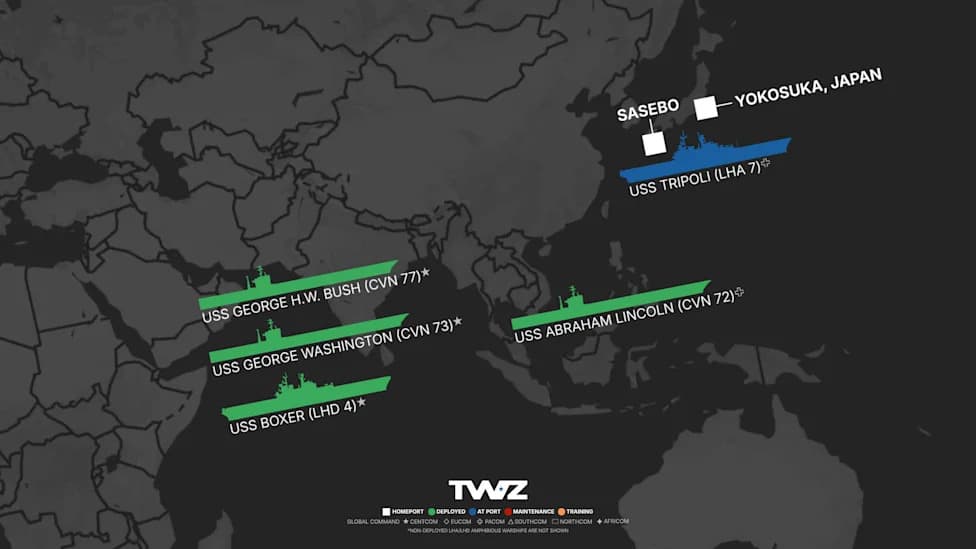
TWZ's weekly carrier tracker monitoring America's flattop fleet, including deployed Carrier Strike Groups (CSG) and Amphibious Ready Groups (ARG)
TWZ sought confirmation from George Washington's Public Affairs Officer, U.S. Pacific Command PAO and Pentagon Press Operations, but was told:
"We have nothing to provide due to operations security."Subsequent reporting by Stars and Stripes and CNN cited unnamed U.S. officials corroborating the move.
Why This Matters: A Carrier Gap in the Indo‑Pacific
George Washington's redeployment temporarily leaves Adm. Samuel Paparo, commander of U.S. Pacific Command (PACOM), without a U.S. carrier in the Indo‑Pacific. Carrier absences in the Pacific were rare until 2024, the first year in decades with no flattops in Asia, and the current repositioning underscores ongoing strain on the carrier force and munitions stocks.
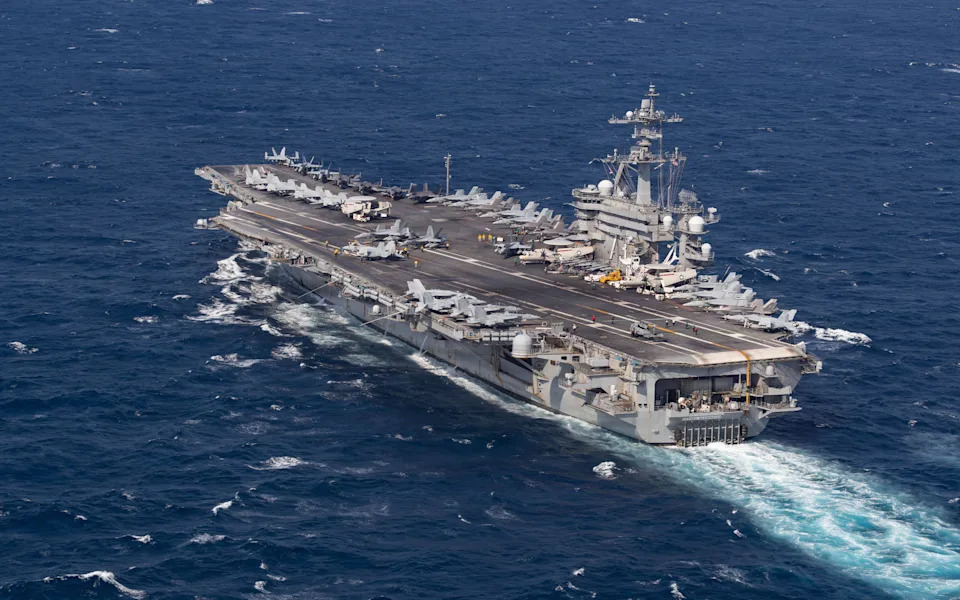
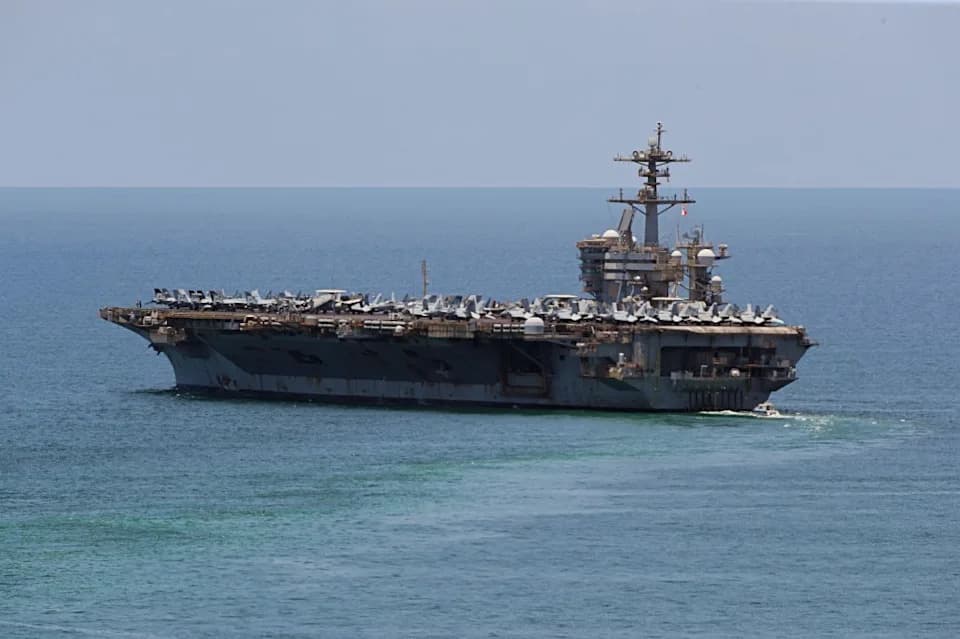
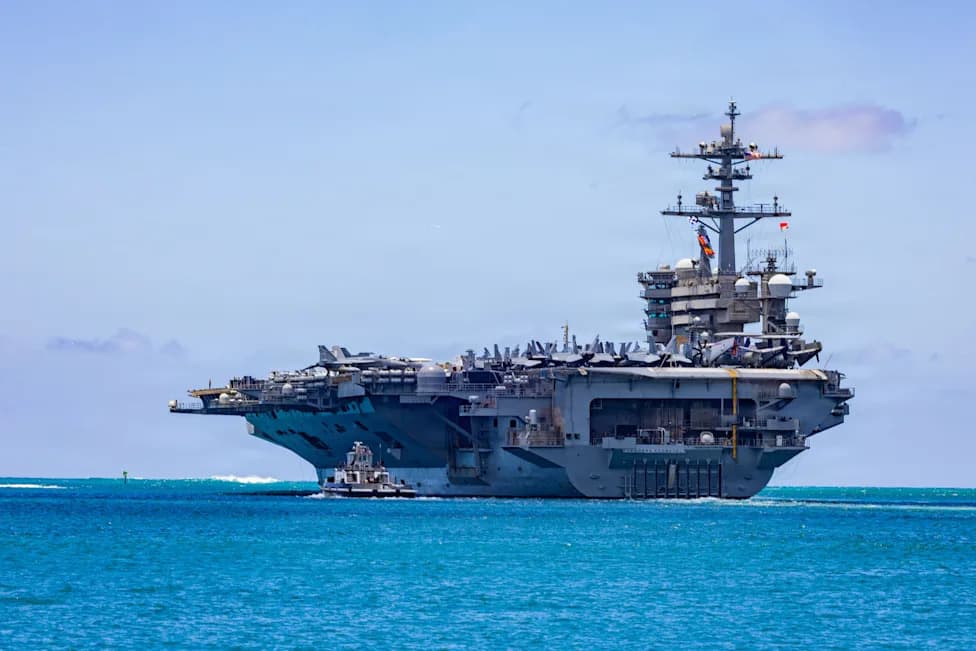
Nimitz-class aircraft carrier USS George Washington (CVN 73) operates in the South China Sea, Aug. 8, 2026. George Washington, operating in the U.S. 7th Fleet area of operations, is the U.S. Navy's premiere forward-deployed aircraft carrier, a long-standing symbol of the United States' commitment to maintaining a free and open Indo-Pacific, while operating alongside allies and partners across the U.S. Navy's largest numbered fleet. (U.S. Navy photo by Mass Communication Specialist Seaman Anthony Vilardi) Seaman Apprentice Anthony Vilardi
Adm. Paparo previously warned that demands for munitions in other theaters "inherently impose costs on the readiness of America to respond in the Indo‑Pacific region… it is now eating into [our] stocks, and to say otherwise would be dishonest." If an unforeseen contingency arises in Asia, the nearest available carrier will be operating in another part of the world.
CENTCOM: Abraham Lincoln and George H.W. Bush
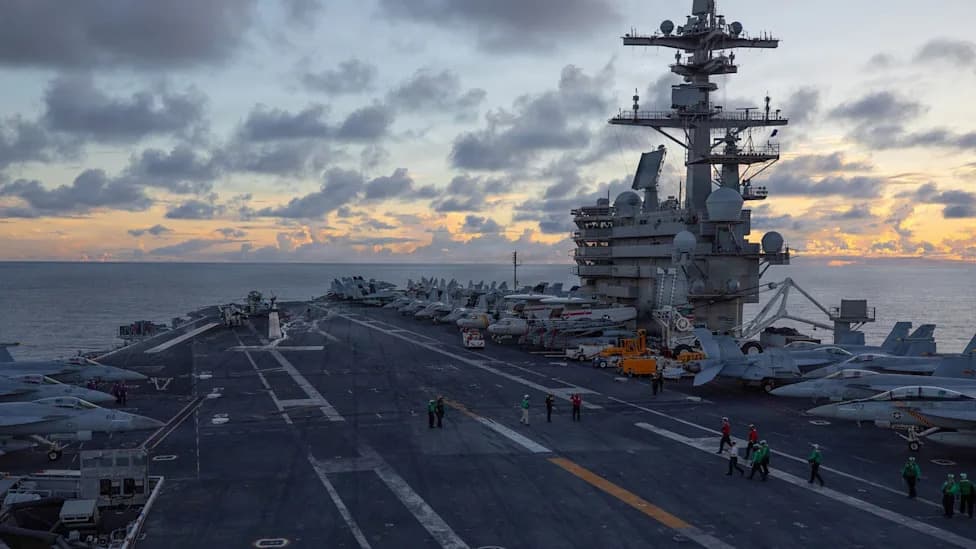
In the Middle East, USS Abraham Lincoln (CVN 72) and USS George H.W. Bush (CVN 77) remain deployed inside the CENTCOM area of responsibility. Lincoln has flown more than 10,000 sorties and delivered over 1.5 million pounds of ordnance while enforcing a maritime "steel wall." Photographs uploaded to DVIDS show Lincoln alongside the fast combat support ship USNS Arctic and dry cargo ship USNS Alan Shepard, suggesting underway replenishment operations.
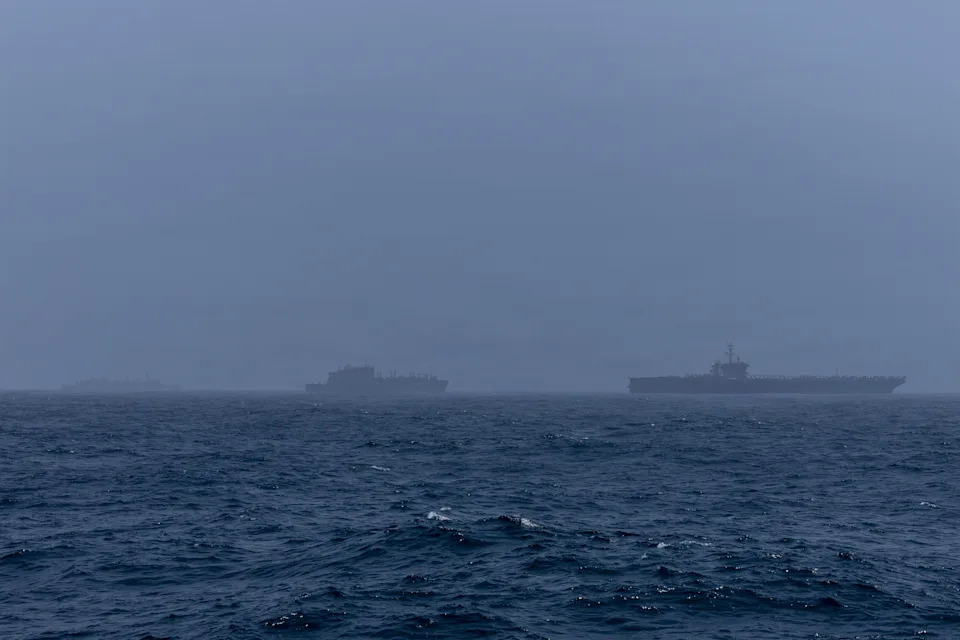
Nimitz-class aircraft carrier USS Abraham Lincoln (CVN 72), right, Supply-class fast combat support ship USNS Arctic (T-AOE 8), middle, and Lewis and Clark-class dry cargo ship USNS Alan Shepard (T-AKE-3) sail in the Arabian Sea, Aug. 16, 2026. Abraham Lincoln is deployed to the U.S. 5th Fleet area of operations to support maritime security and stability in the Middle East. (U.S. Navy photo) NAVCENT Public Affairs
CENTCOM reported on Aug. 17 that its forces have turned around 64 commercial vessels, disabled three using kinetic effects and boarded two others to ensure compliance with maritime controls. The 60‑day diplomatic window to negotiate a cessation of hostilities expired on Aug. 17 with no sign of an extension; public comments from both sides indicate talks have not resumed.
Stateside Readiness And Upcoming Deployments
Back home, USS Carl Vinson (CVN 70) was sighted departing San Diego on Aug. 10 and appears to be conducting workup activities ahead of a future deployment. USS Theodore Roosevelt (CVN 71) remains pier‑side in San Diego, with its deployment date classified; given current global demands, its deployment could be accelerated to address gaps in either the Indo‑Pacific or the Middle East.
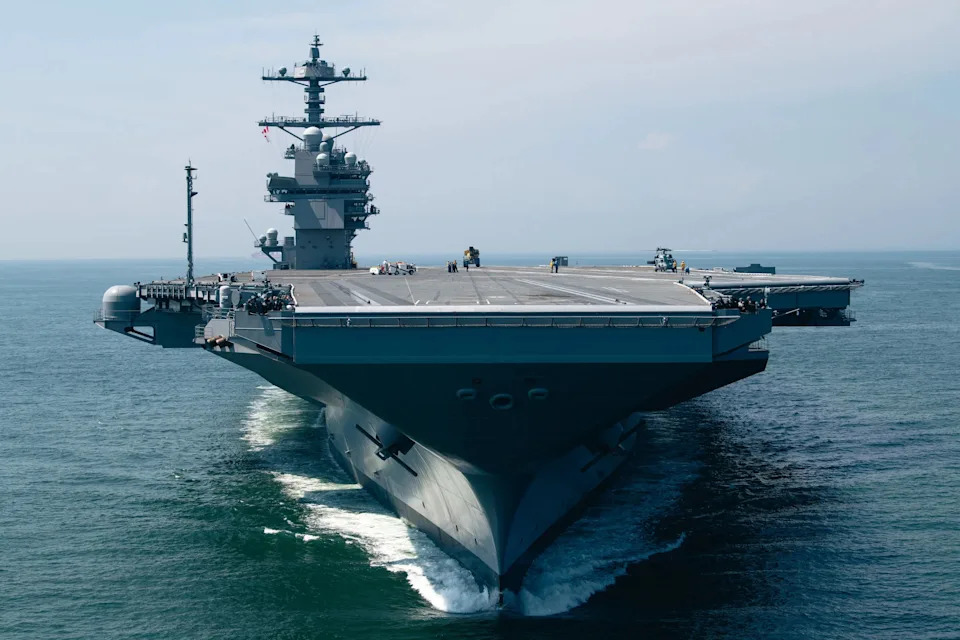
New Carrier Progress: PCU John F. Kennedy
Pre‑Commissioning Unit John F. Kennedy returned to Newport News after completing acceptance sea trials on Aug. 15. The second Ford‑class carrier is reportedly 98% complete and is expected to be delivered in spring 2027, pending final Navy acceptance. Capt. Mark Johnson, Program Manager for Aircraft Carrier New Construction at the Portfolio Acquisition Executive (PAE), praised the crew's performance during trials and highlighted the Navy‑industry team's work to finish construction accurately and efficiently.
Force Posture Snapshot
As of this report: three U.S. carriers are deployed, three are working up or at homeport in various states of readiness, four are in maintenance, and one is being used for training. Among amphibious units, one Amphibious Ready Group (ARG) is deployed, five are training or in port, and three are in maintenance availabilities. Positions are approximations based on open‑source information.
Contact: [email protected]
Help us improve.