
One week after a 7.4-magnitude earthquake struck western Colombia, at least 289 people are dead and 4,187 injured, with widespread destruction across 15 departments. Rescue teams have saved 354 people but are reducing intensive searches as survival odds fall, shifting focus to shelter and medium-term recovery for more than 120,000 affected families. Critical infrastructure and economic losses are extensive; the government has pledged a reconstruction fund amid incoming international aid, while critics say national coordination has been uneven.
Colombia Shifts From Rescue to Recovery After Devastating 7.4-Magnitude Quake
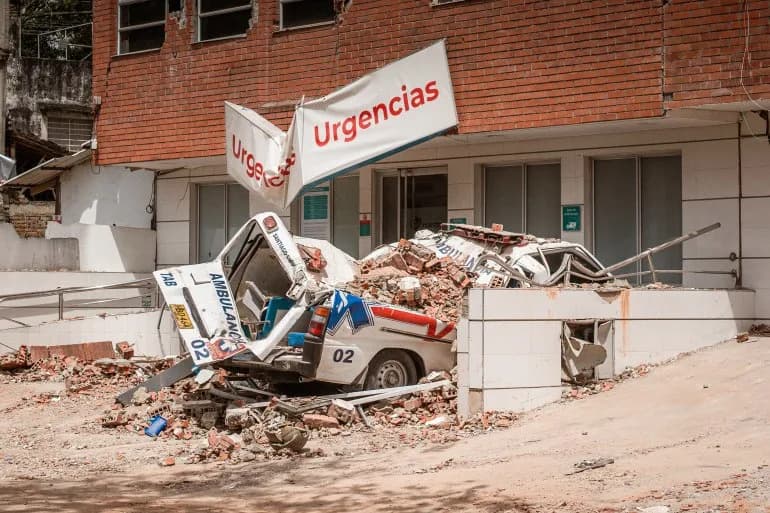
An ambulance crushed by falling debris from the Clinica Nuestra private hospital in Cali, which partially collapsed during the August 10 earthquake [Euan Wallace/Al Jazeera]
One week after a magnitude 7.4 earthquake struck western Colombia, emergency crews continue to work at damaged sites even as the focus shifts from frantic search-and-rescue to shelter, demolition and medium-term recovery.
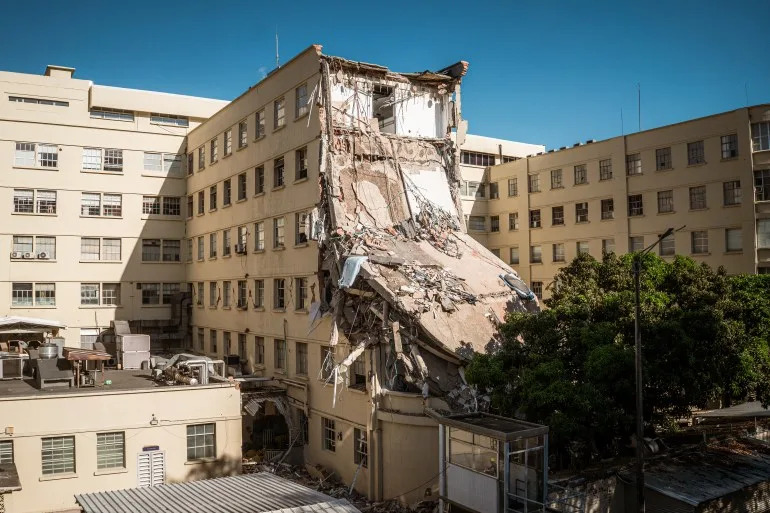
A section of the University Hospital of the Valle Evaristo Garcia in Cali collapsed during the earthquake on August 10 [Euan Wallace/Al Jazeera]
Overview
Fifteen of Colombia's 32 departments reported damage after the August 10 tremor, which has been blamed for at least 289 deaths and 4,187 injuries. Authorities say 127,557 homes were damaged and 26,945 were destroyed; health and education infrastructure were also hit hard, with 285 health centres and 2,838 educational facilities affected.
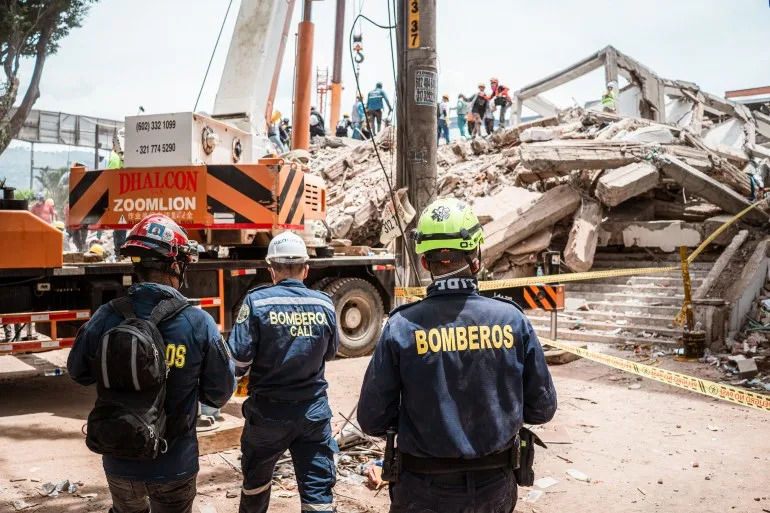
Three firefighters approach the wreckage of the Vanessa apartment building in Cali, which collapsed on August 10 and now shows no signs of survivors [Euan Wallace/Al Jazeera]
Search and Rescue
Over the past seven days, rescue teams have pulled 354 people alive from the rubble. Government figures list 143 people as unaccounted for, while an unofficial online register, Colombia Te Busca, records more than 3,000 missing.
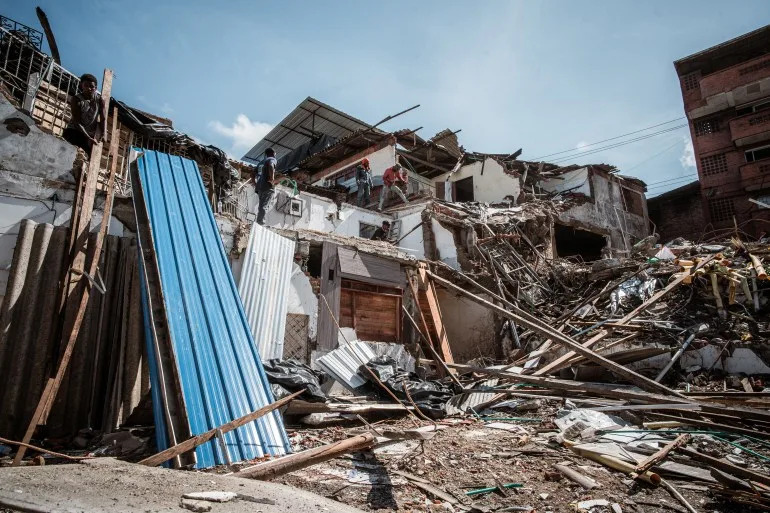
A row of houses was partially crushed by a falling building in Buenaventura [Euan Wallace/Al Jazeera]
"It has been a gruelling week, with little time to rest, as we’ve been focused on searching for, locating and rescuing potential victims," said Sergeant Joel Bustamente, who leads the Bogota Fire Department deployment in Cali.
With survival odds dropping sharply after the first 72 hours, some intensive searches have been paused. At sites such as the seven-storey Vanessa building in Cali, teams have moved from active search to body recovery operations.
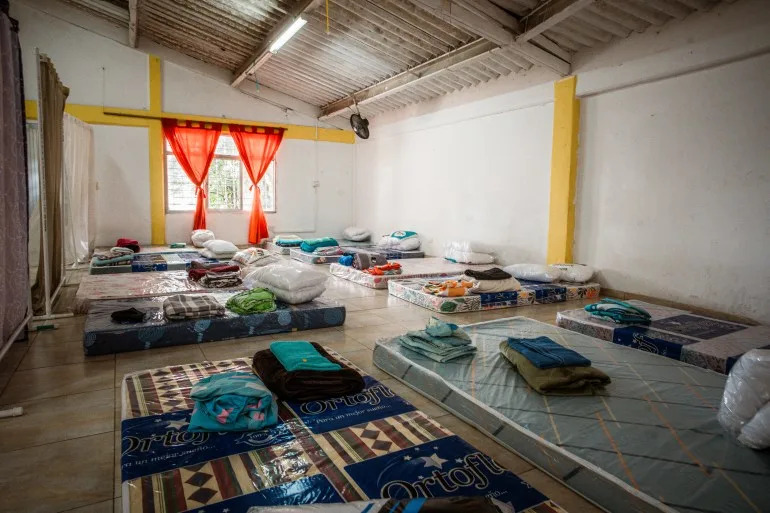
Mattresses lie across the floor of the shelter run by Verónica Echeverry, which has been set up to receive displaced people in Cali [Euan Wallace / Al Jazeera]
Shelter, Relief And Humanitarian Needs
More than 120,000 families have been affected, putting urgent pressure on local authorities and aid organisations to provide shelter, food, water and hygiene supplies. In cities like Cali and Pereira, sports stadiums and community centres have been converted into temporary shelters and distribution hubs.
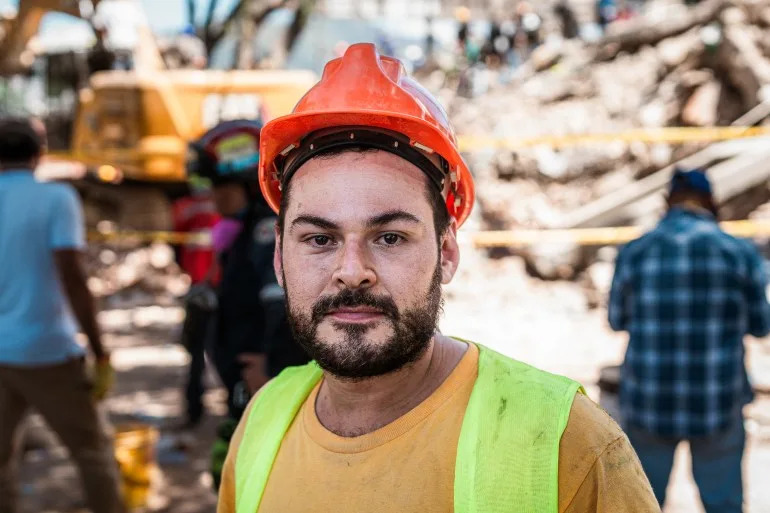
Maximiliano Herrera, 32, a volunteer in Cali who has been assisting rescue efforts since the earthquakes struck [Euan Wallace/Al Jazeera]
Many shelters are sustained by civic networks: volunteers, hospitals and local governments. Some households from wealthier neighbourhoods have relied on friends or relatives rather than formal shelters, while poorer and hard-to-reach regions face far greater need.
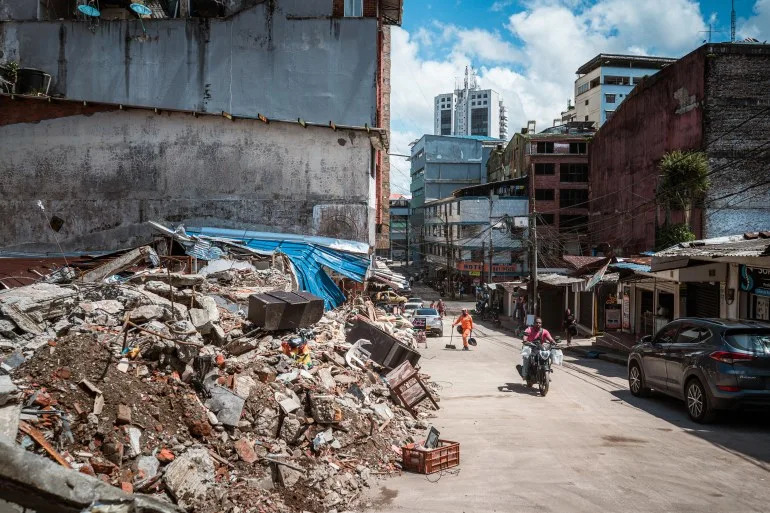
Motorists and pedestrians pass by the wreckage of a collapsed building on a street in Buenaventura [Euan Wallace/Al Jazeera]
Regional Impact And Access Challenges
The Pacific department of Chocó — among Colombia’s poorest regions and affected by long-standing conflict and illegal extraction — was one of the hardest-hit areas. Quibdó, the provincial capital, reported thousands of damaged homes, many rendered uninhabitable, and residents say national relief has been slow in parts of the region accessible only by river.
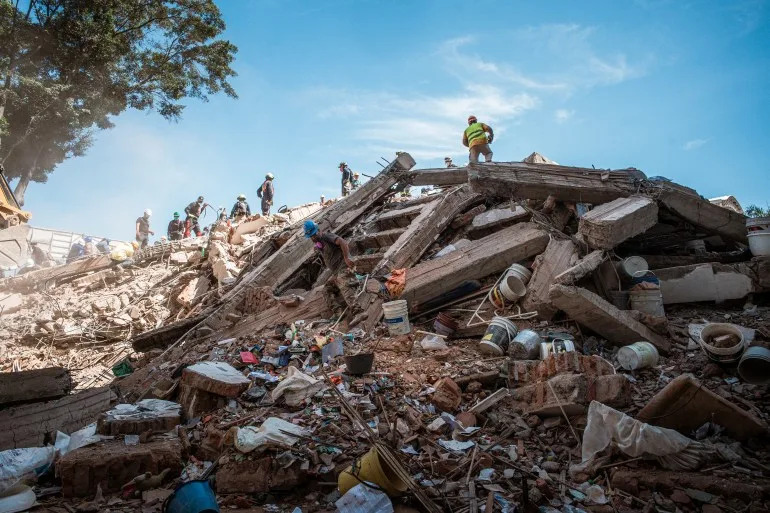
Firefighters and volunteer rescuers climb what remains of the Vanessa apartment building in Cali, with no sign of survivors after a week of searching [Euan Wallace / Al Jazeera]
Infrastructure And Economic Damage
Essential infrastructure sustained heavy damage: 407 roads, 92 water supply systems, 44 vehicular bridges and five airports were affected. Small businesses have reported steep losses; one Buenaventura shop owner estimated damage at roughly 350 million pesos (about $111,000) and said many small enterprises lack insurance.
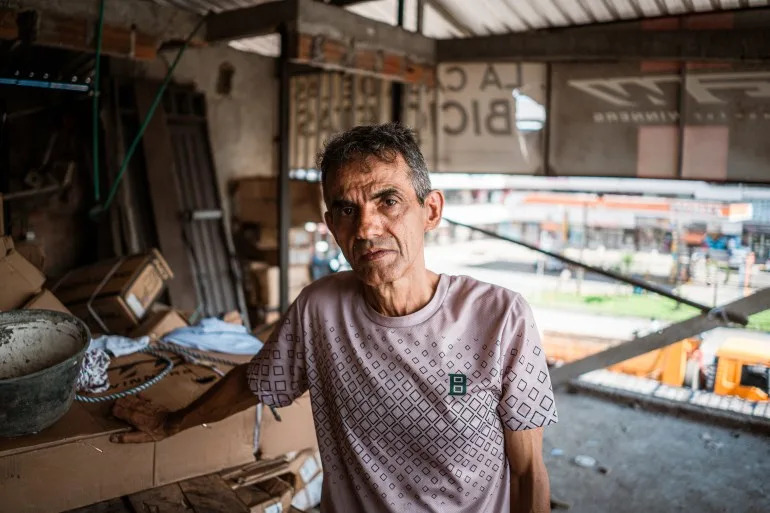
Néstor Martínez's bicycle shop in Buenaventura was damaged by the earthquake [Euan Wallace/Al Jazeera]
Aid, Funding And Political Response
International and bilateral aid has begun to arrive, including a €2 million pledge from the European Union and $15.5 million from the United States. The government announced a reconstruction fund after the finance minister estimated minimum recovery costs at $6.4 billion and secured a $450 million World Bank credit line. The president’s early decisions and the transition between administrations have faced scrutiny from critics who say that gaps in the handover and politically selective acceptance of foreign teams complicated early coordination.
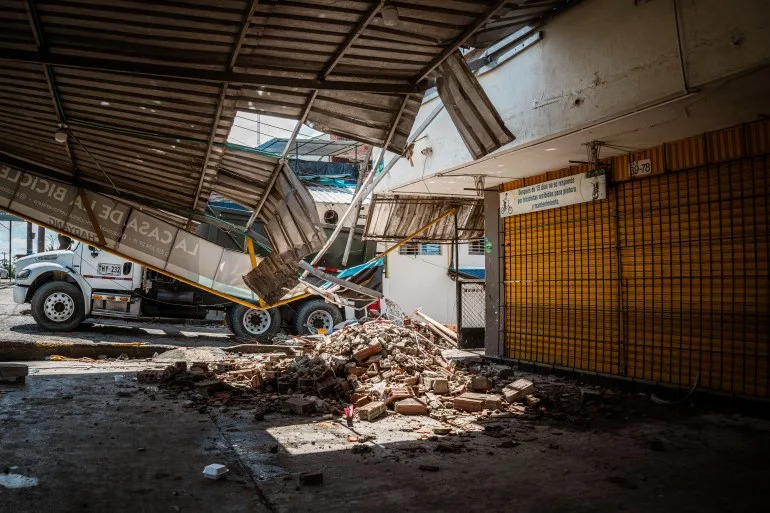
The damage to the building that houses Néstor Martínez's bicycle shop, where part of the roof has collapsed [Euan Wallace/Al Jazeera]
Outlook
As search-and-rescue operations wind down, priorities are shifting to shelter, damage assessments, demolition of unsafe buildings and planning for reconstruction. Emergency responders caution that while the immediate likelihood of finding survivors declines with time, search teams continue work and communities are beginning the long process of recovery.
"The search for survivors continues; there's always the possibility of miracles," Sergeant Bustamente said.
Help us improve.





















