Archaeologists at Lake İznik have exposed a small, early church beneath a later basilica and propose it could be connected to the First Council of Nicaea (A.D. 325). The lead excavator cites a stone pavement found about 30 cm below the basilica and contemporary descriptions of a "house of prayer." Several outside historians urge caution: the council’s principal sessions are described as occurring in the imperial palace, which has not been located. Excavations and scientific dating are ongoing to clarify the site's chronology and significance.
Ancient Church Found Under Lake İznik May Be Linked To First Council Of Nicaea — Excavators Caution Further Evidence Needed
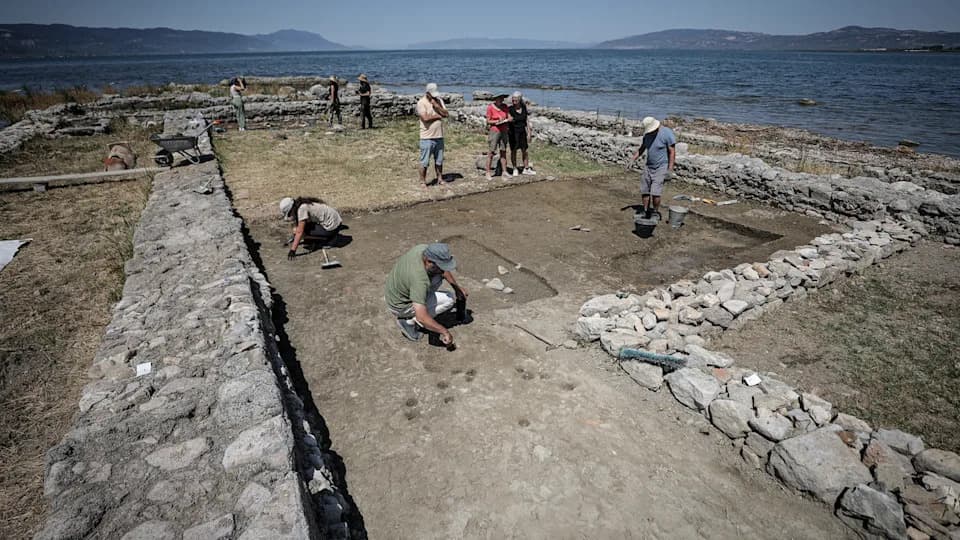
Excavation of the church on the shore of Lake İznik, in Turkey. | Credit: Getty Images
Archaeologists working on the shore of Lake İznik in modern Turkey have uncovered the remains of a small, early church beneath a later basilica and suggest it could be associated with the First Council of Nicaea (A.D. 325). The claim comes from lead excavator Mustafa Şahin of Bursa Uludağ University, but several outside specialists urge caution until further dating and contextual evidence are available.
What Was Found
Fieldwork first exposed the remains of a large submerged church in 2014. Since 2015, the excavation team has revealed an earlier, smaller structure directly beneath the later basilica. The team reports finding a stone pavement floor for the smaller building roughly 30 centimetres (about one foot) below the foundation of the basilica, a stratigraphic relationship that suggests the lower building predates the overlying church.
Why Excavators Link It To Nicaea
Şahin notes that fourth‑century sources—including the church historian Eusebius of Caesarea—describe aspects of the council taking place in a "house of prayer" or small church. Based on documentary and archaeological evidence, the excavation team proposes the lower building might be the so‑called "Church of Neophytos," named for a local martyr who died in 303, while the overlying basilica may be a later "Church of the Holy Fathers," erected to commemorate the council.
Archaeologists think the earlier church was destroyed in an earthquake in A.D. 368, and that the larger basilica above it was built around A.D. 380. To date, no surviving wall plaster, decoration, or wooden superstructure from the small church has been recovered—only its stone foundation pavement survives—leading the team to suggest that much of the original building may have used perishable materials such as timber.
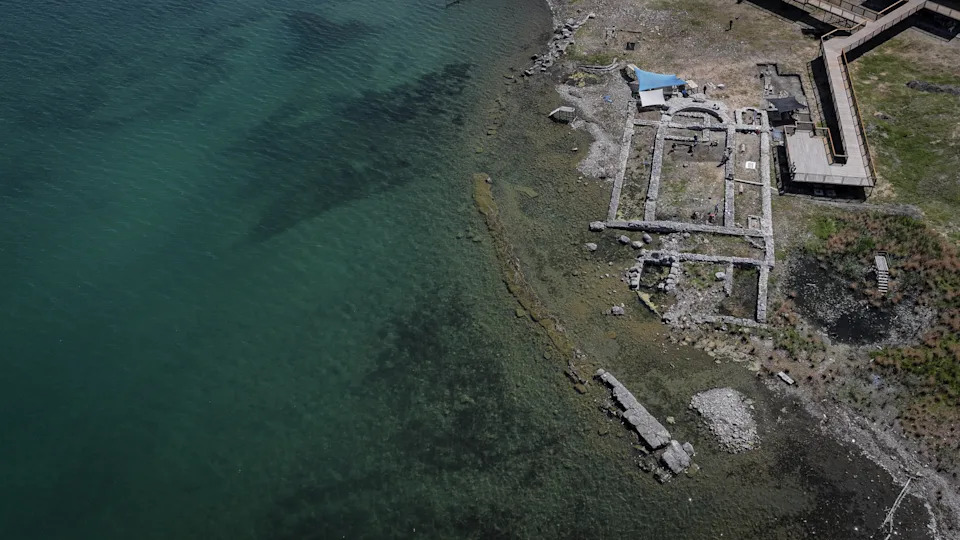
An aerial view of the church's remains in what was once the ancient Greek city of Nicaea. | Credit: Getty Images
Scholarly Cautions
Several historians who were not involved in the excavations warn that the evidence is not yet conclusive. Eusebius records that the council’s opening session occurred in the imperial palace, and many of the council’s most important meetings likely took place there. That imperial palace has not been located and may itself lie under Lake İznik.
Richard Kim (University of Illinois Chicago) has pointed out that the smaller church has not yet been securely dated to the early fourth century, and that the council lasted for months and involved many participants, making a single small building an unlikely venue for all sessions. Charles Odahl (Boise State University) likewise observes that while the underwater church lies close to where the council met, contemporary accounts place the assembly in the emperor’s residence rather than in a small church.
David Gwynn (Royal Holloway, University of London) described the evidence as "promising," but cautioned against exaggerating the find’s significance: the discovery may illuminate the environment in which the council operated without being the actual council chamber for its principal sessions.
What’s Next
Excavation and analysis are ongoing. Teams are seeking further dating evidence—such as datable artifacts, coins, stratigraphic analysis, and possible radiocarbon samples—to establish a firmer chronology. Researchers also continue to search for the imperial palace and other contemporary structures that could clarify where different sessions of the council took place.
Significance: If securely dated to the early fourth century, the smaller church would provide valuable context about Christian architecture and ritual space in Nicaea at the time of Constantine and the Council of A.D. 325. For now, the find is an intriguing piece of a larger puzzle: it enriches our picture of the landscape around Nicaea but does not yet prove it was the venue for the council’s main deliberations.
Help us improve.