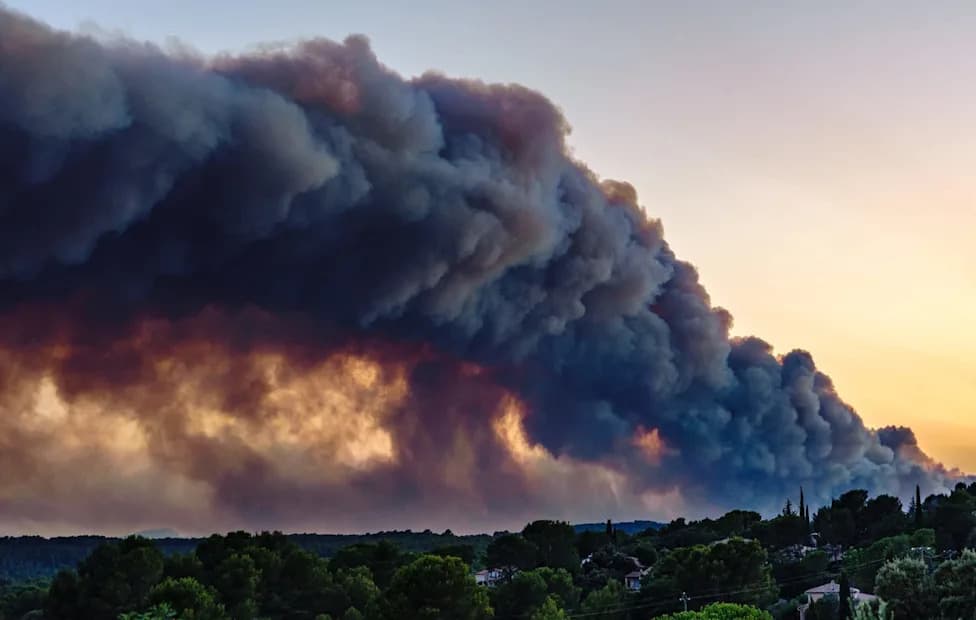
The Bordeaux wildfire — the season's largest — has been contained, but roughly 42,000 hectares were scorched and millions of tonnes of timber must now be removed and assessed. Immediate steps focus on safety: felling unstable trees, clearing firebreak logs and mapping landslide risks. Authorities and industry stress rapid harvesting to avoid mould and pests, while long-term recovery will require climate-adaptive species, better maintenance and more firebreaks. The state plans to rely largely on natural regeneration in many public forests, though recovery may be slow.
After the Bordeaux Wildfire: How France Will Clear, Salvage and Rebuild 42,000 Hectares of Forest
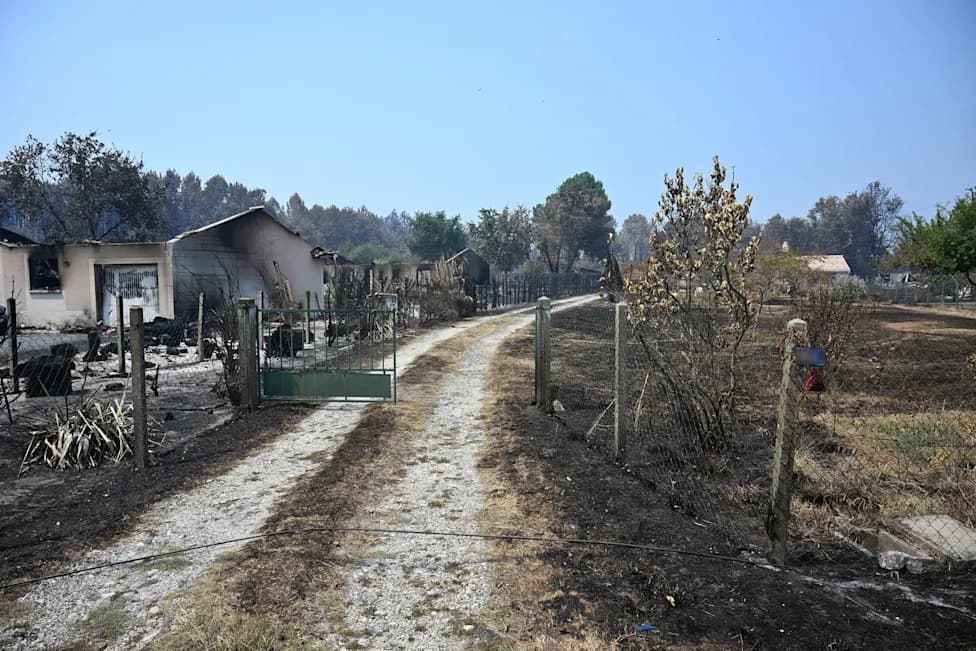
Destruction in Le Porge, France, following the devastating wildfires. Katharina Kausche/dpa
The wildfire near Bordeaux — the largest of the season — has been brought under control and residents have been allowed to return, but forestry authorities warn that the recovery will be long and complicated.
Immediate Priorities: Safety and Stabilisation
Forestry officials and the National Forests Office (ONF) say the first priority is to secure damaged woodland: felling trees that risk toppling, mapping slopes at risk of landslides or flooding, and clearing felled trees that were cut quickly to form emergency firebreaks. Logs cut for firebreaks are being piled along roads to prevent them becoming fuel for flare-ups, then transported to warehouses for sale or processing.
Masses Of Timber To Remove And Assess
Roughly 42,000 hectares were scorched, producing millions of tonnes of timber that must be harvested and assessed fast to reduce the risk of mould and pest infestation. The ONF and industry experts will classify wood by condition: some trunks are only superficially charred and can be used for parquet flooring, construction timber or pallets; other material will be routed to biomass energy. Rapid removal is critical to preserve value and protect remaining forests.
Market And Capacity Challenges
Industry representatives warn of logistical constraints. Jean de Falandre of the Association of Private Forest Owners says companies are still handling storm damage from February, which may create a shortage of machinery and skilled crews. A sudden surge in available timber could depress domestic prices and push exports, complicating the economic recovery for local owners and processors.
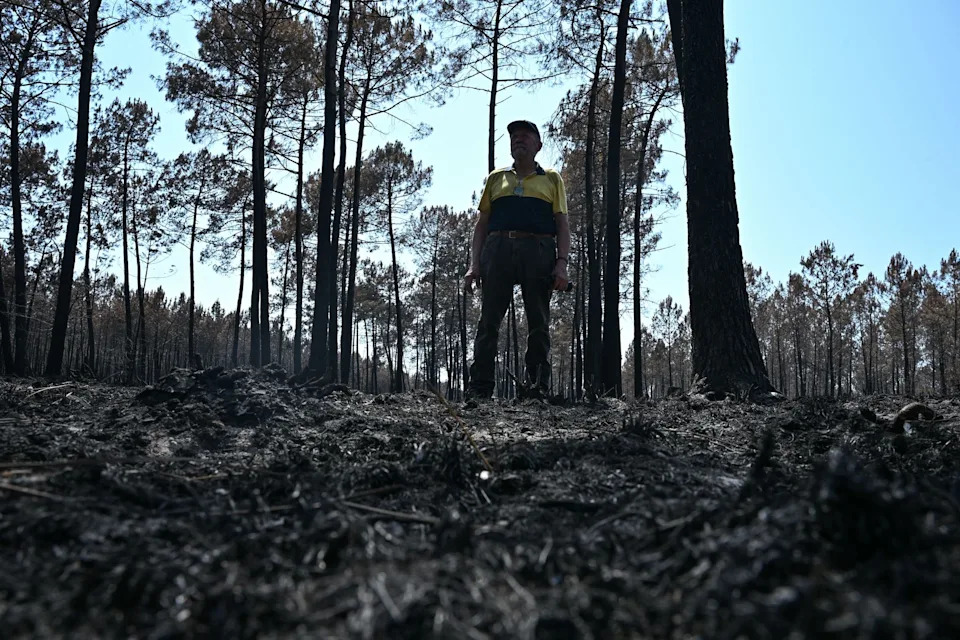
Didier Monchaux stands amidst burnt trees on his land in Lanton, in the Gironde region of France. Much of his woodland has been destroyed by the forest fires in south-western France. Following the catastrophic forest fires on the Atlantic coast, France's forestry sector faces the difficult task of removing and processing several million tonnes of timber from the forests. Some of the timber from the burnt forests can still be processed. Katharina Kausche/dpa
Reforesting For A Warmer, Drier Future
President Emmanuel Macron said it will be essential to "replant and rebuild a different kind of forest," highlighting the need to adapt to a warmer climate that is making European fires more frequent and intense.
Industry bodies such as the French National Federation of the Forestry and Timber Industry (FBF) call for stronger firebreak networks, improved long-term maintenance and selecting tree species better suited to local soils and increasing drought. Much of the pine that burned was not native to the area but was planted in the 19th century on former moors with poor soils, making these stands especially vulnerable.
Natural Regeneration Vs. Replanting
The state forestry agency — responsible for public forests — says it will often rely on natural regeneration. Forestry expert Frédéric Prodhomme notes that fire can trigger some pine species to release seeds, enabling natural regrowth, though this process can be slower than planting. Local residents and observers say forest maintenance has declined over decades, reducing resilience and increasing fuel continuity.
What Comes Next
Authorities will need to coordinate clearing, timber processing and long-term restoration plans that balance ecological recovery, local economies and fire risk reduction. That includes investing in machinery and crews, adjusting species mixes, and expanding preventive measures such as maintained firebreaks and targeted thinning to reduce the likelihood of future large-scale blazes.
On the ground: Landowners, local communities and national agencies face months of cleanup and years of forest management decisions that will shape how these landscapes respond to a hotter, drier climate.
Help us improve.