After nearly 50 years of searches, the BESIII collaboration reports its strongest evidence yet that X(2370) is dominated by a glueball—a particle made mainly of gluons. Using data from BEPCII, including about 10 billion meson decays, researchers measured X(2370)’s mass and spin-parity, identified new decay modes, and found a flavor-singlet signature consistent with glueball expectations. The results were presented at ICHEP and posted as a preprint on arXiv, though further experiments are needed to confirm the finding.
After 50 Years, BESIII Presents Strongest Evidence Yet That X(2370) Is a Glueball
(koto_feja/Getty Images)
Researchers at the Beijing Electron Positron Collider II (BEPCII) report the clearest experimental evidence so far that the particle X(2370) is dominated by a glueball—a novel, ephemeral state made primarily of gluons, the force carriers of the strong interaction.
YouTube Thumbnail
What the Collaboration Did
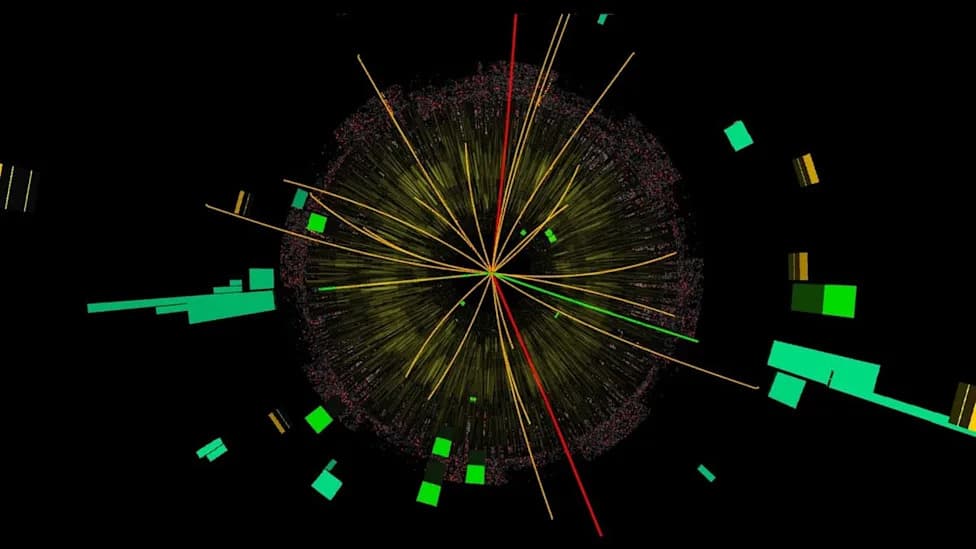
The Beijing Spectrometer III (BESIII) Collaboration, which involves roughly 700 scientists from 15 countries, examined an enormous dataset of meson decays produced in electron–positron collisions. Building on a 2024 Physical Review Letters analysis of roughly 10 billion meson decay events, the team measured X(2370)’s mass and spin-parity for the first time and identified additional decay channels. Their new analysis shows that X(2370) behaves as a flavor-singlet—meaning it shows no strong preference for any of the six quark flavors—a key signature expected of a glueball.
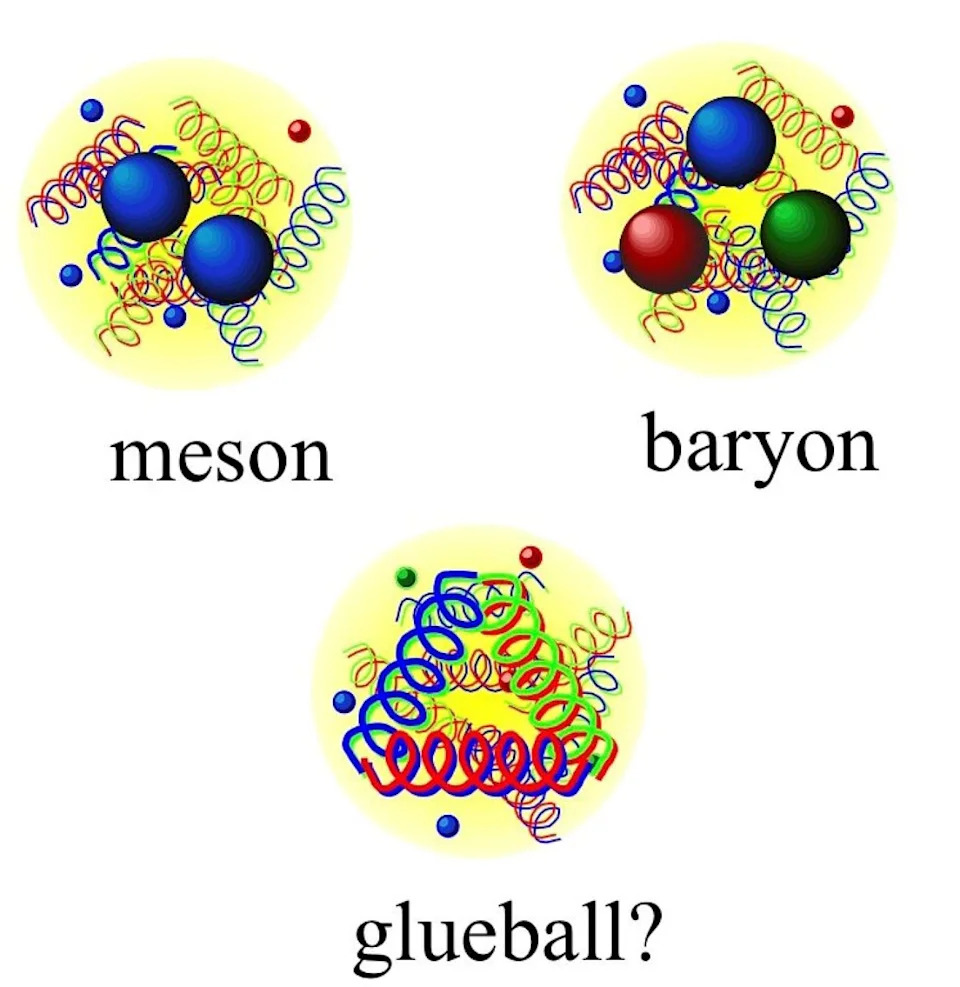
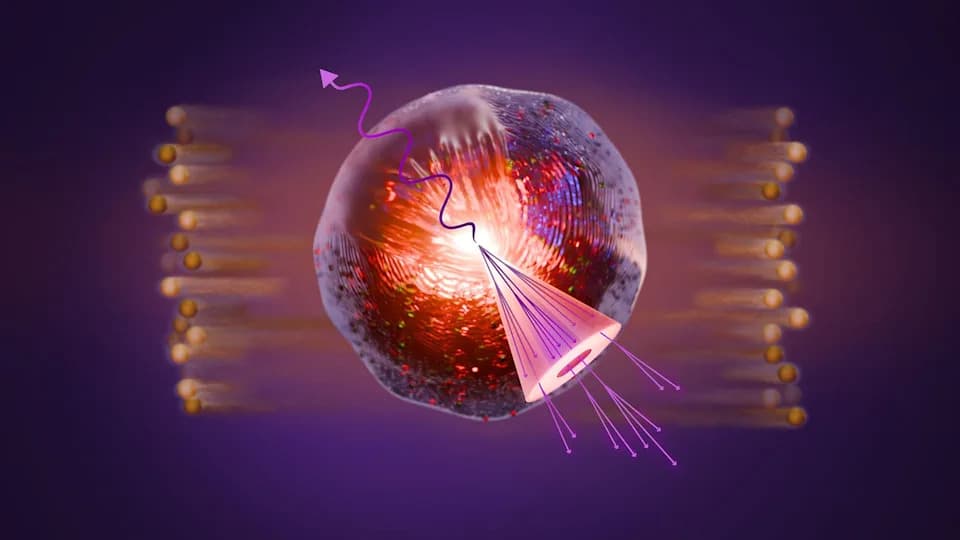
Gluons bind the quarks that comprise mesons and baryons. Gluons can also form exotic glueball particles, made mainly of force carriers.(University of Glasgow)
Why This Matters
Glueballs are an important prediction of quantum chromodynamics (QCD), the part of the Standard Model that describes the strong force. Unlike ordinary hadrons (protons, neutrons and many mesons), which are composed of quarks bound by gluons, a glueball would be composed predominantly of gluons themselves—an object made mainly of force carriers rather than matter.
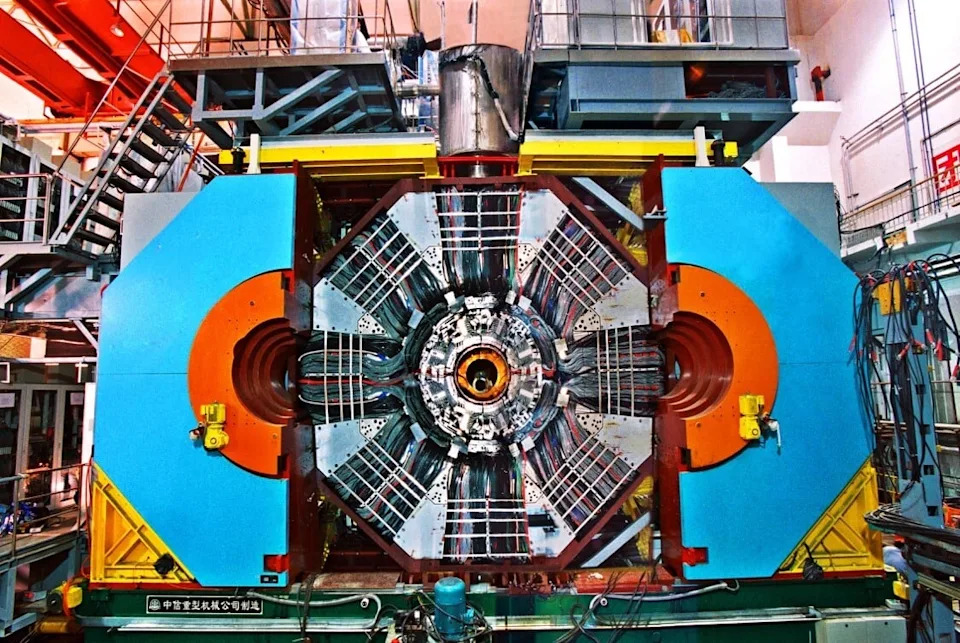
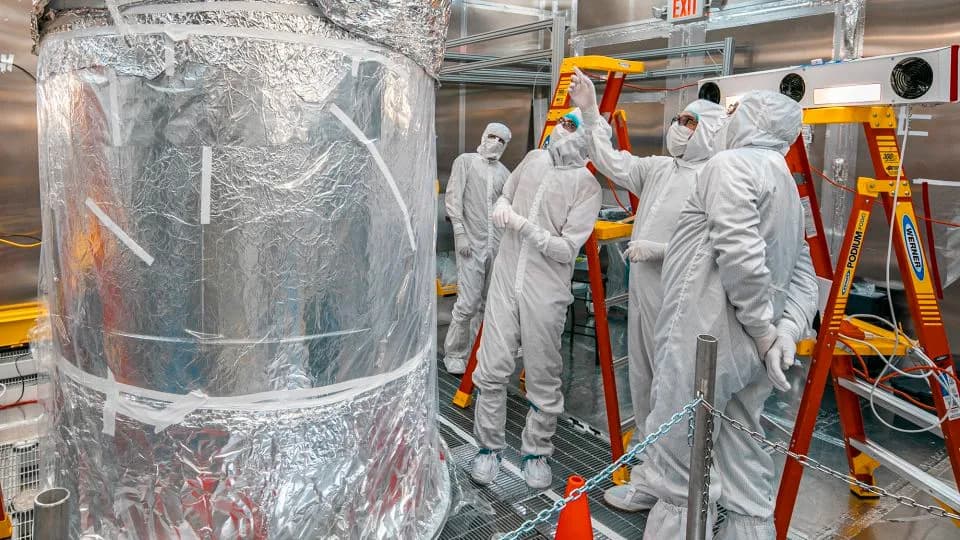
The BES III detector of the BEPCII. The collaboration includes approximately 700 researchers from 15 countries.(BESIII/IHEP)
“The glueball is an important prediction of quantum chromodynamics… and is also the only type of particle in nature composed entirely of force mediators,” the collaboration said in a statement. Jin Shan of Nanjing University described the result as an “unprecedented form of matter” and a stringent test of the theory.
Evidence and Limits
Presented at the International Conference on High Energy Physics (ICHEP) in Brazil and posted as a preprint on arXiv, the new results show consistency between the experimental measurements of X(2370) and theoretical expectations for a glueball candidate. According to the collaboration, most alternative explanations are now strongly disfavored by the data, but the authors emphasize that further measurements and independent confirmations will be needed to pin down the state’s properties with greater precision.

Subscribe to ScienceAlert's free fact-checked newsletter
Next Steps
Confirming a glueball unambiguously will require additional high-statistics experiments, refined analyses, and complementary results from other facilities. If confirmed, a glueball discovery would be a landmark verification of nonperturbative QCD and would expand our understanding of how force carriers can bind to form distinct, if short-lived, forms of matter.
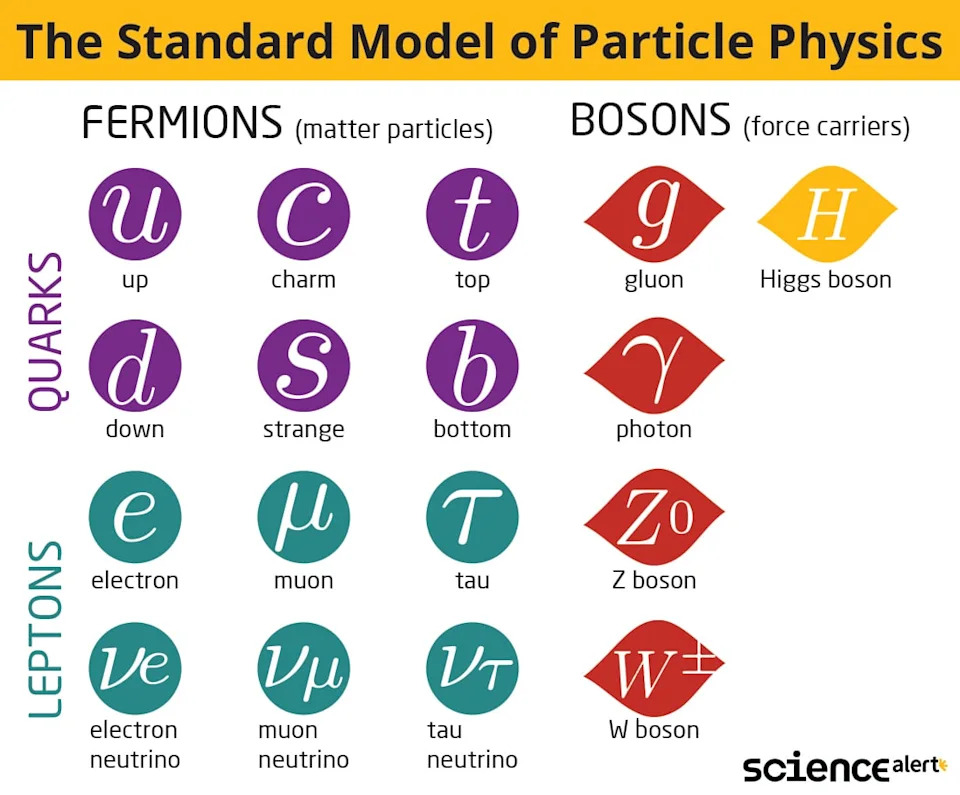
The Standard Model is a set of mathematical formulae and measurements describing elementary particles and their interactions. (ScienceAlert)
Note: The full analysis is available as a preprint on arXiv, and the team reports their findings at ICHEP. Ongoing and future experiments will aim to confirm and further constrain the properties of X(2370).
Help us improve.