Summary: A sudden influx of about 72,000 migrants into Ceuta and reciprocal border measures between Spain and Italy have exposed tensions in the Schengen free-movement zone. Although Europeans overwhelmingly view President Trump unfavorably, many are adopting tougher immigration stances that mirror his approach. Right-wing parties have amplified anti-immigrant rhetoric while mainstream governments tighten asylum and border rules — even though illegal migration is far lower than a decade ago. The authors warn that embracing hardline immigration policies risks scapegoating migrants and weakening democratic norms.
Europeans Distrust Trump — Yet Many Embrace Tougher Immigration Policies

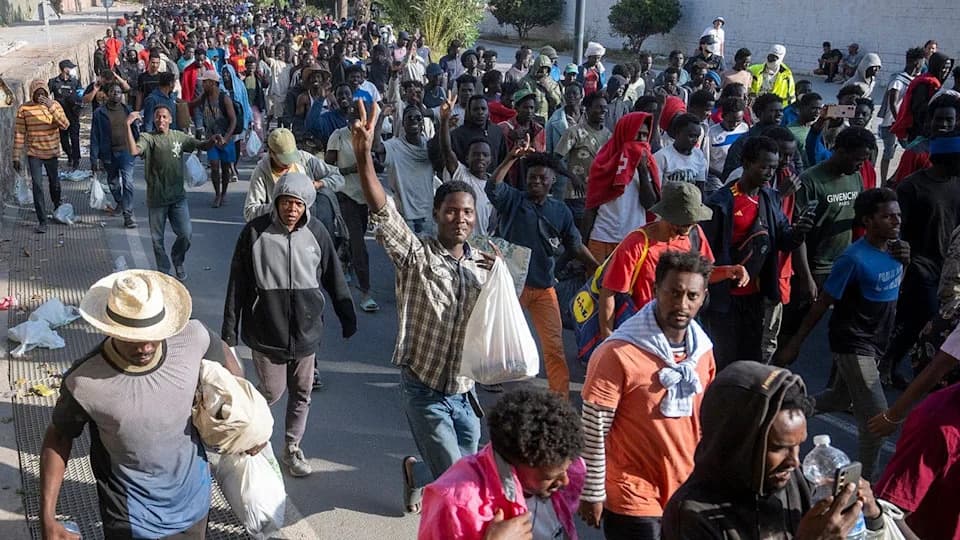
A recent surge of migrants into Ceuta and swift reciprocal border measures between Spain and Italy have exposed growing strains on one of the European Union's core principles: free movement. Roughly 72,000 people from Morocco entered the Spanish enclave of Ceuta in a matter of days, prompting Italy to impose temporary border controls on travelers from Spain; Madrid responded in kind, putting Schengen's freedom of movement at risk.
A Political Paradox
Polling shows a striking paradox: large majorities of Europeans hold an unfavorable view of President Donald Trump, yet many are shifting toward the hardline immigration approach that helped fuel his political rise. As a candidate and president, Trump repeatedly framed his agenda as restoring respect for the United States abroad. He has also emphasized strict immigration control, a stance now echoed across parts of Europe.
"Our nation is … respected again, respected like never before." — Donald Trump
Where Europeans Stand
Europeans have been alienated by Trump's tariffs, talk of seizing territories such as Greenland, criticisms of NATO, and his public clashes with European leaders. In 2022, respondents in every Western European country surveyed considered the U.S. a reliable partner; today, only Hungary and Poland do. In a recent 36-country survey, 25 nations reported viewing China more favorably than the United States, including Germany, France, Spain, Italy, Sweden, the Netherlands, Canada, and Mexico.
Unfavorable ratings for Trump are stark in many places: only about 13% of people in the United Kingdom, France, and Spain view him favorably; 9% in Italy; 8% in Germany; and just 4% in Denmark.
Immigration Politics Crosses the Spectrum
On immigration, right-wing parties across Europe have adopted rhetoric and tactics reminiscent of Trump's playbook, harnessing populist anger against mainstream institutions and elites. In several countries, those parties or their ideas are now influencing — or replacing — established leaders.
In France, Marine Le Pen's National Rally frames immigration as an existential threat to national identity, security, and economic stability. Le Pen endorses strict immigration quotas and a policy of "national priority" to favor French citizens for jobs, housing, and welfare. National Rally has led polls ahead of the next presidential election.
Germany's Alternative for Germany (AfD), whose slogan "Everything for Germany" echoes a phrase once used by the Nazis, has been classified by Germany's domestic intelligence service as a right-wing extremist organization. The AfD opposes asylum, supports mass deportations (even of citizens deemed nonethnic Germans), and portrays the country's Muslim population as a danger to the state. The party has overtaken Chancellor Friedrich Merz's governing center-right party in some polls.
In Britain, Nigel Farage's Reform U.K. calls immigration "a scourge," blaming immigrants for rising prices, lower living standards, and strained public services. Farage has accused the government of "anti-white racism" and has proposed banning some foreign nationals from government housing and welfare programs. Reform U.K. has led polls for much of the past year and currently ranks close behind the governing Labour Party.
Mainstream Leaders Respond
Wary of electoral backlash, mainstream and even left-leaning leaders have tightened immigration rules, asylum procedures, and border controls. Denmark's prime minister, a social democrat, suggested that Spain's handling of the Ceuta episode could merit exclusion from Schengen. German Chancellor Friedrich Merz publicly demanded that Morocco take back illegal migrants immediately. Such rhetoric shows how immigration concerns are reshaping policy across the political spectrum.
Still, the politics of immigration are becoming increasingly disconnected from underlying trends: anti-immigrant sentiment has intensified even though illegal migration into Europe is far lower than it was a decade ago. Immigration has become a proxy for broader anxieties about national identity, economic insecurity, cultural change, and whether political elites care about ordinary voters. Trump and like-minded leaders have converted those fears into a politics that scapegoats immigrants and treats political opponents as threats to the nation.
Conclusion
Europeans may broadly dislike President Trump personally, but many appear willing to embrace tougher immigration policies similar to his. Before following that path wholesale, they should weigh the risks: scapegoating immigrants, eroding civil norms, and undermining democratic institutions are real dangers when migration becomes a political cudgel rather than a policy challenge to be managed with evidence and rights-based safeguards.
By David Wippman and Glenn C. Altschuler
Copyright 2026 Nexstar Media, Inc. All rights reserved.
Help us improve.