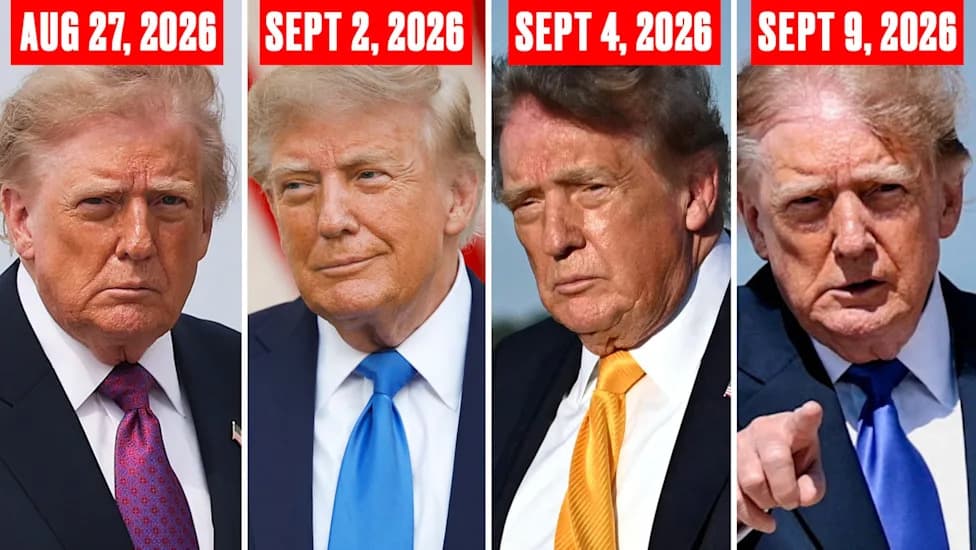
The report that Air Force One may have been used as a decoy to protect President Donald Trump echoes a long American history of political stand-ins. From a Pullman conductor posing as Benjamin Harrison in 1891 to aides and lookalikes substituting for William Jennings Bryan, Eugene Debs, FDR, Truman and Eisenhower, campaigns used simple visual cues to convince crowds. These substitutions worked because fleeting or distant views left room for misperception. The lasting lesson: revealed deception erodes credibility and public trust.
How Presidential Impersonators Fooled Voters for More Than a Century — From Whistle-Stops to Air Force One
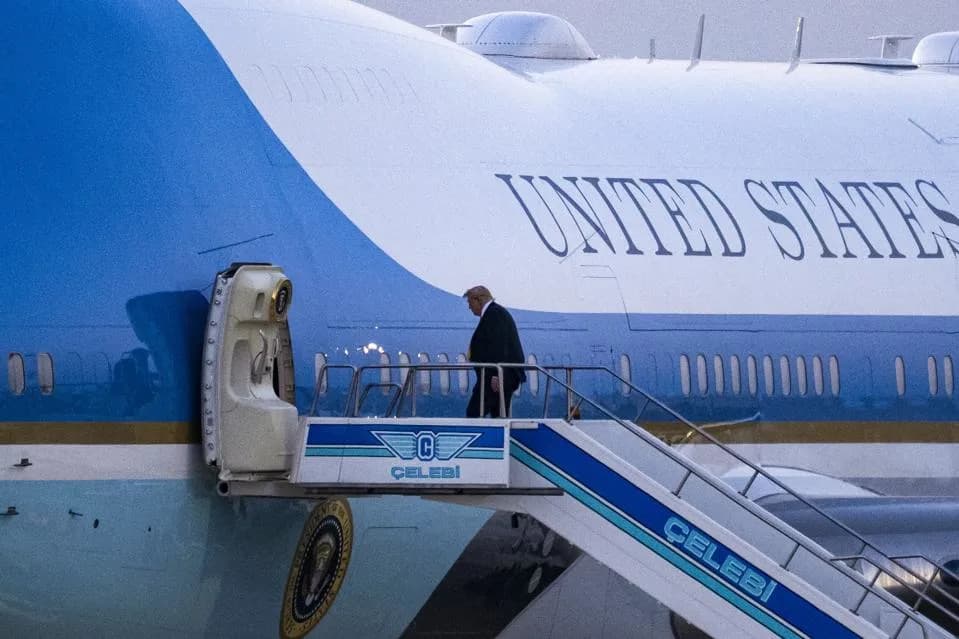
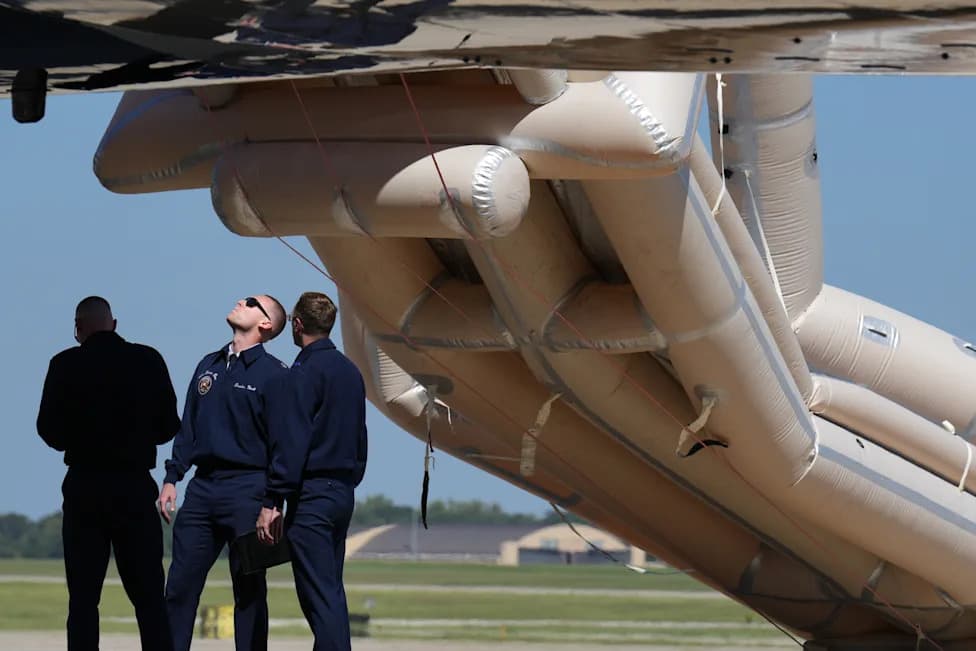
A view of United States aircraft on July 8, 2026 in Ankara, Turkiye. It was revealed that US President Donald Trump was secretly disembarked from Air Force One via an airport catering truck due to security flaw claims and intelligence from Israel during his departure from the NATO Summit in Ankara on July 8, and is transferred to a C-32A military aircraft escorted by F-16 fighter jets to England. (Photo by Ä°smail Kaplan/Anadolu via Getty Images)Anadolu via Getty Images
Photo caption: On July 8, 2026, in Ankara, Turkiye, U.S. aircraft were photographed after reports that President Donald Trump quietly left Air Force One via an airport catering truck amid security concerns and intelligence reports from Israel. He was reportedly transferred to a C-32A military plane escorted by F-16s en route to England. (Photo by İsmail Kaplan/Anadolu via Getty Images)
The recent disclosure that Air Force One may have been used as a decoy to protect President Donald Trump during a July NATO trip reads like a chapter from a political thriller. But the tactic of using stand-ins and lookalikes to shield or substitute for public figures has a long history in American politics.
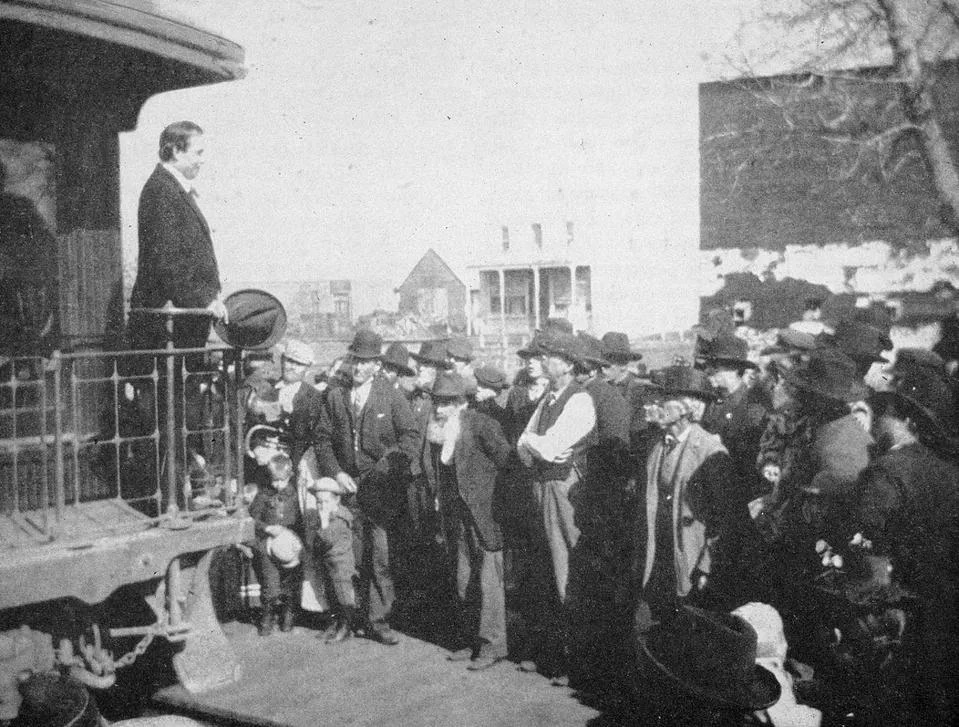
Democratic presidential candidate William Jennings Bryan (1860 - 1925) addresses a crowd from a railroad caboose during his national campaign whistle-stop tour, 1896. (Photo by Kean Collection/Getty Images)
Simple Tricks, Powerful Illusions
Long before multimillion-dollar aircraft and sophisticated security operations, politicians and their teams relied on far cheaper, simpler deceptions. During the whistle-stop era, momentary glimpses through a train window or a brief appearance on a rear platform were often enough: a familiar hat, gray hair, glasses or a practiced wave could convince onlookers they had seen the real candidate.
Notable Historical Examples
Benjamin Harrison (1891) — On a cross-country rail trip, a Pullman conductor in Arkansas assumed the president had retired for the night. When a crowd demanded a speech, the conductor briefly impersonated Harrison and won applause — until the real president, in shirtsleeves, appeared and laughed at the scene. Railroad historian Bob Withers reports Harrison reassured the embarrassed conductor, saying, "No president could have done better."
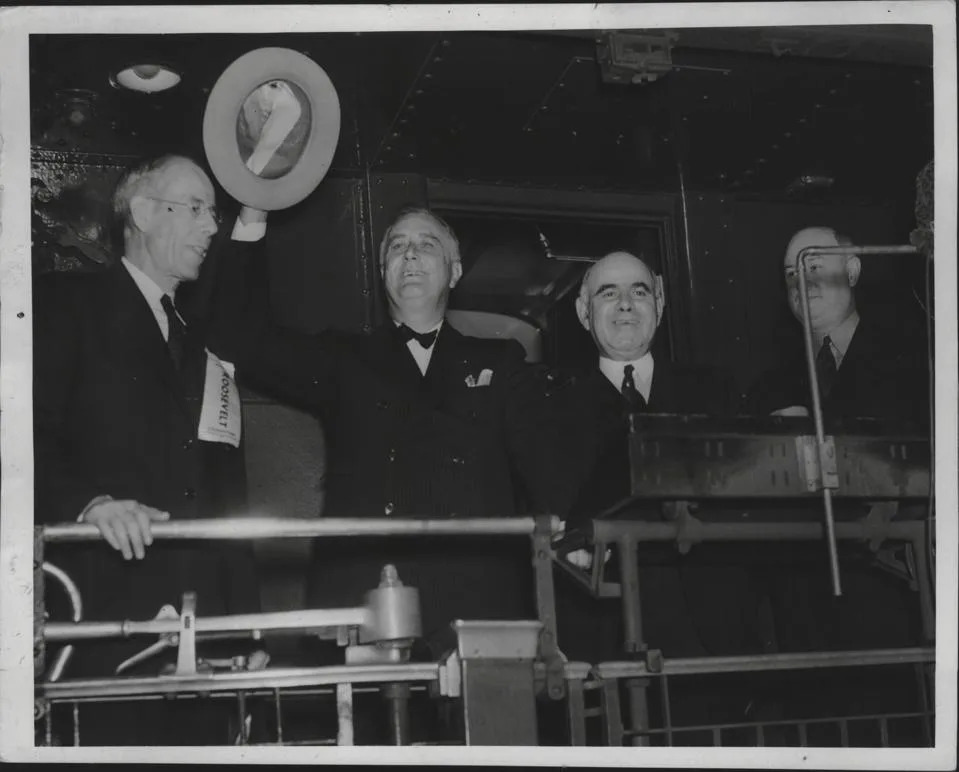
President Franklin D. Roosevelt, former New York State governor, was welcomed by city and state officials when he stopped off in Albany on Oct. 17, 1936, to dine with Gov. Herbert H. Lehman, his successor as chief executive of the state. Left to right on the observation platform of the President's special train are Mayor John Boyd Thacher, Roosevelt, Lehman and Postmaster General James A. Farley. (TU Archive/Albany Times Union via Getty Images)
William Jennings Bryan (1908) — During his campaign, Bryan was absorbed in preparing a speech as his train neared Newport, Kentucky. A local congressman worried about the optics if Bryan failed to appear. An unnamed reporter who resembled Bryan borrowed the candidate's wide-brimmed hat, stepped onto the rear platform and delivered a short speech, keeping the crowd satisfied while the real candidate remained hidden.
Eugene V. Debs (1908) — Exhaustion on grueling whistle-stop tours led to another practical remedy: Debs' brother Theodore, who resembled him, sometimes appeared briefly on platforms with collar turned up and hat pulled down. Campaign aides would tell crowds that the candidate was too tired to speak, allowing Debs time to rest and continue the tour.
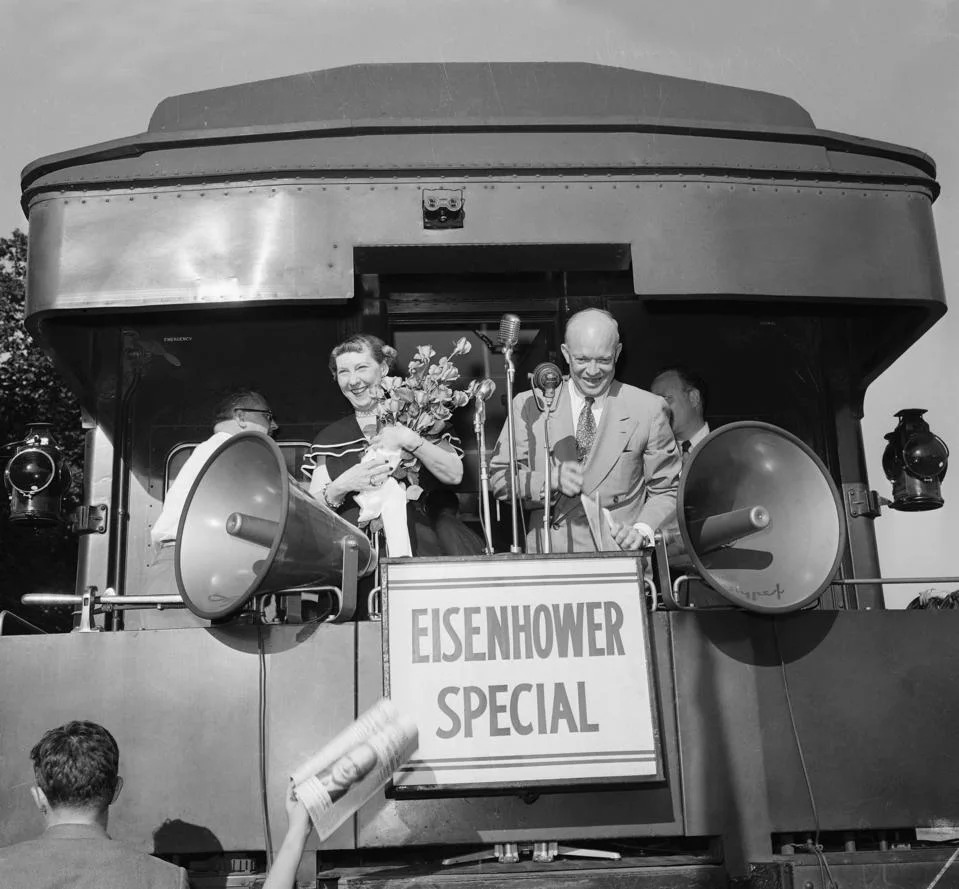
Then-General Dwight Eisenhower and Mrs. Eisenhower stand on a train platform at Hastings during the Republican presidential hopeful's whistle-stop tour of Nebraska cities.
Franklin D. Roosevelt (1936) — Tired of merely waving from his train window, FDR enlisted White House usher William D. Simmons, taught him the president's open-handed wave and gave him a cigarette holder. Simmons would sit by the window and mimic Roosevelt as the presidential special rolled through towns.
Harry S. Truman and Dwight D. Eisenhower (1944–1952) — Similar tactics followed in later campaigns. In 1944, Tom Evans, an aide to Senator Truman, stood on the rear platform and waved as the train passed communities that it could not stop in. During Eisenhower's 1952 run, an aide sometimes filled in beside Mamie Eisenhower while the train was moving. In fast-moving or nighttime situations, brief visual cues were enough for crowds to believe they had seen the candidate.
Why It Mattered
These ruses succeeded because spectators usually had only seconds to register who stood on a passing platform. Whether accidental, improvised, or carefully planned, substitutions avoided immediate logistical and political problems but carried reputational risks if exposed. The broader lesson — for political leaders, business executives, and public figures — remains the same: deception can protect in the short term but can profoundly damage credibility and public trust when it is revealed.
This article originally appeared on Forbes.com.
Help us improve.