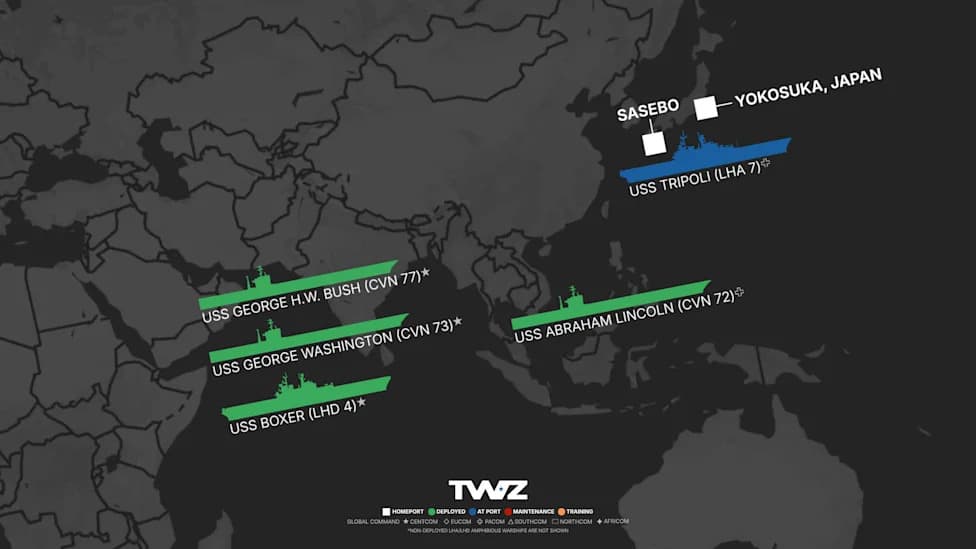
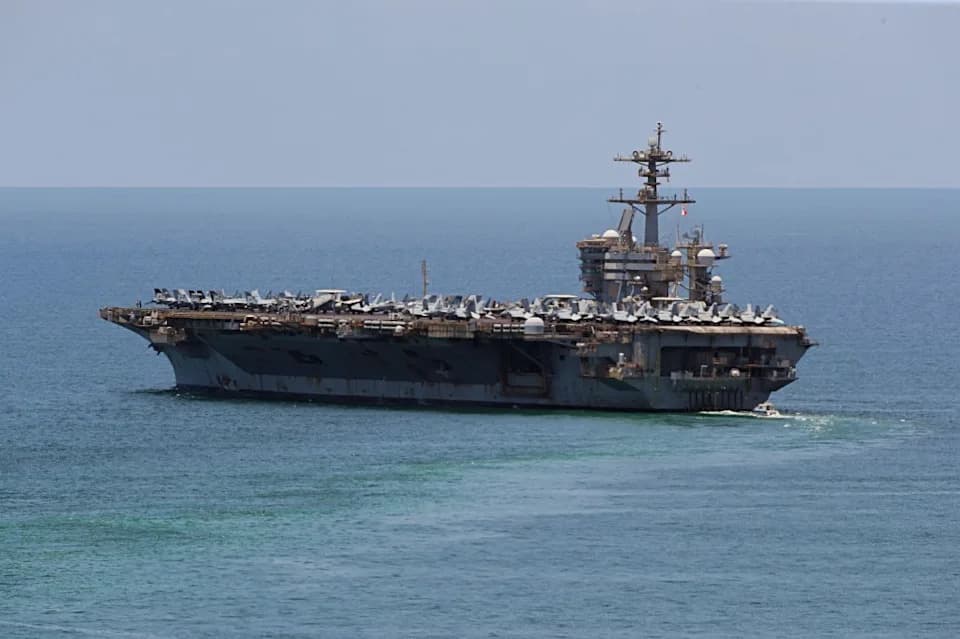
The New York Times reports that an Iranian drone strike early in the war reportedly destroyed a major U.S. logistics hub in Bahrain, complicating resupply for the USS Abraham Lincoln. The carrier, with about 5,000 sailors and Marines and deployed more than eight months, has had to rely on Diego Garcia roughly 2,200 miles away. Families have raised allegations of shortages and spoiled food; some officials deny the claims while others criticized the handling of the situation. The episode highlights how damage to a single logistics node can create sustained strain on forward-deployed forces.
Lost Port, Strained Carrier: Iran Drone Strike Tied to USS Abraham Lincoln Supply Woes
File photo, Anat Givon/AP Photo
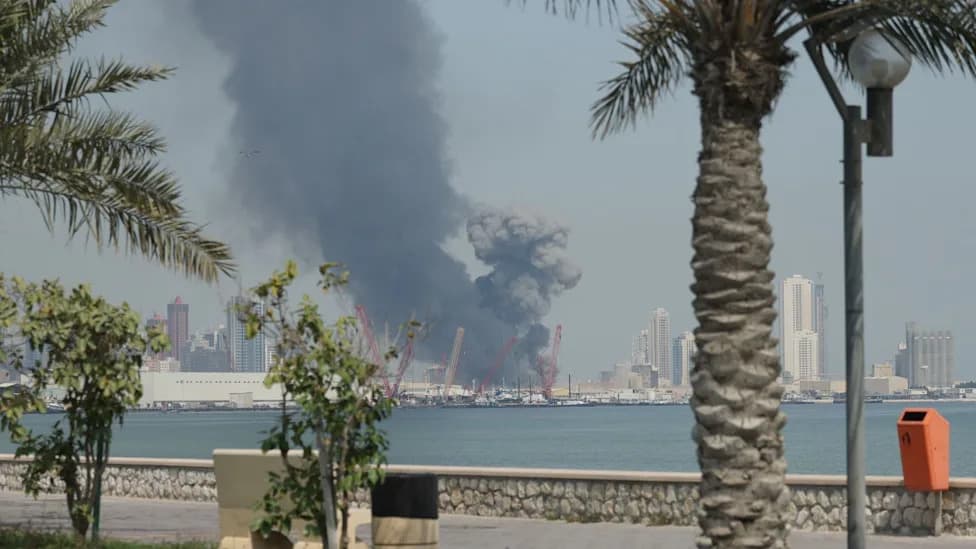
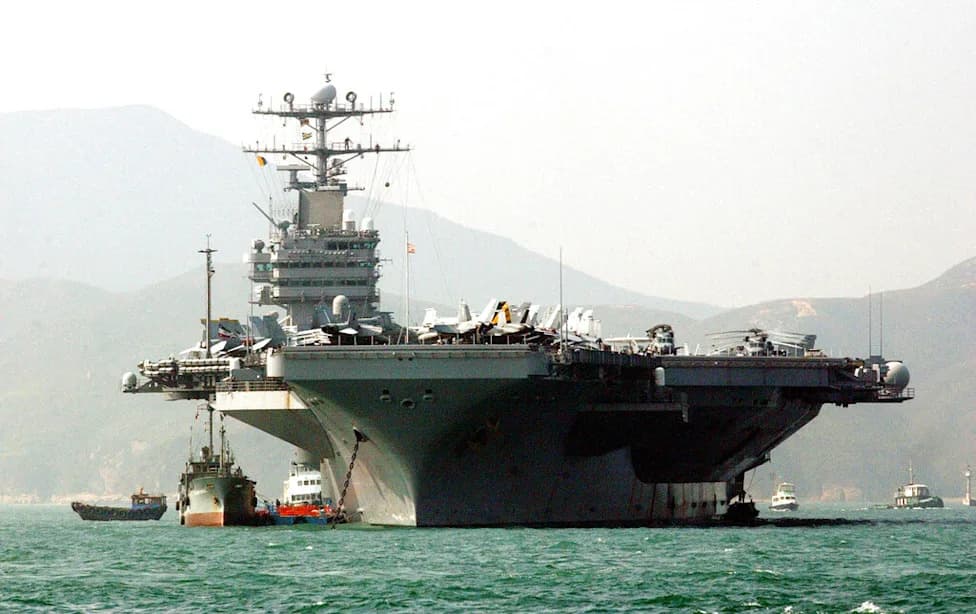
A portion of the reported supply and morale problems aboard the aircraft carrier USS Abraham Lincoln can be traced back to an Iranian drone strike early in the conflict that reportedly destroyed a key U.S. logistics hub in Bahrain, according to a New York Times report.
That attack, which occurred at the outset of hostilities and was described as retaliation for joint U.S.-Israeli strikes on Tehran, damaged a significant section of the Navy’s base in Bahrain — including a widely used logistics facility that had supported forward operations in the region.
With the Bahrain port and logistics node out of commission, Navy logisticians have been forced to rely on Naval Support Facility Diego Garcia in the Indian Ocean, roughly 2,200 miles away, an anonymous official told The New York Times. The distance and reduced capacity have complicated routine resupply for the Lincoln and other forward-deployed forces.
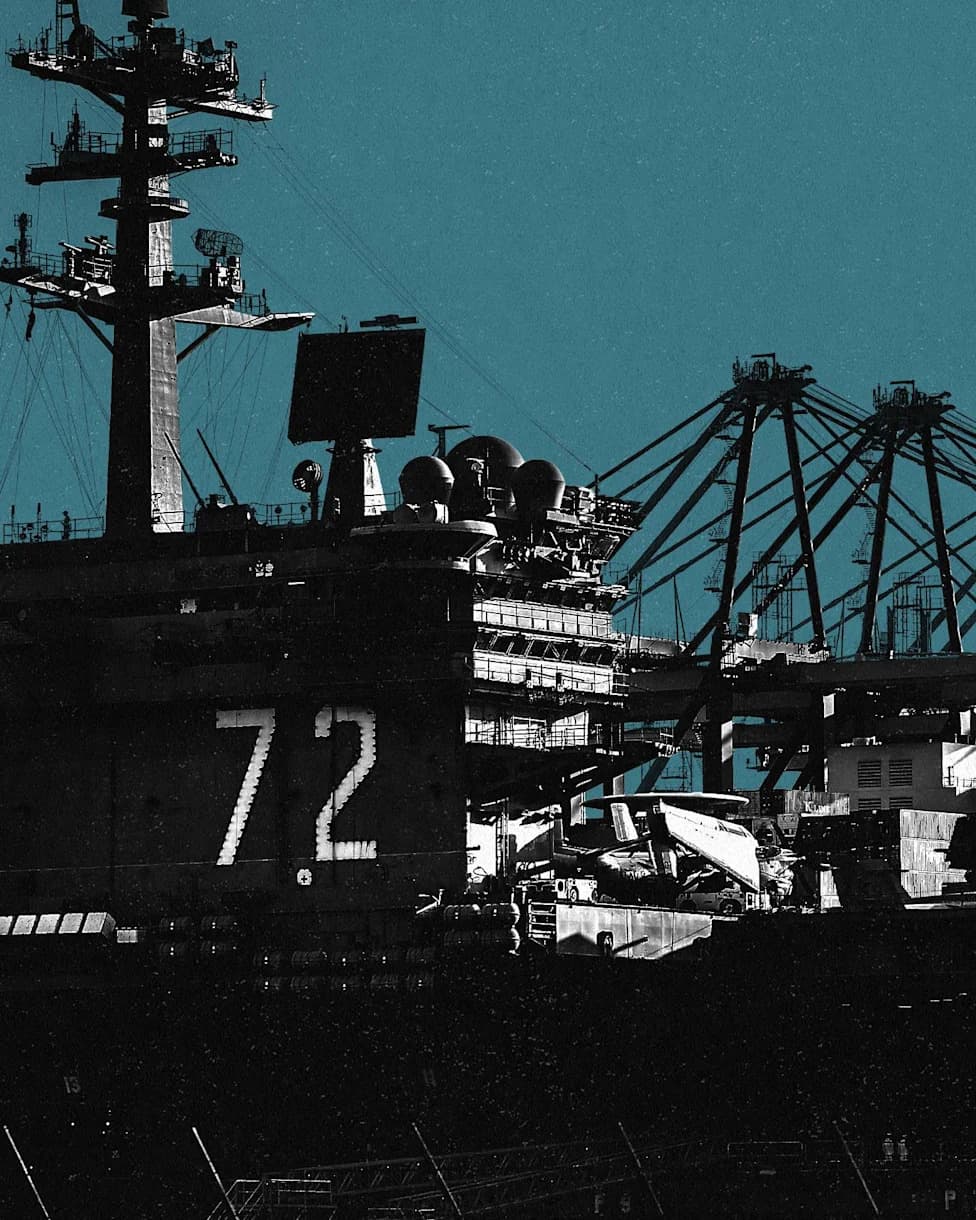
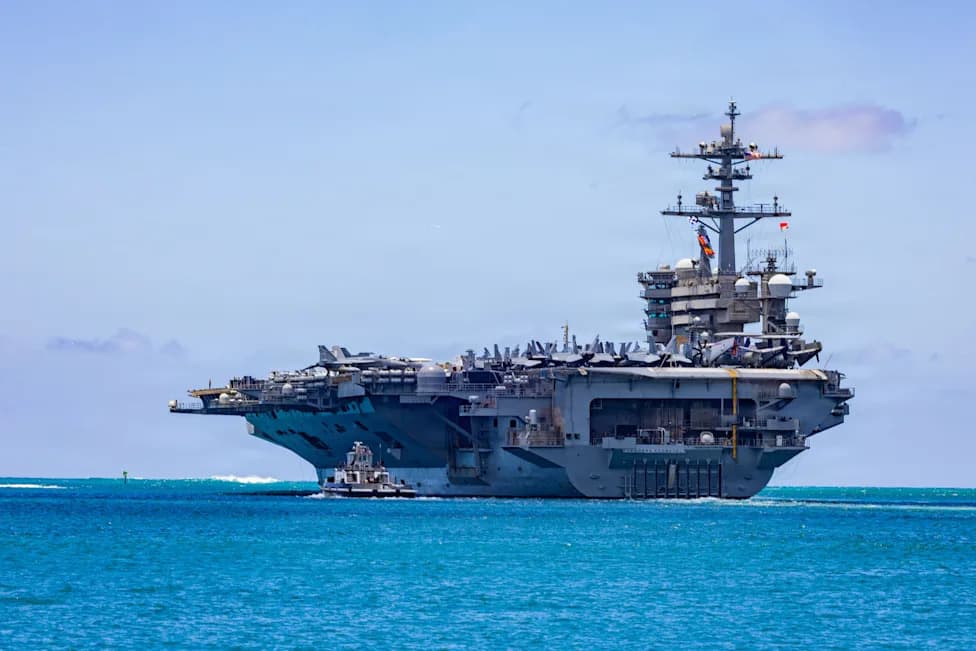
The carrier, a Nimitz-class warship that sailed from its homeport in San Diego on Nov. 21, is carrying roughly 5,000 sailors and embarked Marines and has been deployed for more than eight months, with at least one extension. Those long deployments put added pressure on supply chains for food, hygiene items and other essentials.
Family members of service members have publicly raised concerns and shared messages alleging shortages, spoiled food and inadequate hygiene supplies aboard the ship. Some messages reported extreme incidents; these claims prompted public attention and scrutiny.
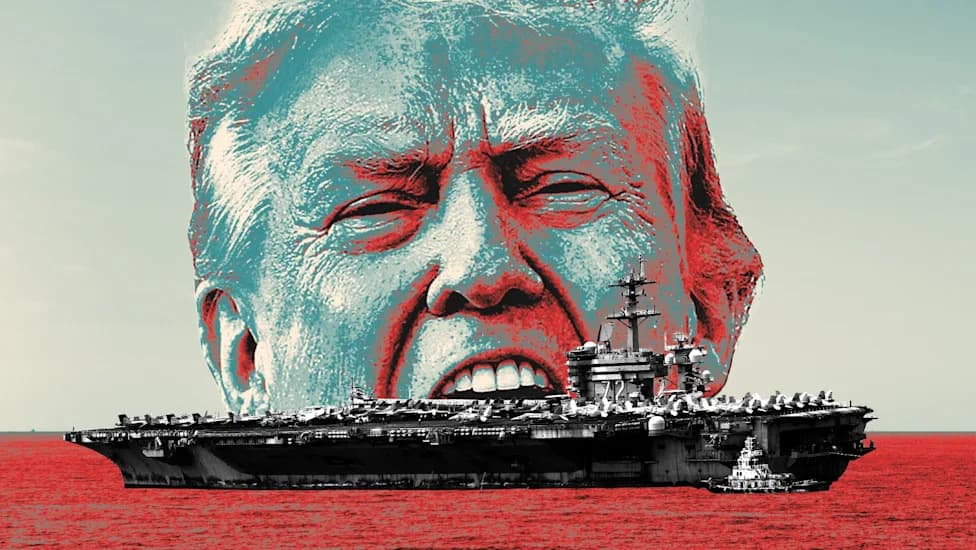
Responding to the reports, commentator and official Pete Hegseth called the accounts "completely misrepresented" and said he had heard from "incredible Americans on a historic mission" across CENTCOM air, land and sea, including the Lincoln. Former President Donald Trump also dismissed the claims. Former Defense Secretary Leon Panetta criticized the reports as "inexcusable." These conflicting statements highlight the political sensitivity of welfare and readiness issues during prolonged deployments.
Logistics, Distance and Operational Strain
The loss of a nearby logistics hub illustrates how a single targeted strike on infrastructure can ripple through naval operations: a damaged port forces longer transit for supplies, fewer options for spare parts and food, and more complex coordination across bases farther afield. For the Abraham Lincoln, that has meant stretched replenishment cycles and increased reliance on remote facilities.
Under Navy custom, a commanding officer can request a "beer day" for every 45 consecutive days at sea; by that metric the Lincoln would be due multiple such days, a detail The New York Times noted as one indicator of extended time at sea for the crew.
The full picture is still developing. Independent verification of all family-reported incidents is limited in public reporting. Officials continue to dispute some allegations while acknowledging that infrastructure damage in the region has tangible operational impacts.
Help us improve.