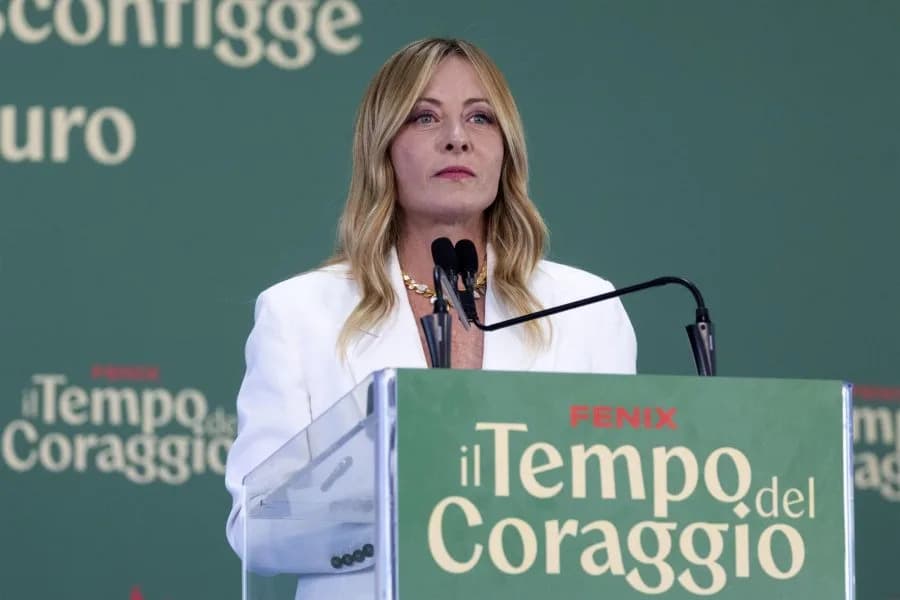
Giorgia Meloni has sharpened her rhetoric on migration and public order following the Ceuta crisis, joining Denmark's Mette Frederiksen in condemning "uncontrolled immigration." Her stance also includes proposals for "return hubs" in Africa. The shift is widely seen as an effort to blunt the rise of Roberto Vannacci's new hard‑Right party, which polls at about 7% and could tip the balance in next spring's election. Meloni faces a strategic dilemma: co‑opt the general and risk alienating moderates, or exclude him and risk losing crucial votes.
Meloni Moves Right on Migration to Blunt Hard‑Right Surge — 7% Party Could Decide Election
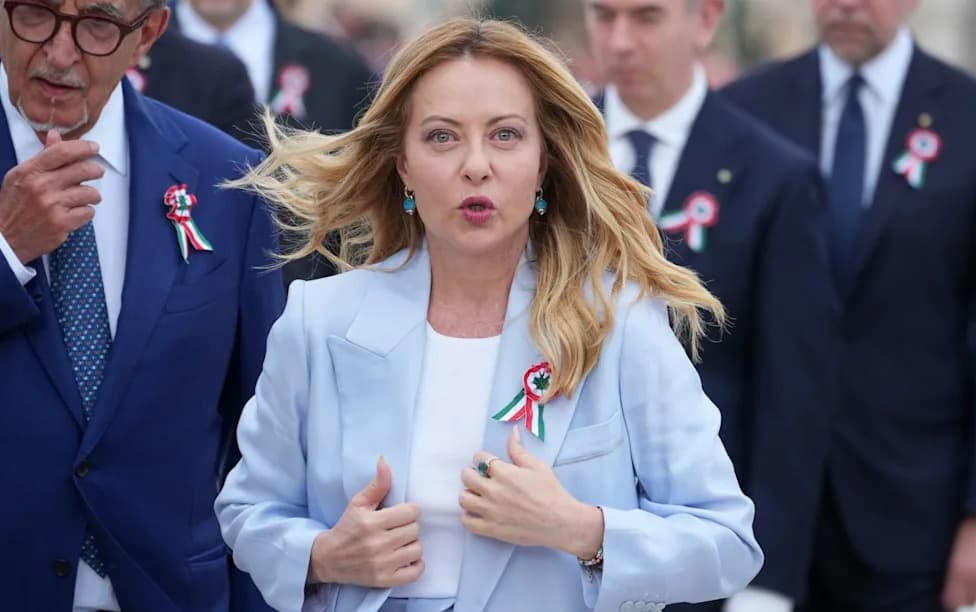
Giorgia Meloni faces a conundrum as she fights to counter the rise of a new opponent in the polls - Andrew Medichini/AP
The smiles looked easy and their body language relaxed, as though they were sharing a private joke. But when Italy's prime minister Giorgia Meloni and Denmark's leader Mette Frederiksen issued a joint message this week, the tone was unmistakably firm.
Reacting to the Ceuta incident — in which roughly 80,000 people forced their way into the Spanish enclave on Morocco's coast — Ms Meloni and Ms Frederiksen posted:
"We don't accept uncontrolled immigration to Europe."
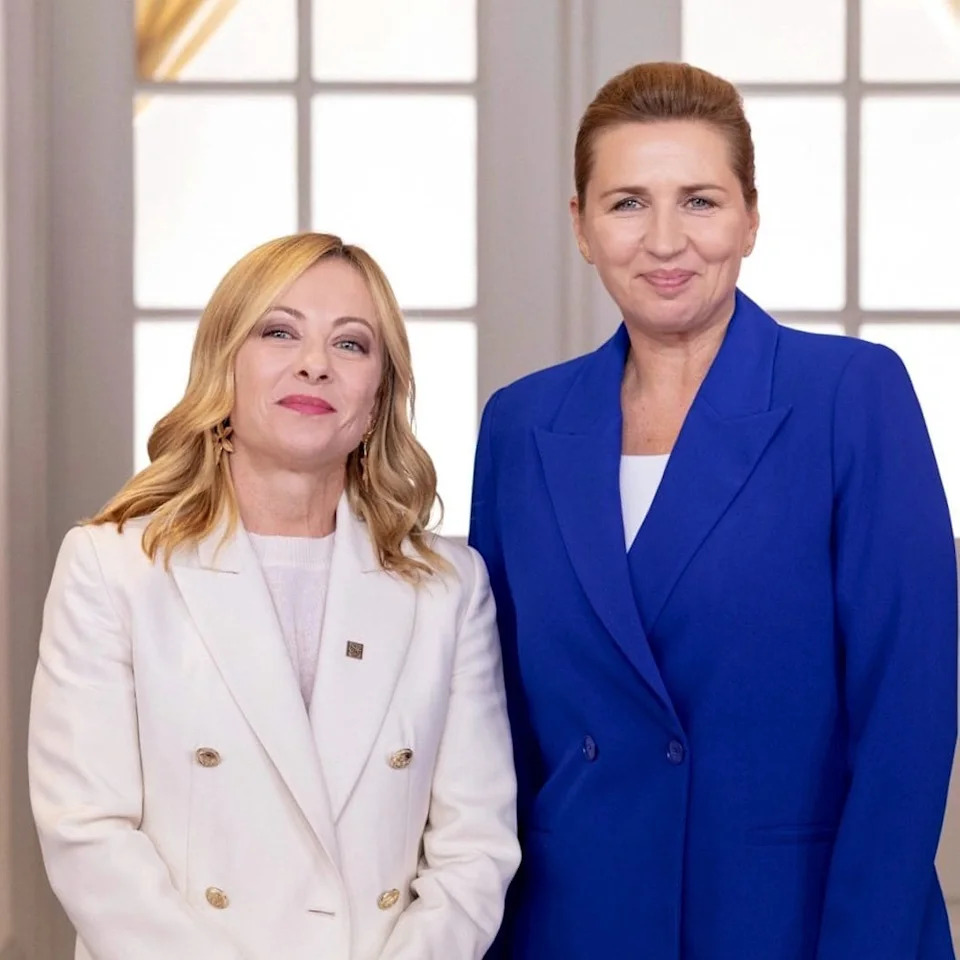
Ms Meloni and her Danish counterpart Mette Frederiksen took a tough stand in their joint Instagram post
The two leaders warned that illegal migration can have serious social consequences, citing concerns from "growing crime rates" to the "erosion of public trust" in institutions. In an Instagram post viewed by millions they added:
"It is particularly serious when illegal migrants commit violent crimes, engage in drug trafficking, or are responsible for sexual violence."
Ms Meloni has also promoted the creation of so-called "return hubs" in parts of Africa — reception or detention facilities intended to hold asylum seekers whose claims are rejected until repatriation is possible. The stance is consistent with her emphasis on border control and public order as she heads toward a likely general election next spring.
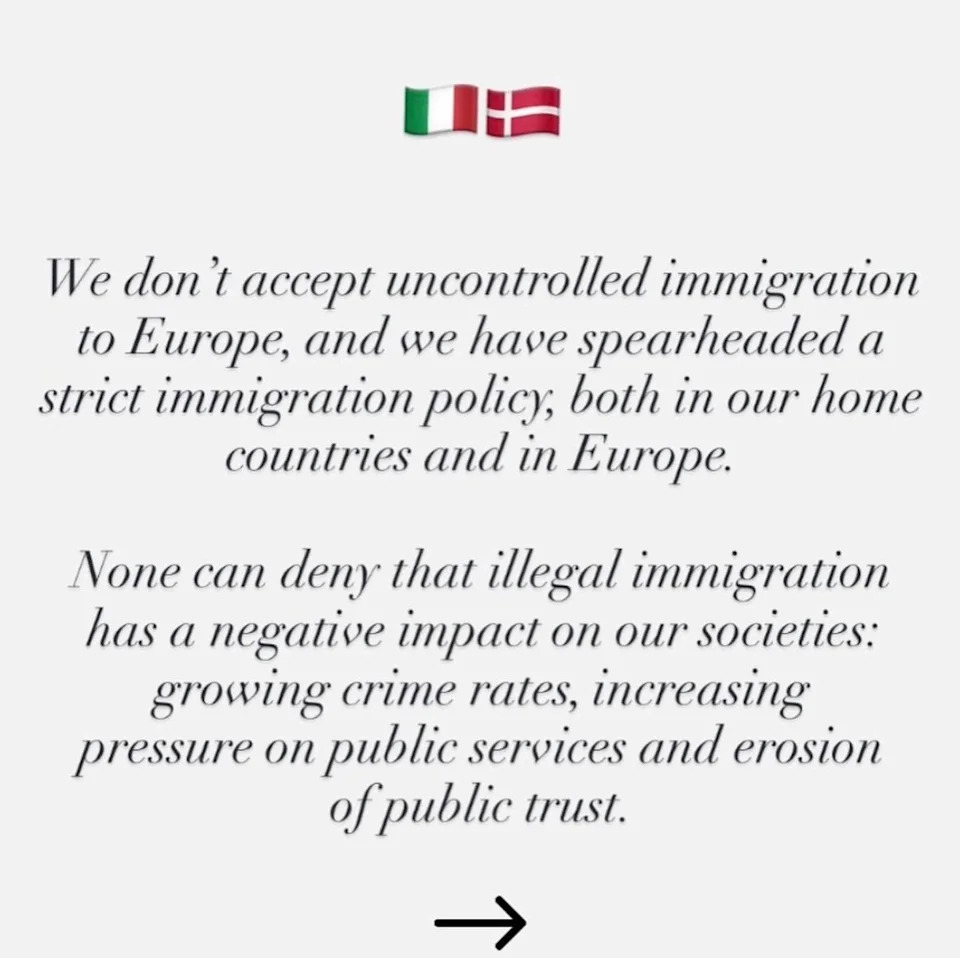
The joint statement published on Instagram was just the latest move by Ms Meloni to look tough on law and order
But Italian opposition figures and some EU leaders argue Ms Meloni's tougher rhetoric is politically motivated. Her coalition briefly suspended Schengen free movement with Spain in response to the Ceuta arrivals, a move that provoked sharp criticism from Madrid. Spain's prime minister Pedro Sánchez noted that those who entered Ceuta did not reach mainland Spain and reminded critics that Ceuta lies outside the Schengen zone.
Critics labelled Rome's action cynical grandstanding intended to shore up support at home. "It doesn't make sense. Worse than that, it shows a lack of European solidarity," said Carlo Calenda, former minister and leader of the centrist Azione party.
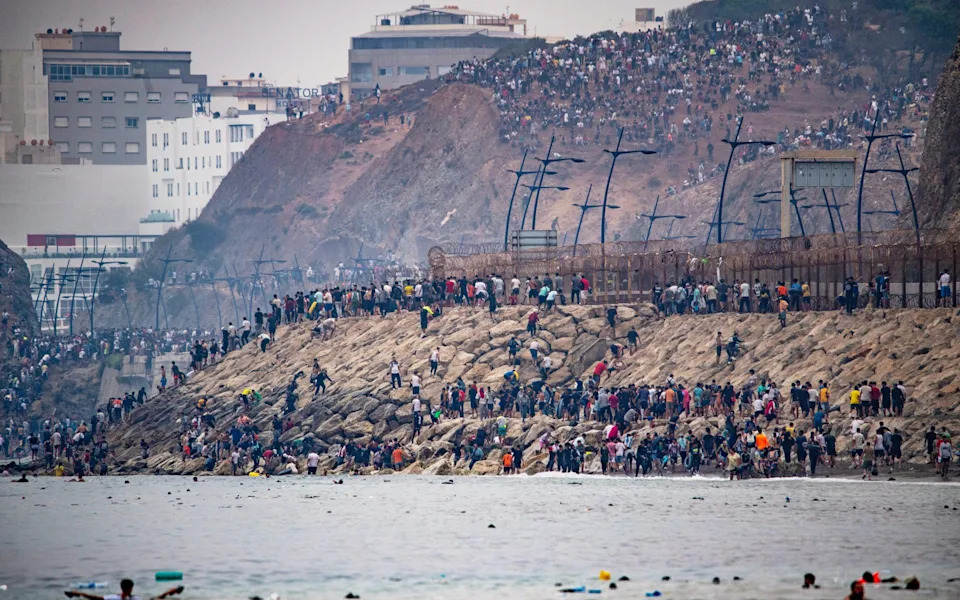
Ms Meloni has taken the hardest line in response to the Ceuta crisis of any European leader - Antonio Sempere/AP
Analysts say the political logic is clear: a newly formed hard‑Right party led by former special forces commander Roberto Vannacci is polling at about 7 percent and threatens to peel off conservative votes. Vannacci launched Futuro Nazionale (National Future) in February and centres his platform on law and order, traditional family values, national identity and what he calls "remigration" — the mass return of people with migrant backgrounds.
Current projections put Ms Meloni's conservative coalition at roughly 40.8 percent versus the centre‑Left's 44.6 percent. In that arithmetic, Mr Vannacci's 7 percent could be decisive. "Meloni is making moves to counter Vannacci's challenge on migration, security and identity," said Wolfgango Piccoli, an analyst on Italian politics. "If she imitates him, she validates him — but if she doesn't, she risks losing votes to him. It is a political dilemma."
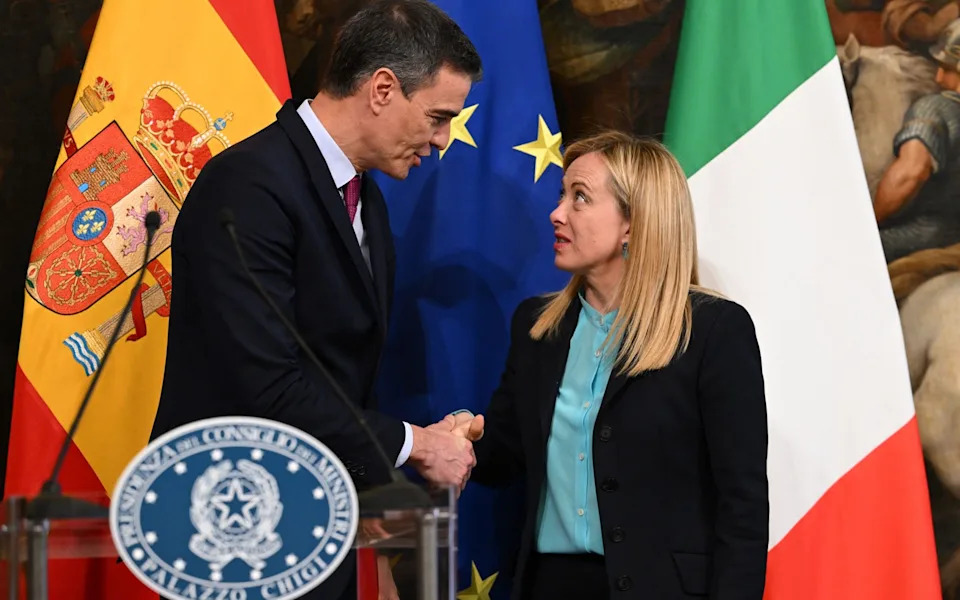
The Spanish government, led by Pedro Sánchez (pictured with Ms Meloni in 2023), has dismissed Italy's response to the crisis as political grandstanding - Andreas Solaro/AFP
The consequences run beyond immigration policy. Observers note a geopolitical split: Mr Vannacci has expressed scepticism about continued support for Ukraine and has made pro‑Moscow comments in the past. That raises a further trade‑off for Ms Meloni — including him might secure crucial votes but could undermine her government's pro‑Western credentials.
Inside government, ministers reject the suggestion that Meloni is simply responding to Vannacci. Deputy Prime Minister and Foreign Minister Antonio Tajani told Corriere della Sera that concerns about Spain's regularisation of undocumented migrants predate Mr Vannacci's rise. Still, the optics of the Ceuta response have fuelled debate in Rome and across the EU.
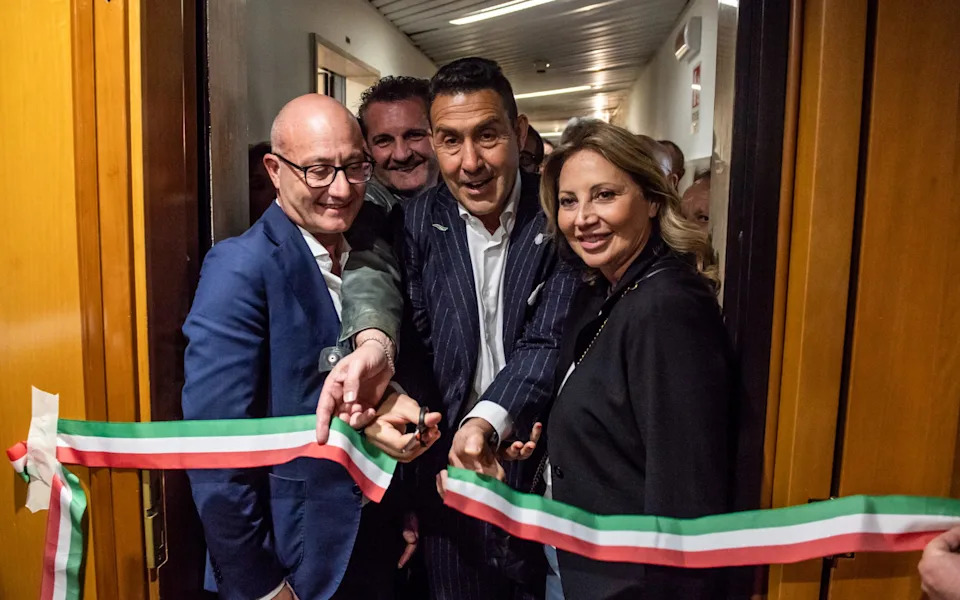
Mr Vannacci (centre) has been described as a 'big problem' for Italy's Right - Ivan Romano/Getty Images
Vannacci, for his part, has downplayed early dismissals of his movement as marginal and celebrated his party's growth on social media: "Remigration. Security. Identity. Family. Sovereignty. Fewer taxes," he wrote, adding that his movement was no longer easy to ignore.
For Ms Meloni the choice is stark: try to absorb or neutralise a rising hard‑Right contender and risk alienating moderate voters, or keep the challenger out and risk losing enough votes to concede power. Either path carries political and geopolitical consequences for Italy ahead of next year's election.
Help us improve.