Myanmar's foreign ministry says it has verified more than 300,000 Rohingya refugees in Bangladesh as former residents of Rakhine and will accept returns when security allows. The ministry reported verifying 426,545 of 828,824 names on a Bangladeshi list, with 308,797 identified as from Rakhine; 113,507 could not be verified and 4,241 were linked to alleged terrorist activity. Repatriation stalled after a 2018 agreement and was undermined by the 2021 coup and intensified fighting in Rakhine in 2023. Humanitarian concerns and dangerous sea crossings continue to complicate the crisis.
Myanmar Says 300,000+ Rohingya Verified As Former Rakhine Residents; Returns Dependent On Security
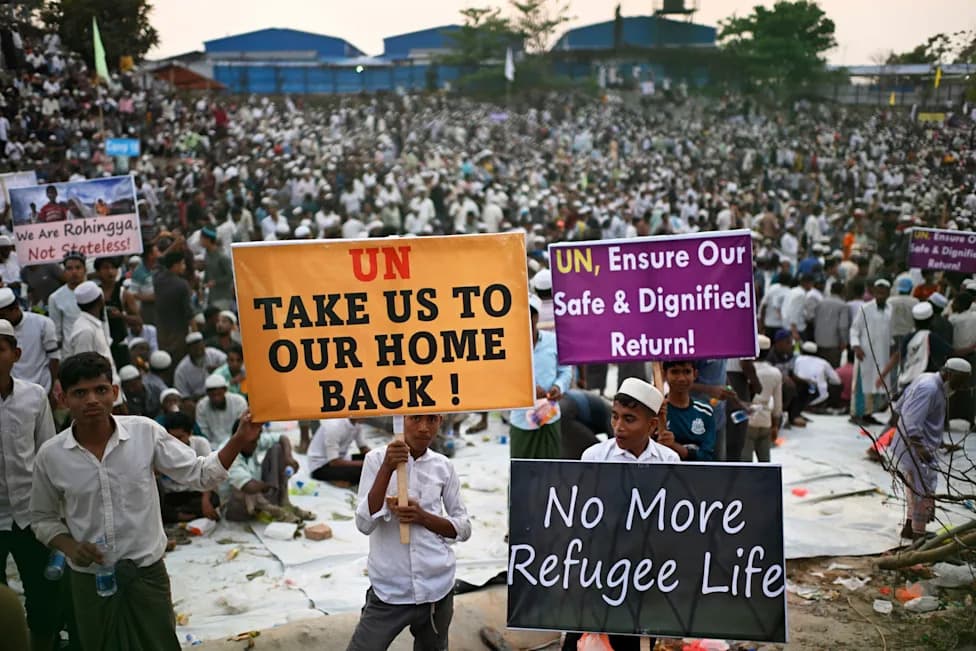
FILE- Rohingya refugee children carry banners during a visit by U.N. Secretary-General António Guterres at the Ukhiya camp in Cox's Bazar, in Bangladesh, March 14, 2025. (AP Photo/Mahmud Hossain Opu, File)
Myanmar's military-backed government announced that more than 300,000 Rohingya refugees living in camps in Bangladesh have been verified as former residents of western Rakhine state and that it will accept their return once security conditions improve.
What the Government Says
The Ministry of Foreign Affairs said it had verified 426,545 of 828,824 names on a list provided by Bangladesh as of the end of July, and determined that 308,797 of those verified were former Rakhine residents. The ministry reported 113,507 people could not be verified and that 4,241 individuals were linked to alleged terrorist activity.
Background
Hundreds of thousands of Rohingya fled Myanmar after a 2017 military crackdown in Rakhine that followed attacks on security posts by a Rohingya insurgent group. That operation pushed more than 700,000 Rohingya across the border into Bangladesh, adding to earlier waves of displacement. The scale and conduct of the 2017 operation drew international accusations of ethnic cleansing and genocide, including from the United Nations.
Repatriation Efforts and Obstacles
Myanmar and Bangladesh agreed on a two-year repatriation framework in 2018, but returns have largely stalled. Security deteriorated further after a military takeover in 2021 that ousted the elected government and prompted widespread armed resistance. Fighting in 2023 between the military and the Rakhine-based Arakan Army further destabilized the region and drove more people to seek safety in Bangladesh and elsewhere.
The foreign ministry said it would continue coordinating with Bangladesh to receive verified former residents when the security situation in Rakhine becomes sufficiently stable. Officials also disputed higher estimates of displacement, saying about 540,000 crossed into Bangladesh after 2017 while more than 200,000 remained displaced inside northern Rakhine.
Regional Implications
Poor conditions in refugee camps, cuts to foreign aid and the lack of safe prospects for return have pushed some Rohingya to attempt dangerous sea crossings to Malaysia and Indonesia. In late July, Malaysian Prime Minister Anwar Ibrahim said Myanmar had agreed to take back 5,000 Rohingya from Malaysia, but Myanmar officials clarified that any repatriation program would focus on verified Myanmar nationals in detention, not a broader acceptance of Rohingya refugees.
Note: Numbers reported by Myanmar's foreign ministry reflect the state’s verification process and its position; they are disputed by other governments, NGOs and international observers.
Help us improve.