The village of Konotopie has unveiled a 55-metre Virgin Mary statue, the tallest Marian monument in Europe and the world’s second-largest. The concrete-and-steel shrine, financed by billionaire Roman Karkosik at an estimated 100 million zlotys (~$26m), is due to be blessed on 15 August despite the site still being unfinished. Local officials hope the statue will attract pilgrims and create jobs, but some residents say the money would have been better spent on healthcare or social services amid Poland’s ongoing secularisation.
55-Metre Virgin Mary Statue Towers Over Polish Village — Europe’s Largest Marian Monument
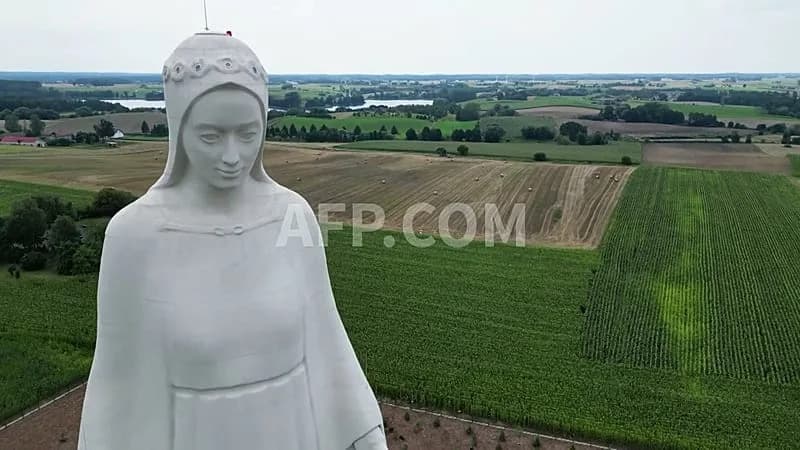
Europe's tallest Virgin Mary statue rises in Polish village
A 55-metre statue of the Virgin Mary now dominates the skyline of the small Polish village of Konotopie, making it the tallest Marian monument in Europe and the second-largest in the world after the Mother of All Asia effigy in the Philippines.
The concrete-and-steel figure is scheduled to be blessed on 15 August, the Catholic feast of the Assumption, even though construction at the site is not yet finished. Visitors have reported scaffolding still in place and debris scattered across a muddy car park.
Funding, Local Hopes and Early Visitors
Local media say the project was financed by billionaire Roman Karkosik at an estimated cost of 100 million zlotys (roughly $26 million). Officials in nearby Kikol — one of the region’s poorest municipalities — hope the shrine will draw pilgrims, increase tourism and create jobs in the area. A site guard said coaches were already arriving while scaffolding remained up.
Mixed Reactions
Not all locals share the optimism. Some residents told AFP they would have preferred the funds to be invested in a hospital, an orphanage or other social services. The debate highlights broader tensions over private-funded religious monuments and priorities for public welfare in economically challenged communities.
“The money could have been better spent on health or social services,” a local resident told AFP.
Wider Context
Poland remains predominantly Catholic, but the country is secularising: 71% identified as Roman Catholic in the 2021 census, down from 88% in 2011. The new monument adds to an ongoing conversation about the role of faith, private philanthropy and public needs in contemporary Poland.
What to watch next: the planned blessing on 15 August and whether the site’s pilgrimage traffic translates into sustained local economic benefits.
Help us improve.