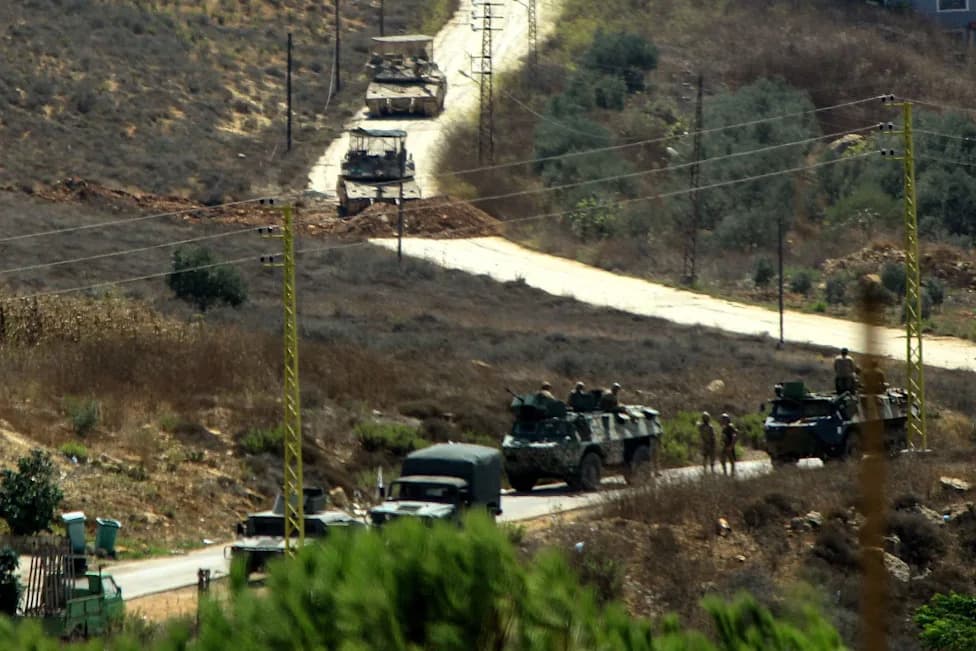
Nawaf Salam has pressed US officials for a clear timetable requiring Israeli forces to withdraw from Lebanese territory and to expand pilot zones in the south. Hezbollah deputy leader Naim Qassem denounced the framework as humiliating to the Lebanese army and said it exposes troops to Israeli pressure. The US says attacks will end only if Hezbollah disarms, while Israel insists it will not pull back until that happens. Negotiations under the June trilateral framework continue, with the next round expected in early September.
Lebanon Demands Clear Timetable for Israeli Pullback; Hezbollah Says Deal Humiliates Army
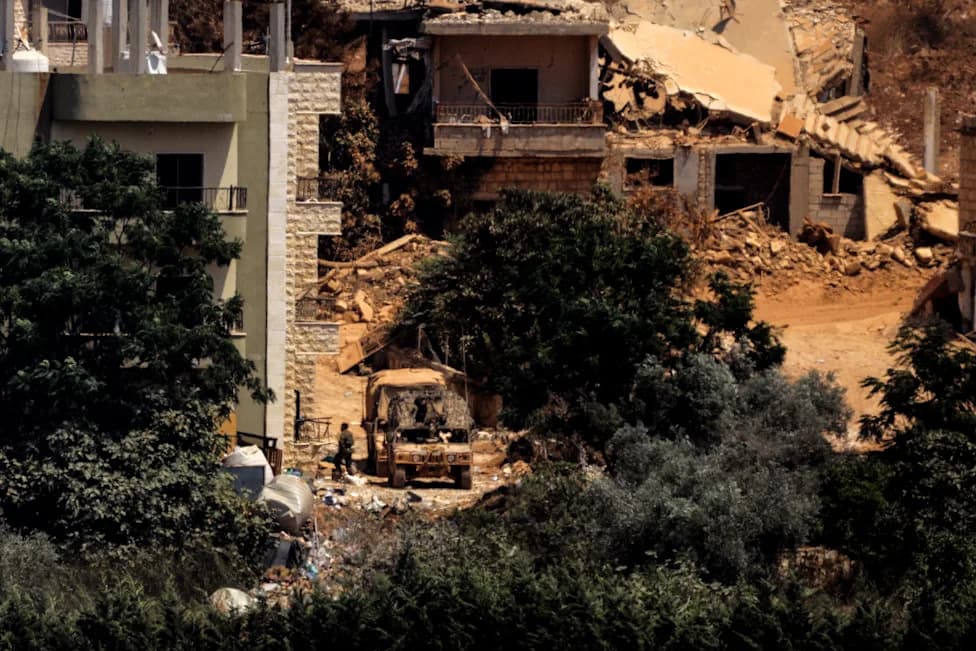
Israeli military vehicle stationed between houses in the village of Zawtar al-Sharqiyeh in southern Lebanon on August 13, 2026 [Ammar Ammar/AFP]
Lebanon's prime minister has pushed for a concrete withdrawal schedule from Israel, while Hezbollah's leadership has condemned the proposed framework as an affront to the Lebanese army.
Lebanese Prime Minister Nawaf Salam met US Ambassador to Beirut Michel Issa and General Joseph Clearfield, head of the US military coordination group for Lebanon, to discuss the military track of the negotiation framework with Israel and recent developments in southern Lebanon.
What Lebanon Is Asking For
According to a statement from the prime minister's office, Salam urged Israel to halt destructive operations, expand the number and scope of designated pilot areas in the south, and provide a clear, time-bound plan for withdrawing forces from Lebanese territory.
US Involvement And Reactions
Ambassador Issa described the talks as "positive" and said negotiations would continue, without announcing a date for the next round. Lebanon's Parliament Speaker Nabih Berri also met the US officials and warned that violations — including village demolitions, bulldozed farmland, forest fires and damage to heritage sites — have continued.
Hezbollah's Response
Hezbollah deputy leader Naim Qassem strongly criticised the Lebanese government's approach. He accused officials of subjecting the Lebanese army to "undue pressure" and exposing it to humiliation by pursuing what he called a non-functional agreement.
“How can you accept this ongoing humiliation of the Lebanese army, exposing it to bombardment and Israeli pressures, instead of acting as its protectors?” Qassem asked.
Qassem also charged that Israel is seeking oversight of Lebanese army deployments through the proposed framework. He pointed out that Israeli strikes and demolitions have continued in Zawtar al-Gharbiyeh, the first designated pilot zone, despite the presence of the Lebanese army there, and challenged negotiators to name a single achievement from seven rounds of talks.
Positions Of The Parties
US officials say Israeli attacks would cease only if Hezbollah agrees to disarm. Ambassador Issa told reporters, "If they give up their weapons, everything will stop." Israel, for its part, has said it will not withdraw until Hezbollah is disarmed; Defence Minister Israel Katz reiterated that stance this week.
Framework And Outlook
The June trilateral framework between Lebanon, Israel and the United States envisions phased Israeli withdrawal from parts of southern Lebanon and measures relating to Hezbollah's armament. But a wide gap remains between the parties' positions. Negotiators expect the next round of talks to resume in early September.
Casualties and Displacement: Lebanese authorities report that Israeli attacks since March 2 have killed 4,335 people, wounded 12,277 and displaced more than one million residents.
Help us improve.