The Betterment poll of 1,000 U.S. retail investors shows a notable generational shift: 26% of Gen Z view sports betting as part of a long-term financial strategy and 52% recently used money earmarked for investing to place bets. Broader legalization, mobile platforms and social-media exposure have normalized betting, while economic pressures — high youth unemployment and steep housing costs — push some young people toward high-risk alternatives. Academic research indicates about 96% of online bettors lose money over time, underscoring the risks of treating gambling as investing.
Most Gen Z Investors Have Used Investment Money To Bet On Sports, Poll Finds

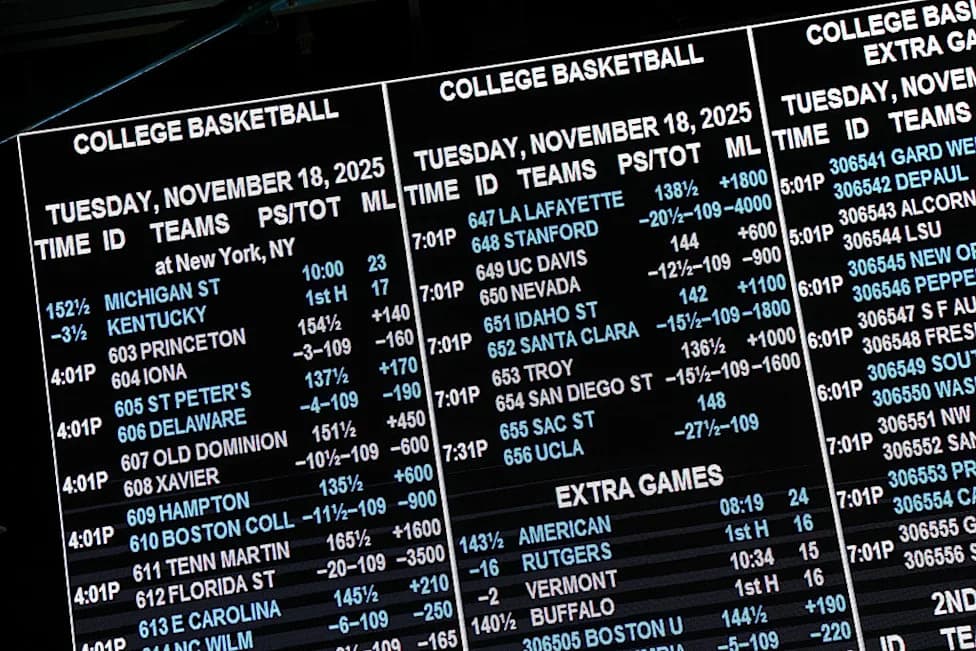
Online sports betting has become ubiquitous in recent years.(Getty Images)
A new Betterment survey of 1,000 U.S. retail investors finds a striking generational shift: a large share of Generation Z is treating sports betting as part of their financial playbook. More than half of Gen Z respondents said they had placed a sports wager in the past year using money that had originally been set aside for investing, and 26% described betting as an element of their long-term financial strategy.
Key Findings From the Survey
The Betterment poll highlights important differences by age: 26% of Gen Zers said sports betting is part of a long-term strategy, versus 14% of millennials, 6% of Gen Xers and 1% of baby boomers. Similarly, 52% of Gen Z reported redirecting money intended for investments into sports bets in the past year, compared with 31% of millennials, 10% of Gen Xers and 4% of baby boomers. Overall, only about one-third of Gen Z investors (34%) said they do not participate in sports betting, while 63% of all investors surveyed said they avoid betting.
Why Gen Z Is More Exposed
Legal and technological changes since the U.S. Supreme Court lifted the federal ban on sports betting in 2018 have reshaped the market. Today, 39 states plus Washington, D.C. allow sports wagering, and roughly 30 jurisdictions permit online or mobile betting. The American Gaming Association estimates that more than 90% of bets are placed online. In 2025 Americans wagered about $166 billion on sports — a figure larger than the combined revenues of the U.S. movie, music, book and museum industries, according to Fortune. Industry revenue is estimated at roughly $17 billion in 2025, up from about $400 million in 2018.
Digital platforms make betting fast and frictionless: users can place minute-by-minute wagers while watching games, payments are instant, and advertising and league partnerships (with operators like DraftKings and FanDuel) have normalized the practice. As the most digitally native generation, Gen Z reports heavier exposure to these enticements. Betterment found social media is now the most-cited source of financial news for Gen Z, rising from 45% in 2024 to 60% today; only 21% said they rely on a financial adviser.
Economic Pressures and Cultural Shifts
Exposure alone doesn't fully explain the trend. Economists and analysts point to broader financial pressures that make young adults more open to high-risk, high-reward alternatives. The unemployment rate for Americans under 25 is about 8.5%, roughly double the overall rate, and entry-level job postings in the U.S. have fallen sharply in recent years, in part due to automation and AI. Housing costs and borrowing have also become more prohibitive: 30-year fixed mortgage rates are near 6.7%, the median price for a new U.S. home is roughly $411,000 (up about 81% since 2011), and the median age of a first-time buyer has risen to about 40.
British economist Alice Lassman, who is Gen Z herself, calls these responses part of a broader "disillusionomics" — strategies like house hacking, content creation, buy-now-pay-later use and other alternatives born of financial frustration. Economics writer Kyla Scanlon has described a related trend as "financial nihilism," where constrained conventional paths prompt people to seek outsized returns in riskier arenas.
Reality Check: Academic evidence suggests betting is a poor long-term financial strategy for most people. A 2024 UC San Diego study of 717,724 online bettors over five years found about 96% appeared to lose money while only 4% realized a profit.
Bottom Line
The Betterment poll reveals that many Gen Z investors have shifted some money from traditional investing to sports betting — a choice driven by legal access, technology, marketing and economic anxiety. But the empirical record warns that treating gambling as investing is unlikely to produce reliable gains for the vast majority of participants.
Help us improve.